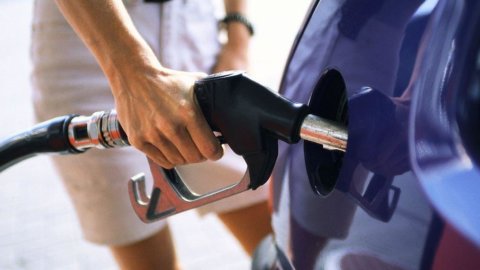
House and Senate at work to try to curb the constant increases in the price of petrol. In Montecitorio, in the Productive Activities Committee, there are five bills for the reorganization and efficiency of the market and for the containment of fuel prices for motor vehicles. The main cornerstones around which they revolve are: a central storage body, an energy market manager, the separation between research and distribution, freedom of procurement. These legislative proposals complement similar initiatives being examined by the Senate Industry Commission, so much so that Manuela Dal Lago (Lega), who chairs the Chamber commission, has announced that she will inform Gianfranco Fini so that he can reach possible agreements with the President of the Senate.
Here is a summary of the contents of the bills under examination in the Chamber, with very similar structures, the common objective of which is to contain the prices of fuel for motor vehicles, through the introduction of provisions aimed at increasing competition in the petroleum products market.
1) Meanwhile the Minister of Economic Development is asked for the task of setting up the central storage body, which will have to monitor the wholesale fuel market for automotive use and define the methods of participation of all operators.
2) Then the Energy Markets Manager Spa is identified as the subject who has the task of defining the wholesale market of fuels for automotive use, within which the public price lists of the products are negotiated.
3) The task of ensuring the most competitive conditions for small and medium-sized companies that manage fuel supply systems is instead entrusted to the Acquirente unico Spa, already active in the electricity market, through the methods defined by the Electricity and Gas Authority. The Ministry of Economic Development promotes the aggregation of managers in consortia to encourage their wholesale purchasing capacity.
4) Crucial question the one who intends to realize the separation between the areas of integrated and industrial operators who supply the market on the one hand and retail distribution on the other, to prevent the persistence and crystallization of dominant positions and monopolistic or oligopolistic systems. A separation is therefore arranged between the ownership of the exploration and production of liquid and gaseous hydrocarbons; refining, importing or marketing of finished products; production or marketing of petrol, oil, diesel, lubricating oils, LPG and methane for vehicles. This separation should be completed within two years.
5) Among the rules being examined by the Productive Activities commission of the Chamber, there are also those which aim to overcome the exclusivity constraint for the supply of fuels imposed on managers, to allow them to obtain supplies freely on the market, in the same way as other operators are allowed.