Here we go again. Another part of the world erupts in conflict. There is a shiver among investors: that the new war in Israel may continue over time or may expand.
And then all you have to do is place at least part of the investments in shelter goods, those financial bunkers that provide greater security, at least while waiting for the storm to end. And here's the gold market turning back on, gods US Treasuries, from the dollar, but also the prices of those company which in some way could be involved in the business of war, from weapons to the entire oil/gas supply chain.
Gold puts interest rate fears aside and raises its head again
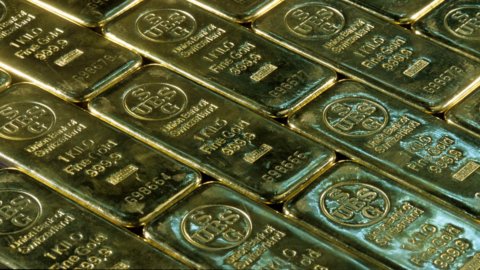
Towards the end of the first working session after the outbreak of the war, it is their to shine, and this is not a euphemism, on the markets, showing a price of 1.846 dollars per ounce, with an increase of around 1%, after a peak above 1.860 dollars, going back up a slope that had seen it in sharp decline in the last sessions and accumulating a loss of 4,70% in one month and 8% in six months. The air of rate increases still blowing through the corridors of the Fed prevailed over the weakness. Now the winds of war have the upper hand. And in the wake of gold also moves Copper, also up about 1% last week, according to Reuters data.
Fears of high volatility
“We believe that the volatility will remain very high in the coming days and that the impact on the markets will be increasingly profound if other states were to be involved, leading to risk aversion and a risk-off sentiment that could last for a long time", he writes in a note Philip Diodovich, senior market strategist at Ig Italia. “The immediate reaction to recent geopolitical tensions adds to the increase in volatility already recorded last week – he adds Antonio Cavarero, Head of Investments of Generali Insurance Asset Management – The riskiest parts of the markets are obviously penalized”.
US Treasuries: demand returns and yields fall
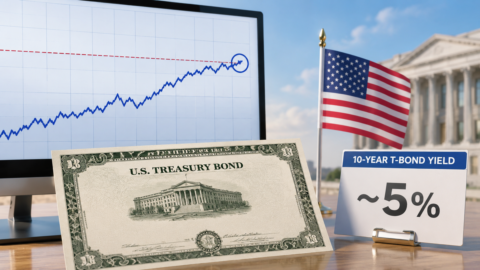
Also benefiting from the state of affairs are Treasuries, which have been under pressure for weeks with yields that had flown close to 5% for a ten-year duration. Now, however, demand is also on US securities and the yield tonight shows a drop towards 4,70%: good news for the Stars and Stripes Treasury, which is busy between September and December having to issue securities for around 1000 billion.
In the world of Currencies are the dollar, but also it yen, the two currencies considered an excellent hedge against international turbulence. But also goes in the same direction Swiss franc.
Attention to oil and Iran's involvement
But attention also goes to the Petroleum, not as a safe haven this time, but as an asset that could once again create problems of availability on the markets and price.
Gianclaudio Torlizzi, founder of the raw materials consultancy firm T-Commodity, as well as essayist and ISPI collaborator, fears above all the involvement of Iran in this new war. “If sanctions were to be imposed on Iran, then Tehran could turn off the taps Strait of Hormuz, the main energy crossroads of the region”. Mediobanca Securities echoes this by underlining that they point out that it is not so much the direct impact from Israel and Palestine that is of concern, but rather the possible spillover of tensions with Iran, citing precisely the risks for the flow of oil from the Strait of Hormuz.
For Diodovich, in any case, "we do not believe that the oil embargo of 1973 following the Yom Kippur war can be repeated", both due to OPEC's lesser grip on global production and due to "the ongoing talks between Saudi Arabia and Israel to normalize relations between the two countries" which "lay the foundations for a different situation than that seen in 1973".
The beneficiaries are companies linked to energy and weapons
The "integrated oil & gas companies" could benefit from the rising crude oil prices and "should be the biggest beneficiaries of such events due to the direct momentum on profits and their defensive characteristics" say Equita analysts. It is no coincidence that already in the morning, in Piazza Affari, headlines such as Eni, but also Tenaris e Saipem are the ones most in the light.
Same thing for defense shares, which could benefit from new requests for armaments. Saab, a Swedish group that ranges from technological systems to aircraft, rose today by more than 9%, at the top of the Stoxx Europe 600 index. But strong purchasing orders also for Leonardo (+4,79%), Rheinmetall, Thales and Dassault Aviation. For Mediobanca Securities, Leonardo is the preferred choice for the Defense sector, while Saipem (+1,80%) is observed especially for oil. On the other hand, Bloomberg analysts argue, airline shares are the ones that can suffer the most from high fuel prices, which is the single largest expense item on their balance sheets.