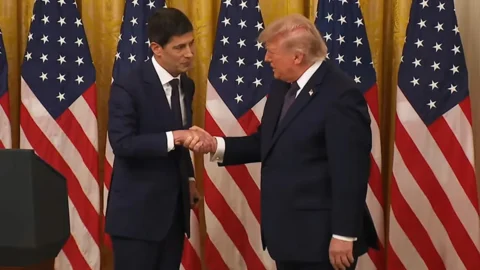
In 2016, Michigan, a traditional Democratic fiefdom, surprisingly won the victory of Donald Trump. Four years later Joe Biden he took revenge with 50,6 percent of the votes. But now? It is clear that the outcome of the negotiations on renewal of the employee contract of the Big 3 of Detroit (Ford, GM and the former Chrysler now controlled by Stellantis) will have a decisive influence on the voting orientations for the presidential elections in November. From here thewatch out for the visit that President Biden will make today to the pickets guarding one of the striking GM plants, the group led by his friend Mary Barra. As well as Donald Trump's quick reply that he will also go up to Detroit tomorrow. Not to defend the union's action, for goodness sake, but to accuse the White House of wanting to destroy US cars with incentives for electric cars.
The US auto strike: Joe Biden's visit today
The mother of all battles at work also feeds on this, followed with extreme attention by the Federal Reserve, worried that the wage demands of the blue collars (+40% in the next three years) do not create a dangerous precedent for the labor market, frustrating the central bank's efforts against inflation. But Shawn Fain, the union leader leading the strikes, found an unexpected ally this morning in the Wall Street Journal, the Bible of US capitalism controlled by the Murdoch family. In a front-page investigation, the newspaper notes that "the CEOs of the Big Three earned 300 times the average pay of their employees last year, more than in other sectors."
Here is the Wall Street Journal's ranking of the salaries of US auto CEOs
The ranking is led by Carlos Tavares, Stellantis' number one, which last year grossed 25 million dollars, or 365 times the gross income of its employees (around 68 thousand dollars), with a robust increase, around 70%, compared to when Peugeot alone was driven, before the integration with Fiat Chrysler. No less rich is the paycheck of Mary Barra who leads GM: 29 million dollars, equal to 362 times what one of its employees earns. A little "poorer" Jim Farley of Ford: $21 million, representing 281 Ford workers. Numbers that are even more impressive when compared with the decline in the real income of workers in the Big Three: -5,4% compared to 2019 according to the Economic Policy Institute. These data, in truth, only tell part of the reality: in some sectors, such as pharma, employee paychecks are much higher than in the automotive world, therefore the distance between bosses and employees is smaller. In the world of technology, salary is most often just one item of overall compensation, enriched by bonuses and stock options with a lower tax impact.
The fact remains that in 2019 Carlos Tavares, reports the US newspaper, earned "only" 219 times as much as his employee (the calculation is made on the basis of Stellantis' Dutch balance sheet accounts). But the final figure, replied a spokesperson for the group (the only one who wanted to comment on the news), is in line with the pay of other CEOs of the same level. Not only. Ninety percent of pay is performance-related, as are the annual bonuses (just over two billion dollars) that the company paid to employees in the form of an annual bonus.
The gap between CEO salaries and earnings is the basis of the union's demands
The gap between salaries and earnings at the top is undoubtedly one of the keys to explaining the UAW's "aggressive" platform which calls for an average increase of 36% in four years, a 32-hour week and much better treatment in terms of social security and healthcare and has equipped itself for a long season of strikes with an unprecedented formula. After the first protests in three different plants of the three companies, the struggle spread to 38 GM and Stellantis plants, chosen with the aim of blocking the distribution of spare parts. The Uaw wanted to avoid punishing Ford in this second round because the company came forward with proposals that were considered more dignified than the first contacts.
And Ford gives up the battery plant for US cars
But, surprisingly, it is Ford himself who has inflicted a blow low blow to the union on the day of Biden's visit. The company has announced plans to suspend construction of a battery factory in Marshall, Michigan for now. The reason? The demands of the union, which asks to also be able to enter these plants. But also the hostility of the Republicans, who contest the agreement with Catl, the Chinese battery giant, a sort of Trojan horse to attack the blue collars according to Trump's accusations. Biden, who has not yet obtained the official support of the union, has the burden of convincing the workers that the transition to electric cars, which is also generously subsidised, does not come at the expense of their rights.