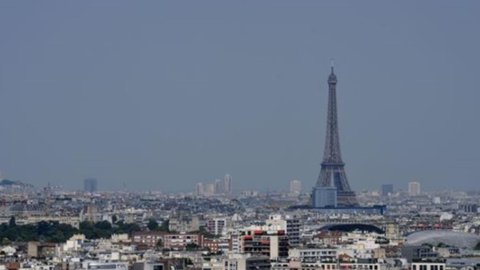
The arrival of tourists in the fourth quarter in Europe is at risk. The analysts of Mediobanca Securities they assume that the Paris terrorist attacks of 13 November and the fears of new attacks in Europe have a impact on the luxury goods sector, which is heavily dependent on international tourism and which is likely to be affected not only in France but throughout Europe.
This is especially important given that we are in the middle of the fourth quarter and Christmas season is approaching. Paris is the second largest city in terms of spending on luxury goods after New York and, more specifically, “purchases of luxury goods items are determined by a welfare factor that we find difficult to predict in the current scenario”.
According to official statistics from Global Blue, the tax-free shopping market is worth 48 billion euros (+20% in the first nine months of this year). France is the largest market in Europe and accounts for more than a quarter of the total. In Europe, the Chinese are the biggest spenders and their purchases were up 64% year-over-year in nine months and now account for 36% of the total. The good news this year is that US travelers are back, thanks to the strength of the dollar against the euro and are now in third place by nationality.
While in France shopping grew by 41% in the first nine months with spending by the Chinese registering an impressive +80% annually. Based on Mediobanca estimates, out of a total of 21 billion euros in turnover expected in 2015 for luxury companies covered by the investment bank, the business generated in Europe represents a third of the total and that in France around 930 million euro (or 4,5%) with Geox among the most exposed companies (11% of its turnover).
“While we know that all of these companies have flagship stores in Paris, given the modest contribution of French business to the total, we do not believe that a slowdown in work in the city is a real risk for a downgrade in consensus estimates for this year,” they specify. Mediobanca experts, remembering however that tourists represent 15% of the sector's turnover. So the current risky and uncertain geopolitical situation could compromise tourist flows.
Based on the Altagamma data, almost all markets are driven by tourist spending and Europe is the most exposed. Among the luxury companies covered by Mediobanca, the business generated by tourists accounts for 3,1 billion euros, or 15% of total turnover. This percentage is much higher (40-45%) for Ferragamo, Moncler and Prada which therefore can be more affected by a lower tourist flow.
Given that the travel retail is the channel that could be immediately impacted in the event of any restrictions on travel movements, Ferragamo would be the most affected company given that it has a higher percentage of its turnover in this channel (10% of revenues). In the event of a 10%/30% decline in sales to tourists, the sector's 2015 earnings would decrease by 3,5%/10%, with the names mentioned above (Prada, Moncler and Ferragamo) being the hardest hit with a decline in profits between 6% and 18%.
In summary, any possible drop in tourist flows throughout Europe generated by fear of terrorist attacks and the sense of uncertainty and insecurity related to such events "could materially affect business in Europe, especially now that the Christmas season is approaching", state the Mediobanca analysts who therefore advise in the current scenario to focus on those companies exposed to local demand, i.e. names that have a particularly interesting risk/return profile such as Yoox Net-a-Porter, a hedged stock with an outperform rating, and Luxottica, hedged with a neutral rating, while "considering this other risk factor, we remain cautious on Ferragamo, a hedged stock with a neutral rating".