South America has become in recent years one of the most attractive regions in terms of foreign investment, catalysing capital coming not only from large Western multinationals but also from the new great powers such as China and India which, driven by the large availability of raw materials and the newfound political stability, have contributed to the impetuous economic growth that has taken place over the past ten years . There is however the exception of a country which, despite the enormous wealth of raw materials and a natural vocation for internationalisation, seems to go against the trend, creating a climate which, if not hostile, is at least complicated for foreign investors.
It is of 'Argentina by Cristina Fernández de Kirchner, the "President" who, strengthened by the re-election by popular acclaim obtained last October, seems to want to continue decisively on the path of a return to the Peronist model, based on the strong interventionism of the State in the management of the economy. The first limitations on economic freedoms had already been noticed in the years of Kirchner's first mandate, with the nationalization of pension funds, the huge taxes on agricultural exports (true and almost the only engine of the impetuous recovery after the 2001-2002 crisis) and the Telecommunications Act which had restricted supply in the broadcasting sector. It is enough to quote one fact: Argentina is ranked 113th in the world in the World Bank's ranking for ease of undertaking economic activities.
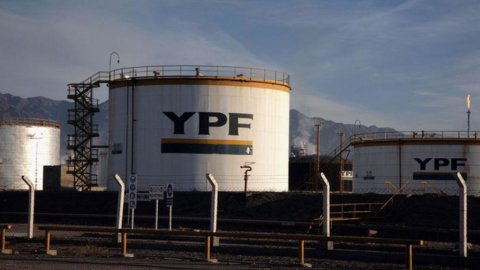
In recent weeks there is an event linked to the energy sector and which he sees in his sights the oil company YPF (Yacimientos Petrolíferos Fiscales), the main oil extraction and distribution company and its derivatives in the South American country. YPF, 57% controlled by the Spanish multinational Repsol and 25% by the Argentinean Eskenazi family, was the subject of a joint attack by the Government of Buenos Aires and the Provinces where there are major oil resources (Chubut, Santa Cruz , Neuquén, Mendoza, Salta and Rio Negro): in fact, the authorities argue that the company is not making sufficient investments in the territories in which it operates and that in recent months it has voluntarily limited its mining activities to keep prices higher. For this reason the Provinces in question have decided to withdraw some concessions given to YPF and just in the last few hours, the Argentine government has let the project of wanting to acquire at least a third of the shares of YPF leak, taking over the share of the Eskenazi family and taking advantage of the low value of the company: also due to the sharp falls suffered on the Argentine stock market in recent days, YPF is now worth $8,74 billion, less than half what it was worth last year.
repsol, on the other side, did not hesitate to defend himself by demonstrating how, data in hand, the lack of investments made in Argentina through the YPF would not be true. In reverse, planned investments for 2012 amount to 3,4 billion dollars (the highest level ever), with an increase of 500 million dollars compared to 2011. The President of Repsol-YPF, Antonio Brufau, went to Argentina in recent days to seek an agreement with the authorities, but the path towards the establishment of a joint venture mixed public-private now seems marked.
Kirchner like Chávez in Venezuela and Morales in Bolivia? If we are not yet faced with the threats of nationalizing hydrocarbons, it is certain that such an event will hardly be able to encourage the influx of new investments in the energy sector in Argentina. Beyond the dizzying growth of the economy in recent years, the South American country is having to deal with a growing energy deficit, a problem that has not been addressed in this period also due to the lack of infrastructure projects by the Government: high energy costs are therefore one of the reasons why Argentina is plagued by inflation which, despite the false official statistics, hovers around 30%.
In this scenario that is not exactly clear for foreign investments, even Italian companies could be damaged. Leader in the Argentine energy sector, especially in the production of electricity distribution, is Endesa, a company controlled by Enel since 2009 which represents the first private operator in the Latin American continent. Also Endesa/Enel for several months he has been facing a tug of war with the local authorities which prevent the company from raising rates further. This increase is requested by the company by virtue of the investments made and the increase in management costs caused by inflation. Endesa's Ebitda margin in Argentina is negative and testifies to the difficulties the company is facing, although exposure to the Argentine market is relatively limited, representing only 3% of Ebitda in Latin America.
Argentina needs foreign investment to provide further impetus to its growth and nationalizations do not seem the most appropriate response to provide a solution to galloping inflation: further increases in public spending would be harmful for a country that has based a large part of its social policies on welfare and subsidies. On the other, Italian investments in the energy sector could be discouraged and our companies could find it convenient to bet everything on neighboring countries such as Chile, where there is a very different climate towards foreign capital.
Follow the development of the news on the Argentinian sites: ElCronista