Il Orangerie Museum (Paris) from 15 September 2021 to 10 January 2022 presents the exhibition “
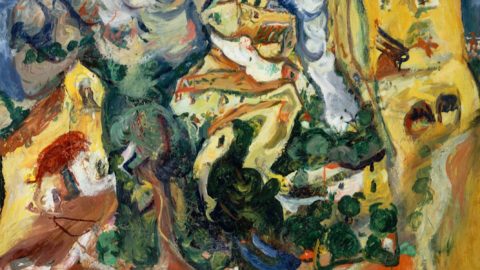
Chaïm Soutine / Willem de Kooning, the painting incarnate” with works by Chaïm Soutine (1893–1943), a School of Paris painter of Russian origin (now Belarus) and by Willem de Kooning (1904-1997), an American abstract expressionist of Dutch origin. Specifically, the exhibition will explore the impact of Soutine's painting on the pictorial vision of the great American artist.
Soutine in fact marked the generation of post-war painters, both through the expressive power of his brush and through his figure as a "cursed artist" grappling with the vicissitudes and excesses of the Parisian bohème. His work was particularly exhibited in the United States between the 30s and 50s, when the figurative artist of the European tradition was reinterpreted in the light of new artistic theories. The gestural painting and the pronounced impasto of Soutine's canvases lead critics and curators to proclaim him a "prophet", herald of American abstract expressionism.
It was precisely at the beginning of the 50s that Willem de Kooning embarked on the pictorial project of Woman, a series of canvases in which a singular expressionism is defined, halfway between figuration and abstraction. The elaboration of this new language corresponds to the moment in which the painter summons the artistic universe of Chaïm Soutine and confronts it. De Kooning discovered his predecessor's paintings as early as the 30s, then at the retrospective that consecrated the painter at the Museum of Modern Art in New York in 1950. He was later particularly struck by the presentation of Soutine's canvases in the collections of the Barnes Foundation in Philadelphia , where he went with his wife Elaine in June 1952.
Better than any other artist of his generation, De Kooning was able to grasp the tension between the two apparently opposite poles of Soutine's work: a search for structure combined with a passionate relationship with the history of art, and a marked informal tendency. Soutine's work then became a permanent point of reference for the American artist. De Kooning, who tries to free his own painting from the figurative art / abstract art antagonism by inaugurating an original 'third way', finds in Soutine's art a legitimization of his own practice.
Source Musée d'Orsay (Paris)