April 20, 1964 marks an epochal moment in world gastronomic history: 60 years ago the first jar of Nutella came out of the factory in Alba, Piedmont, Italy. That day, the unmistakable gianduia cream made its debut, revolutionizing the spreadable cream market. Since that moment, Nutella has conquered the palates of millions of people around the world, becoming aglobal culinary icon. Its soft and creamy consistency, enriched by the unmistakable taste of chocolate and hazelnuts, has made this spreadable cream a must-have in the breakfasts (and not only) of many families.
Il Nutella's success was immediate: in 1965 it was launched in Germany, achieving enormous success, and the following year it was also introduced in France.
Nutella is there best-selling spread cream in the world, having a annual production of 365.000 tons. Its versatility in the kitchen also makes it suitable for one wide range of recipes, from simple slices of bread buttered with a layer of Nutella, to more elaborate cakes and desserts. It has also become a popular option for filling cakes, croissants, pancakes and even ice cream.
Nutella: the origins
The history of Nutella dates back to the 40s, when the pastry chef Pietro Ferrero, founder of Ferrero SpA, was looking for a creative solution to the chocolate shortage caused by the Second World War. Nutella originated from an earlier cream called Pasta Giandujot and later SuperCrema. In 1946, he had the idea of creating a hazelnut cream that was tasty and convenient. After years of experimentation, in 1964 Pietro's son, Michele ferrero, perfected the recipe and presented it to the world under the name Nutella. The name “Nutella” comes from the combination of the English word “nut” with the Italian suffix “-ella”, creating a catchy and catchy name.
Nutella: the iconic glass jar
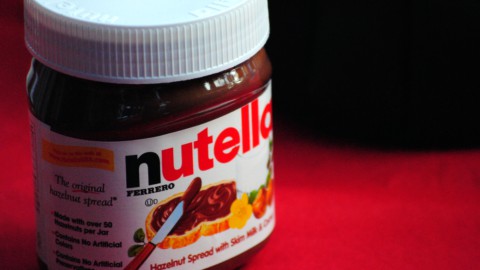
From the early days, Ferrero has adopted 250 ml glass containers for the 200 gram format of Nutella, encouraging the purchase of the product. After being emptied, the containers can be reused as household glasses. Soon, these containers became collection items featuring multicolored images, initially silk-screened with abstract or naturalistic themes until the 1990s.
Subsequently, they were replaced by images of animated characters, with some exceptions, while maintaining the use of comic-like images merchandising strategy, particularly for the 200 gram format, to date.
Nutella in the world
Nutella is the most popular spreadable cream in the world, and according to the OECD it represents a example of success in the global economy, with nine factories distributed all over the world and ingredients coming from different parts of the planet. Nutella is sold in over 160 countries. It is mainly used as an accompaniment to bread, biscuits, desserts and fruit, but over the years numerous recipes have been developed that include it in cakes, pastries and crêpes.
In many European nations, Nutella is not just a food, but a consolidated cultural phenomenon. Despite changes in tastes and trends over time, the recipe, packaging and public appreciation for Nutella have remained constant.
Over time, Nutella has become more than a simple spreadable cream: it is a symbol of joy, sharing and family tradition that representsexcellence of Made in Italy in the world. Its captivating advertising campaigns and its connection with moments of happiness and conviviality have then contributed to consolidating its positive image in the hearts of consumers of all ages.
February 5th is World Nutella Day
Nutella remains extremely popular and is often mentioned in novels, songs and films. In Italy, in 2014, a commemorative stamp for its 50th anniversary, while in 2021 the State Mint dedicated three 5 euro coins with Nutella.
February 5th has instead become Nutella day, it is celebrated all over the world World Nutella Day. The “holiday” was established in 2007 by an American blogger.
In 2010, the European Parliament passed legislation requiring foods high in fat and sugar to include a warning about the best nutritional profile. This initiative was criticized by Ferrero, which created the committee "Hands off Nutella“, supported by the Piedmont region and the former minister Andrea Ronchi. Nutella has also become a key ingredient in Nutella Biscuits, launched by Ferrero in 2019.
In 2021, on the occasion of World Nutella Day, to celebrate the 75th anniversary of Ferrero, it was issued a silver coin by the Italian Ministry of Economy and Finance, minted by the State Printing and Mint Institute, dedicated to Nutella and Ferrero.
In addition to delighting the palates of millions of people, Ferrero, the company behind Nutella, has also made a commitment to sustainability. Through programs such as “Ferrero Farming Values“, is committed to promoting sustainable agricultural practices and improving the living conditions of the agricultural communities involved in the production of the raw materials used to create Nutella.
Nutella: the ingredients
The composition of ingredients and their percentage in the product vary from country to country. While sugar and palm oil permanently represent over 50% of the product, in Anglo-Saxon nations Nutella contains soy-based ingredients. In Italy, the law prevents labeling as "chocolate cream" since it does not reach the minimum quantity of cocoa required.
La composition of Nutella includes:
- sugar
- Palm oil
- hazelnuts (13%)
- skimmed milk powder (8,7%)
- low-fat cocoa (7,4%)
- lecithins (soy)
- teaspoon vanilla extract
The first jar of Nutella on April 20, 1964 therefore began a timeless culinary history that continues to delight future generations. More than sixty years after its debut, Nutella remains loved by adults and children.