The initiative is part of the cultural programme linked to the XXV Olympic Winter Games Milan-Cortina 2026, enhancing the dialogue between art, landscape, and local identity. It is an unprecedented cultural initiative in the Italian exhibition landscape. “Titian and the Landscape”, the exhibition that from On 23 January 2026 inaugurated in Pieve di Cadore, birthplace of Titian Vecellio (1488/90–1576), the celebrations for the 450 years since the death of the masterThe initiative is promoted by the Magnifica Comunità di Cadore and the Fondazione Centro Studi Tiziano e Cadore, with the collaboration of the Municipality of Pieve di Cadore and the fundamental participation of the Municipality of Ancona, the lending body, in addition to the general organization of Villaggio Globale International. The project is part of the program of Cultural Olympicsthe gates to XXV Olympic Winter Games Milan-Cortina 2026.
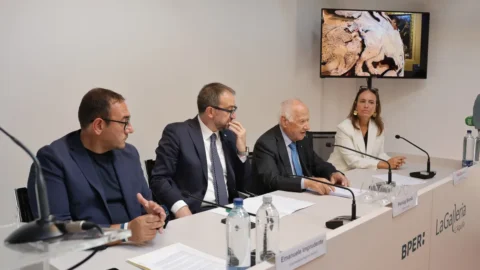
The exhibition was presented in Venice, at the Athenso Veneto, together with the Municipality of Ancona. At the heart of the exhibition is an unprecedented and highly stimulating dialogue between two key works of Titian's production, both dated 1520., capable of offering new keys to understanding the role of landscape in the master's painting.
The altarpiece allows us to admire the first modern pictorial view of the Venice lagoon
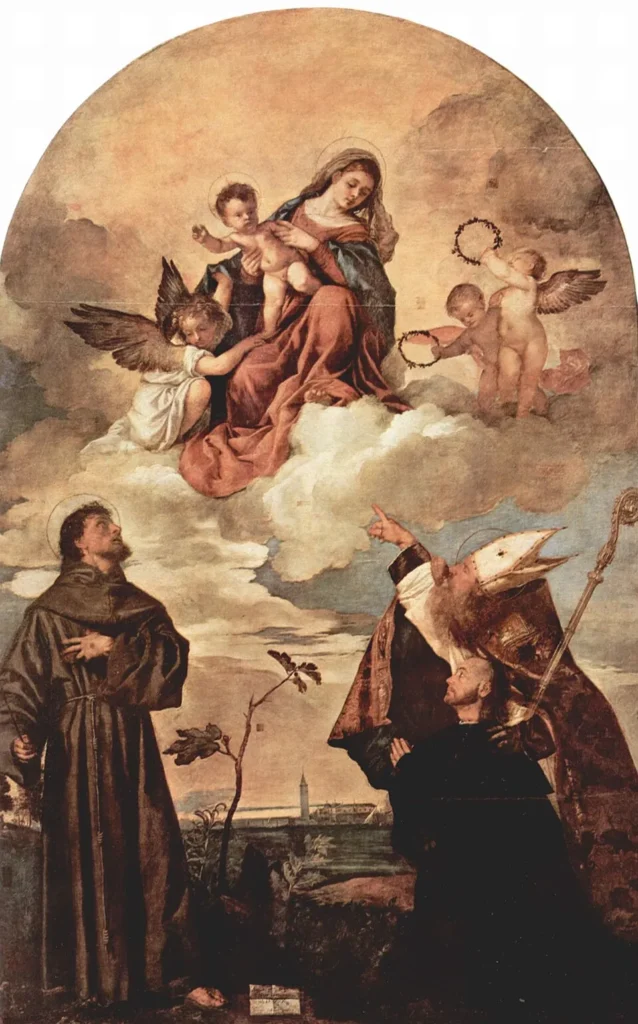
Confronting the monumental Submersion of the Pharaoh will in fact be the Pala Goiters, masterpiece from the Pinacoteca The exhibition, titled "Landscape," is the first of two related exhibitions conceived by Bernard Aikema and curated by Thomas Dalla Costa, who attended the press conference along with Renzo Bortolot, President of the Magnifica Comunità di Cadore; Sindi Manushi, Mayor of Pieve di Cadore; Marta Paraventi, Councilor for Culture of the Municipality of Ancona; Maria Giovanna Coletti, President of the Fondazione Centro Studi Tiziano e Cadore; Don Paolo Barbisan, Director of Cultural Heritage of the Diocese of Treviso; and Melissa Conn, Director of Save Venice – Venice Office. The second exhibition is scheduled for July 2026, followed by a conference in early 2027, completing a project that aims to explore new research horizons on a well-known yet still unsolved theme, intertwining historical-artistic, socio-cultural, and formal perspectives.
«With the loan of the Gozzi Palace – explains the Councillor for Culture of the Municipality of Ancona, Marta Paraventi – Ancona makes a gesture of great cultural responsibility and institutional vision, just as it is a candidate to become Italian Capital of Culture 2028We are talking about an extraordinary work not only for its pictorial quality, but also because it bears the unique signature “Titianus Cadorinus”, making it a key document for the study of the artist and his identity. During the absence of the Gozzi Altarpiece, the “Podesti” Art Gallery will host Titian's Annunciation from the Treviso Cathedral, recently restored thanks to the support of Save Venice, giving life to a concrete project of cultural and scientific exchange.
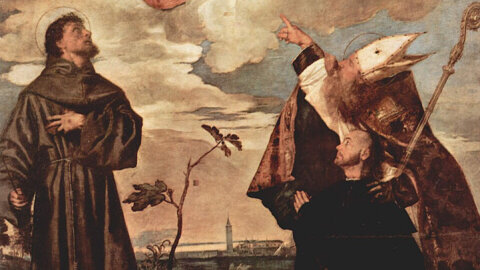
Naturally, great attention was paid to the Pala Gozzi:Virgin and Child in Glory, Saints Francis and Blaise, and the donor Alvise Gozzi, an imposing oil painting over three metres high (324 x 207 cm), created in 1520 for the church of San Francesco ad Alto in Ancona and never before exhibited in Titian's birthplace. Commissioned by the Ragusa merchant Alvise Gozzi, the work presents a complex double landscape: on one side a hinterland of Venetian origin, on the other a maritime view dominated by the profile of a city emerging from the water, a clear reference to the Serenissima.
Recent diagnostic investigations, presented for the first time on this occasion, confirm the extraordinary modernity of the work, in which the landscape dynamically integrates with the sacred scene through light, color, and atmospheric perspective, anticipating fundamental developments in European painting. Added to its artistic value is a political and eschatological significance: in 1520, the painting celebrates the return of Venetian rule over the Adriatic and the resumption of trade relations with Ancona. Completing the comparison is the spectacular Submersion of the Pharaoh in the Red Sea, large woodcut in twelve sheets (120 x 220 cm), engraved by an anonymous engraver based on a design by Titian (ca. 1515) and preserved in the Civic Museums of Bassano del Grappa, considered one of the most extraordinary monumental prints of all time.