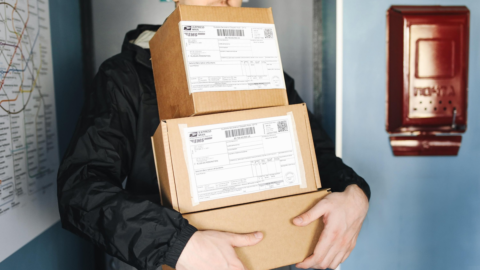
La Italian tax on extra-EU mini-parcels will not start in JulyThe Council of Ministers of 22 June decided to postpone to October 1st the entry into force of the contribution of 2 euros on small shipments up to €150 from non-European countries. The measure, introduced with the latest budget law, had already been suspended and then extended. Now comes a new slip, inserted in the Infrastructure decree, with the aim of avoiding that the national price increase is immediately added to the new European tariff of 3 eurosThe reason is precisely this last one. Without the postponement, starting from July 1st, a tax on small online purchases from outside the EU could have been created. double withdrawal: 3 euros of European duty plus 2 euros of Italian contribution, for a total of 5 euros per shipment, to which VAT should be added. A combination that companies and industry associations had already dubbed the "3+2" effect.
Il the government has therefore chosen to take its timeFor the summer quarter, e-commerce shipments from non-EU countries will only be subject to the EU duty. The Italian tax remains suspended until October, barring further measures.
What is the Italian tax on low-cost parcels?
The national contribution of 2 euros concerns the parcels with a declared value of up to 150 euros coming from non-EU countriesThe measure is designed to primarily target the large influx of low-cost purchases linked to international e-commerce and ultra-fast fashion, with a particular focus on Chinese platforms like Temu and Shein. The target is sales models that have transformed the market for small online purchases, making very small and frequent shipments commonplace. The stated rationale is to support the costs associated with importing small shipments and counteract competition deemed unbalanced compared to European operators.
The measure, however, immediately met with many resistancesThe logistics sector fears a loss of traffic to Italy, with the risk that orders will be redirected to other European hubs to avoid the national contribution. Confetra warned that the tax could "cause a collapse of at least 50% of goods traffic and cause the State to lose 25 million euros". Aice-Confcommercio asked to further extend or cancel the national contribution to avoid the “3+2” tariff effect.
The postponement decided by the Council of Ministers is precisely one step in this direction. Aice-Confcommercio welcomed the decision, calling it a decision that "avoids the 3+2 effect, i.e., the sum of the specific European duty of €3 and the national contribution, prevents traffic losses for the Italian logistics system, and avoids market distortions and thus conditions of unfair competition."
Extra-EU parcel tax: a 3-euro European duty comes into effect on July 1st.
The Italian postponement does not mean that extra-EU mini-parcels will remain free of new costs. The European duty of 3 euros will come into force on 1 July. on items contained in shipments worth up to €150. Brussels has chosen this path to overcome the customs exemption on low-value goods, which is no longer considered adequate for the growth of e-commerce.
The European Commission explained that this is "a fixed duty applied per item (not per package) for shipments with a value of up to 150 euros." This is a crucial point, because the calculation it doesn't simply depend on the number of pieces contents in the package, but from the tariff classification of articlesIf a shipment contains five T-shirts, the duty will be 3 euros because they are the same type of item. If it contains a T-shirt and a watch, the duty will increase to 6 euros because the items belong to two different tariff classifications.
The Commission also clarified who pays. the person responsible for the payment is the "declarant of the asset", that is, the seller, the importer or the indirect representative. The final consumer should be required to pay directly only in cases defined as “very rare”, linked to the online declaration systems made available by some Member States.
The European duty will remain in force until 1 July 2028, when the new European Union customs data hub for e-commerce is expected to become operational. Until then, the flat-rate levy will serve to cover the transitional phase of the customs reform.
Why Europe is cracking down on small online purchases
The crackdown stems from the explosion of online micro-purchases from non-EU countries. According to the European Commission, e-commerce imports have grown rapidly in recent years, reaching almost 5,9 billion articles in 2025The aim is to "ensure a level playing field" between European operators and non-EU sellers. The duty exemption threshold below 150 euros had been introduced to avoid an excessive administrative burden on customsWith the boom in online platforms, however, that threshold has become a competitive advantage for some business models. Brussels maintains that the reform will also serve to strengthen controls on goods that may pose health risks, intellectual property infringements, or compliance issues with European regulations.
Il the most sensitive issue remains ChinaA huge share of small packages purchased online comes from there. In 2025, out of 396 million items ordered by Italians from outside the EU, 98% came from China, while a quarter of the shipments contained clothing.
For now, then, Italy avoids immediate double taxation. But the game is not overStarting October 1st, in the absence of new extensions or a comprehensive reorganization of the rules, the €2 national contribution could also be reinstated. And it is precisely on that date that the next tug-of-war between the government, logistics, platforms, and consumers will focus.