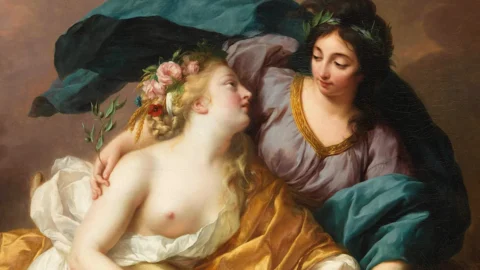
Art and stock markets seem to belong to very different worlds. On one side, we find creativity, aesthetic expression, and cultural research; on the other, profit, investment, and financial speculation. However, a closer look at the history and functioning of modern societies reveals a profound and complex relationship between these two spheres, united not only by their economic dimension but also by their attraction to innovation and change. Since the modern age, the development of financial markets has indirectly contributed to artistic growth. The great mercantile and financial families, enriched through trade and investments, often financed artists, architects, and intellectuals. Patronage was made possible precisely by the accumulation of wealth generated by economic activities. In this sense, financial prosperity represented a favorable condition for artistic production and the dissemination of culture.
In the contemporary world the bond has further strengthened
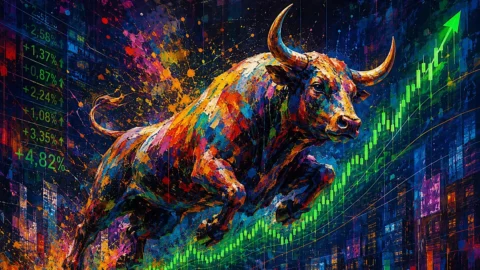
The art market has become a global economic sector in which works, collections, and artists are also valued in financial terms. Many investors purchase paintings, sculptures, or photographs not only for their aesthetic value, but also as a form of investment. Some works by artists such as Pablo Picasso, Andy Warhol, and Jean-Michel Basquiat have reached prices comparable to those of major financial assets, demonstrating how art can also be considered a store of value. Stock markets influence the art market through economic cycles. When financial markets are rising and investors have greater resources, demand for artworks generally increases. Conversely, during financial crises, the art market can slow down, as collectors and investors tend to reduce expenditures considered non-essential. There is therefore a correlation between the health of financial markets and the performance of art sales. An even more significant element that unites the two sectors is their fascination with new technologies. Both the financial and art markets place great value on innovation, considering it a driver of growth and transformation. On the stock exchanges, technology companies attract investors because they promise to revolutionize production processes, communication, and daily life. Their market value often depends not only on current performance, but above all on expectations for their future development.
The art world has also been profoundly influenced by technological innovations
Digital art, virtual reality, artificial intelligence, and new forms of creation and distribution have opened up unprecedented creative and economic horizons. Collectors and investors are attracted to these innovative art forms because they perceive them as expressions of the future and potential sources of growing value. In both cases, technology contributes to the creation of economic value through an intangible element: expectation. Investors purchase shares in innovative companies, confident in their ability to generate future wealth; similarly, collectors and art market participants place value on works that incorporate innovative technological languages, betting on their cultural and commercial relevance over time. The allure of innovation thus becomes a factor that fuels both the price of financial securities and the price of works of art. Another important point of contact concerns the way value is constructed. In the stock market, the price of a stock depends on investors' expectations about a company's future. Similarly, the value of a work of art is determined not only by production costs, but above all by the artist's reputation, the work's rarity, market demand, and collectors' expectations. In both cases, the price is influenced by psychological, cultural, and social factors, as well as economic ones. However, there are also fundamental differences. Stocks represent ownership interests in companies that produce goods or services and generate income. Works of art, on the other hand, possess primarily cultural, symbolic, and aesthetic value. Reducing art to a mere financial instrument risks impoverishing its meaning and encouraging speculative behavior that can obscure its cultural value.
The continuous interaction of three factors: Stock Market, Art, Technology
The wealth generated by financial markets can support artistic production, while art itself can become an investment asset. Both sectors place value on expectations, trust, and the ability to imagine the future—elements that today find a major driver in technology. Despite this, art retains a dimension that goes beyond economic value: it represents a form of human expression capable of narrating the history, emotions, and values of societies. “For this reason, the dialogue between finance and art must be interpreted as a delicate balance between profit and culture, between innovation and creativity, between the market and human sensitivity.”