Ferenczy cannot be rigidly classified into any one movement: he is not entirely a Naturalist, nor a Symbolist, Impressionist, Nabi, or Fauvist, but he is, in part, all of them. This fusion of influences reflects the cultural cosmopolitanism typical of the fin-de-siècle period. Founder of an artists' colony in the heart of the Hungarian countryside, he made plein air painting one of his main practices, seeking in nature the expression of a harmonious and unified spirituality. In his works, the sun often plays a central role, becoming the protagonist of his evocative depictions of the landscape.
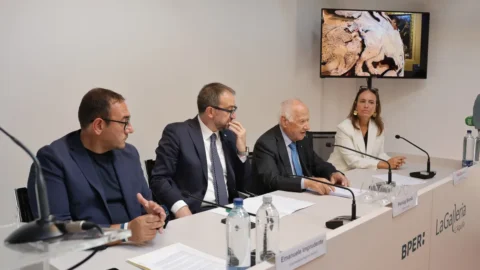
The exhibition Károly Ferenczy, Hungarian Modernity from 14 April to 16 September 2026
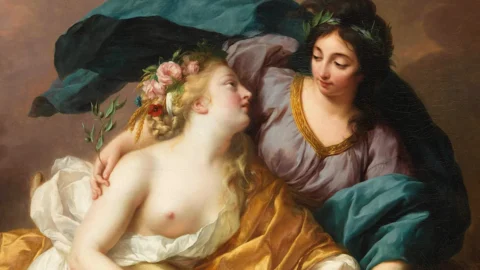
The exhibition, comprising nearly one hundred and forty works, presents the diverse facets of his work: landscapes, portraits, family scenes, biblical subjects, nudes, and caricatures, while also highlighting his pivotal role in the birth of the Hungarian modernist school. The exhibition was created in collaboration with the Museum of Fine Arts in Budapest and the Hungarian National Gallery. Organized chronologically, the exhibition is divided into thematic sections that trace the stylistic evolution of Károly Ferenczy, from his early works, influenced by his travels in France and Italy, to the final phase of his career. The exhibition opens with a self-portrait by Ferenczy, flanked by two works in which the artist directs the pose of his model. This introduction immediately highlights the two fundamental poles of his production: plein air painting and studio work, elements that would characterize his entire career. The first rooms present his youthful works, created after his formative travels, particularly in Italy, and his early works in Szentendre, Hungary. These paintings testify to the visual culture acquired through contact with the great European masters and the lasting influence of his studies in Paris at the Académie Julian. The exhibition continues with a section dedicated to portraits of his closest loved ones—his wife, father, and children—which reveal an intimate and attentive gaze. This personal dimension connects to the period spent in Monaco, a crucial moment in his artistic development. Here, his language approaches Symbolism, closely connected to nature, where the forest becomes a central motif. Key works such as Birdsong (1893) and Orpheus (1894) testify to this transformation, marking a new narrative and spiritual depth. The move to the Nagybánya art colony in 1896 represents another decisive moment in his career. Here Ferenczy reaches full artistic maturity. The works of this period highlight his originality: religious subjects set in contemporary landscapes, the coexistence of different temporal dimensions, and a widespread spirituality inserted into everyday life. The biblical themes, recurring in his production, find a unique form of expression in this phase, through the fusion of sacred iconography, observation of nature, and references to the modern world.
Dialogue between painting and literature
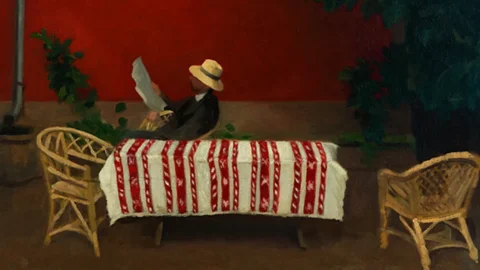
The exhibition also highlights the dialogue between painting and literature within the Nagybánya group, particularly through Ferenczy's illustrations for József Kiss's poems. This aspect underscores his deeply intellectual nature, his passion for reading, and his vast knowledge of European literature. This cultural openness is also reflected in the scenes of everyday life and the characters observed in and around Nagybánya: farmers, woodcutters, Roma, horsemen, and craftsmen. Presented alongside works by other contemporary Hungarian artists, these works highlight his unique vision and central role in the development of Hungarian artistic modernity. After 1900, Ferenczy's painting entered a particularly luminous phase. Landscapes, swimming scenes, rivers, and country houses express a new serenity and a complete mastery of color and composition. At the same time, the artist continued to devote himself to portraiture, broadening his gaze to the intellectual and artistic circles he frequented, and also developing a freer and more satirical approach in his caricatures, which reveal a more intimate and ironic side to his work. From 1906 onwards, the final years of his career were marked by a new exploration of the representation of the body. Female nudes, executed in a classical studio style, were combined with male figures placed in dynamic contexts such as the circus or sports, where movement became a central element. This reflection also culminated in the ambitious project of Pietà, on which he worked intensively between 1913 and 1916. It is a work on the border between religious and historical painting, considered his last great masterpiece, left unfinished due to his death during the First World War. The exhibition concludes with a series of late landscapes, characterized by a strong chromatic intensity. In these works, nature becomes vibrant and almost meditative, testifying to the artist's full pictorial maturity. The exhibition concludes with The Red Wall IV (1910), an emblematic work for the strength of its color and the contemplative atmosphere that distinguishes it, leaving visitors with a lasting memory of the art of this important protagonist of Central European modernity. The exhibition was organized in collaboration with the Museum of Fine Arts in Budapest and the Hungarian National Gallery.