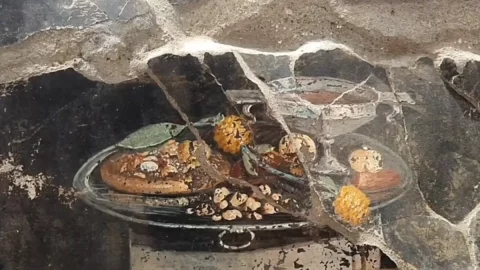
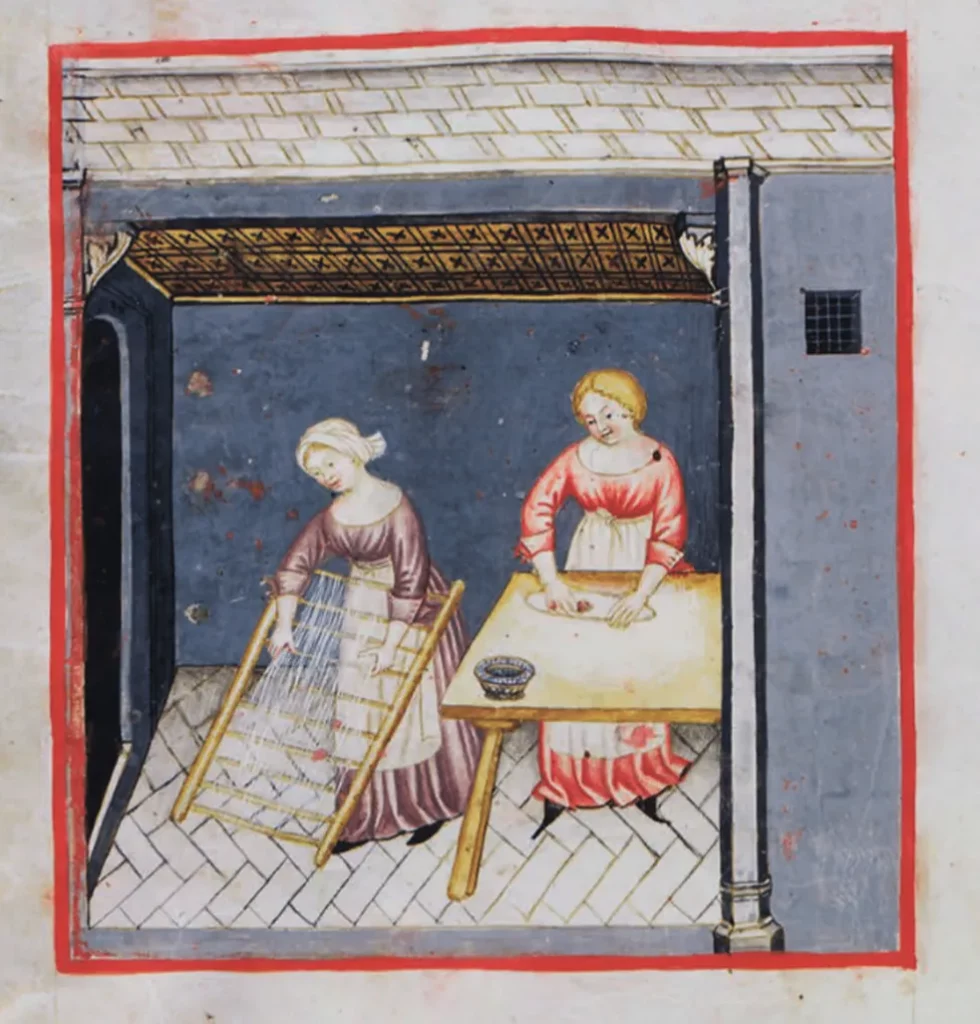
La recent discovery of the Pompeii fresco suffered referred to by its shape and its colors to a pizza. However, a dish cannot be confused with its name. The Romans knew puff pastry very well to which they attributed the name of “tracta”, but they didn't use the rolling pin, whose use is only documented in a miniature shown in the teatrum sanitatis in the mid-fifteenth century.
The Romans knew puff pastry well and it was handmade, the rolling pin appears in the XNUMXth century
The term “pizza” (duodecim pizze) is mentioned first in a mill lease agreement located near the Garigliano river and dating back to 997 AD However, during the Middle Ages there are numerous documents that report the term "picça" and "picza" which a vassal should bestow on his feudal lord on the occasion of the festivities.
The mysterious object depicted in the fresco can reasonably be interpreted in the light of a poem erroneously attributed to Viriglio such as a crouton.
The mysterious object depicted in the fresco can reasonably be interpreted in the light of a poem erroneously attributed to Viriglio like a crouton. It is the only one in Latin literature that faithfully reports all the operations and gestures a servant intent on preparing croutons
levi tum protinus illam
componit tabula, tepidas super ingesit undas,
contrahit admixtos nunc sources atque flours,
transversat duration manu liquidaque coata,
interdum grumos spargit salt. iamque subactum
raise opus palmisque suum dilatat in orbem
et notat impressis aequo discriminate quadris.
infert inde fire (Scybale mundaverat aptum
ante locum) testisque tegit, super aggerat ignis.
Here then is the maid spreads the flour on a pastry board and adds some warm water and mixes water and flour and turns the dough hardened by hand and compacted by the water, then adds salt and subsequently lifts the kneaded dough and with the hand forming a circle and detaches the squares at equal distances. He puts them into cooking (Scibale had previously cleaned up the suitable place) and covers them with a terracotta bell on which he places some embers.
The cooking was carried out under a terracotta bell called in Latin "clibano"
The cooking is done not over the fire in the fireplace, but under a terracotta bell called "clibano" in Latin and that archeology has returned to us in numerous specimens. They are small bells for domestic use only, since in the Pompeian era the bakers of the time (pistores) had large ovens for baking larger loaves.
On those croutons cut from a sheet of water, flour and salt, the poem adds dill and cheese (traiectus medium sparto sed caseus orbem et vetus astricti fascis pendebat aneti) and this was the breakfast of our vilicus who knew how to garden of simple vegetables.
More than pizza, it would be more correct to speak of croutons or round biscuits (which Apicius liked)
That the fresco depicts simple round biscuits of pasta we can be comforted by Apicius which in his fifth book expressly says “dry three discs of dough” (tres orbiculos tractae siccas).
La archaic Greek cuisine already knew the term “pitta” (πίττα) which indicated a simple flattened tablet; but the flat breads were the "placentas" (πλακοῦς) larger than a simple biscuit.
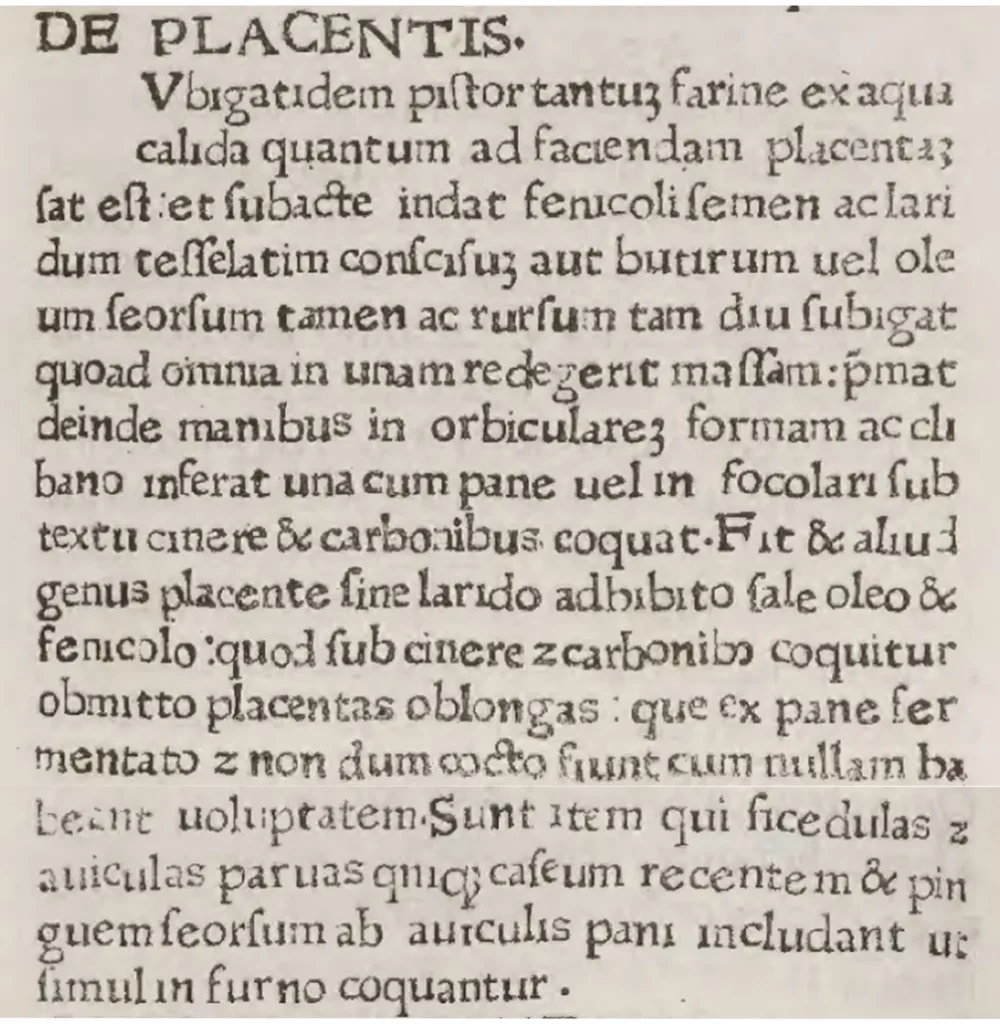
We will have to wait for Platina who, around 1450, gives us a recipe for the placenta more similar to a modern focaccia.
In short, it's quick, therefore, to say pizza, but the story is another.