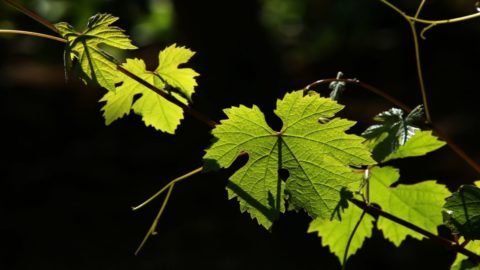
The recovery of Grignolino has begun, here you are Monferace, wine with a noble, rebellious and irreverent spirit. Grignolino, with a centuries-old history behind it, known in Piedmont since the Middle Ages under the name of Barbesino, condemned to end up in the shadow of the more profitable Barbera, shakes off years of oblivion with the intention of assuming a respectable position within the national wine production and redeems its image of light wine, undervalued by the market, for establish itself as a wine for long aging.
Wine loved by great characters, starting with King Umberto I who celebrated its qualities of excellence at the Asti fair, to Giovanni Lanza, president of the board at the time of the breach of Porta Pia, to arrive at Giovanni Agnelli who proposed it with refined pride to his guests, a Nils Liedholm who was its producer, not to mention – and sorry if it's not much – of Pope Francesco whose grandfather produced Grignolino in Portacomaro, in the province of Asti, today Grignolino aims to take his revenge thanks to a group of twelve producers who have rekindled the spotlight of consumers on this vine which represents a piece of Piedmontese enology history.
A wine of great quality and great potential but also difficult wine. It is one of the grapes that requires more care in the vineyard. “Anarchist and individualist“, called it Veronelli who also greatly appreciated it, referring to the problem of cultivating vines that require particular soils and climates, which adapt with difficulty to different rootstocks, which do not guarantee a constant production of grapes. And for this he also called him "Headhead". On the other hand, the same etymology of the name makes it derive from "grignole" which in the local dialect means grape seeds of which the plant abounds.
It should be added that the vine is particularly sensitive to diseases, in particular to gray mould, favored by the compactness of the bunch, and this makes it clear why the cultivation of Grignolino which has also known widespread between the 500th and 600th centuries when it was the basis of the famous "chiaretti" appreciated throughout Piedmont, has become rarer over time due to its low productivity, also by virtue of the fact that many producers, interpreting it as a light wine to be drunk young, aimed to obtain high grape yields from the vineyards, to the detriment of quality.
The action taken by the group of Grignolino producers who have now decided to join forces and create a network to launch Monferace on the market, which can be called soonly if produced from 100% Grignolino grapes after a minimum aging period of 40 months, calculated from 1 November of the harvest year, of which at least 24 months in wooden barrels.
“Monferace – he declares Guido Carlo Alleva successful lawyer who converted to wine about fifteen years ago and now owns one model company, the Santa Caterina Estate in Grazzano Badoglio – is a dream born among the hills and castles of Monferrato. And the project of a group of courageous winemakers who, for years, have loved, believed in and invested in the ups and downs of vineyards between Casale Monferrato, Alessandria and Asti, in the heart of Monferrato Aleramico. A geologically coherent territory, limited to 24 municipalities straddling the provinces of Alessandria and Asti recognized as a UNESCO World Heritage Site”.
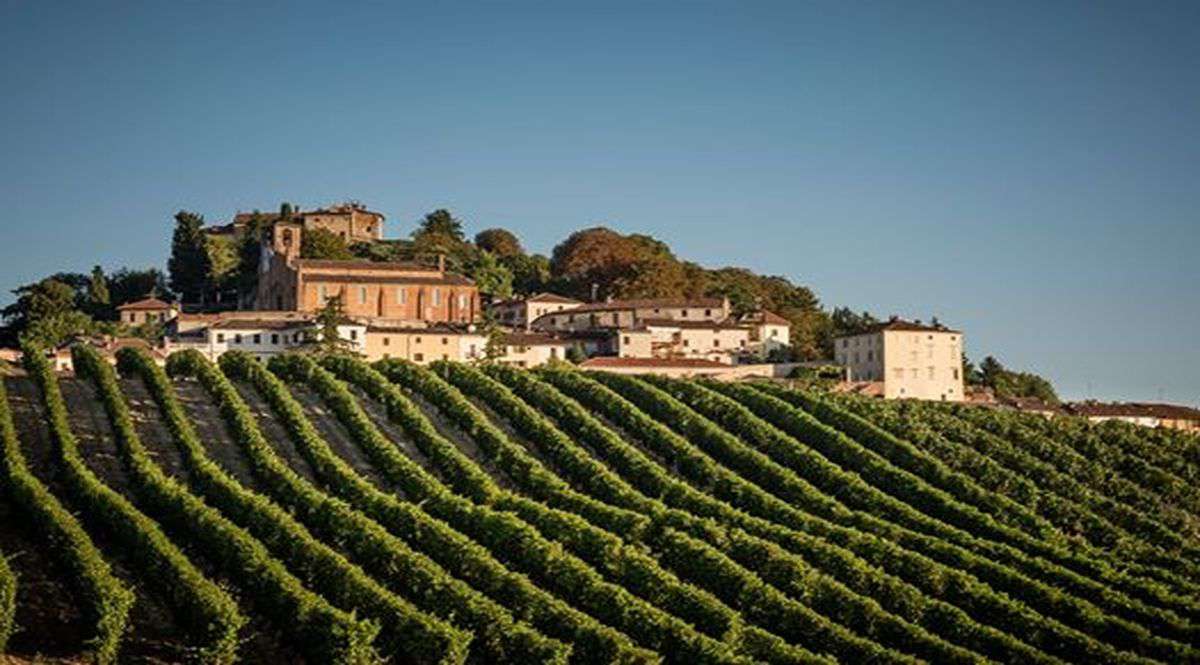
The chosen name, Monferace, has a precise meaning and encompasses all philosophy which moved the group of entrepreneurs: it is the ancient name of the Aleramic Monferrato, taken from the sixteenth-century "Descripton of all of Italy" by Leandro Alberti. But Monferace is not just wine, it is something more articulated and complex, it is a pact between winemakers, entrepreneurs, men and women "who live, breathe and love this land: Monferrato.
An alliance that unites passions and common objectives: to raise awareness of being a unique territory capable of an important tourist welcome. This is why we speak of a "territorial project" and not just a wine because it involves a land rich in history and mysteries, vineyards and castles, Romanesque churches and paths of worship, infernot and casot, declared World Heritage Site by Unesco”. The ascertained history of Grignolino, formerly called Barbesino, dates back to at least 1249 (with acclaimed writings), even if there are even traces of the eighth century AD. c.
“The passion for this vine among the Monferrato winemakers – adds the lawyer Alleva – has always been absolute, as has the respect and awareness of its potential. The history of Grignolino itself is particular: it was much loved by the Savoys, at whose table in the Royal Palace of Turin it was served as it was considered one of the great Piedmontese red wines in the last century.
Numerous ampelographic and oenological texts of the 800th century include it, in fact, among the "very fine and noble" wines of Piedmont and describe its great aging qualities when taken from the best exposed vineyards. In numerous international and national competitions, between the 800s and 900s, for example, Grignolini aged for a long time and dating back to harvests even more than 10 years earlier were awarded.
In a 1966 treatise on Italian wines (Rebaudengo) it is widely acknowledged that the best Grignolino wines, produced in suitable territories such as that of Monferace, reach great levels of evolution when they are "aged two years in barrels and three years in bottles" . To support, promote and disseminate this project, the Monferace Association was established in February 2016.
There are twelve founding members, inspired by the oenologist Mario Ronco, including ten producers: Santa Caterina estate of Grazzano Badoglio (At), Castle of Uviglie of Rosignano Monferrato (Al), I agree of Vignale Monferrato (Al), The Tenaglia estate of Serralunga di Crea (Al), vicar of Treville (Al), Alemat of Ponzano Monferrato (Al), La Fiammenga estate of Penango (At), Agricola Sulin of Grazzano Badoglio (At), Brothers Natta of Grazzano Badoglio (At), Angelini Paul of Ozzano Monferrato (Al)
The main objectives - explains the lawyer Alleva - are the communication and dissemination of Monferace and the creation of an entrepreneurial network in Monferrato, the production area, which allows a relaunch of these hills.
The Association will also take care of the organization of events, seminars, conferences and to participate in initiatives for the promotion of activities related to Monferace also through participation in fairs, exhibitions, workshops and any other scientific, cultural, food and wine event.
It is possible to join for wine entrepreneurs who produce Grignolino (Doc d'Asti, Monferrato Casalese, Piedmont) in the Monferrato Aleramico area and intend to devote themselves to the production of Monferace, associations of agricultural producers, oenologists and other subjects identified by the Assembly, who have the characteristics consonant to the achievement of the social goals.
In addition, the "Amici del Monferace" association was established, to which companies and/or associations outside the Aleramic Monferrato can also join. is based in the Castle of Ponzano Monferrato, owned by the Cavallero family who has made the historic cellars of the house available.
The disciplinary is particularly strict: The vineyards from which Monferace originates must be registered in a special Register of Monferace Vineyards held by the Association's Board of Directors and must be planted on calcareous-silty-clayey soils, in the various combinations, even with the natural presence of sandy sediments . The vineyards must be exclusively hilly, with suitable exposure to ensure the best ripening of the grapes. The number of vines per hectare cannot be less than 4.000.
The pruning systems can be those traditionally used to obtain quality, such as the traditional guyot and low spurred cordon. The maximum yield of grapes must not exceed 7 tons per hectare. In order to be placed on the market under the Monferace name, the wines of each associated producer must compulsorily be approved, for each vintage, by a blind tasting commission which must verify that they correspond to the characteristics of typicality and objective quality of the specification.