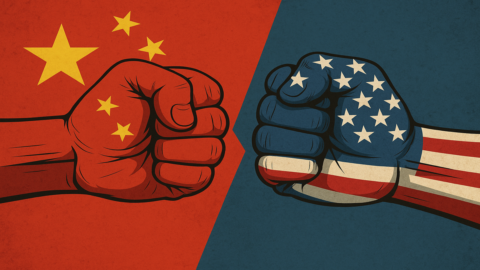
Trump and Xi They know very well that if they really fought each other, both of them would come out with broken bones and these days at the end of October will be crucial for avoid a trade clash to which analysts attribute a systemic value. The toni they did more accommodating this weekend after the'aggression demonstrated last week, while China, which feels strong by holding tight its grip on Rare lands, with today's data, shows the cards of its economy which is so tied to exports.
The November 1 deadline is approaching and by that date the United States has threatened to significantly increase duties due to export controls of Rare lands on the part of China, but the two also competed with each other oil from the kitchen and soybean, rather than on the ground of the pmaritime gardens and in the sector of with Everything could be taxed and retaxed, with reciprocal measures and retaliation if one really wanted to engage in a trade war. But who would benefit?
Days of frenetic key meetings until the end of the month
Un new round of talks trade between the United States and China is expected to this week in Malaysia, with the Secretary of the Treasury Scott Bessent and the Deputy Prime Minister He Lifeng who will have to try to avoid an escalation of relations. Meanwhile, Chinese leaders will meet for four days this week, in a meeting known as Fourth Plenum to discuss the country's next five-year development plan. Analysts expect new measures to extend the strongest Chinese stock rally in eight years and to support domestic consumption and the yuan, but it is clear that discussions will also focus on trade, in view of the possible meeting between Chinese President Xi Jinping and Trump.
Meanwhile Trump he started throwing buckets of water on the fire: questioned yesterday by Fox News Regarding his threat to increase tariffs on Chinese products by 100%, Trump responded that the tax was “not sustainable,” although it “could hold.” United States will "find an agreement" with China, he added. Bessent then met virtually on Friday, commenting that the conversation was “frank and detailed,” while the Chinese state media they described the talks as a constructive exchange of opinions.
After repeated yeses and nos, Trump said that he sees his meeting as possible scheduled with Chinese President Xi Jinping, who is expected in South Korea later this month on the sidelines of the Asia-Pacific Economic Cooperation leaders' summit.
La last week the tones were much more aggressive: the China she said she was ready to "fight to the end” the trade war with the United States and the Usa they said they are all possibilities for retaliation are open. On one side of the table there is Beijing which is aiming for a crackdown onexport of rare earths and new tariff impositions on shipsOn the other hand, Washington has flexed its muscles by imposing duties especially on any “with critic".
Of course the main point of all this is the rare earth management. As is known, rare earths are anything but “rare”: They are found in many parts of the world, but the China has developed systems cutting edge for the extraction , processing until they are ready to be placed on the market, so much so that they are felt Beijing in a dominant position.
Chinese export and GDP data under Beijing's scrutiny
Just today, new economic data was released in China that provides conflicting arguments for Beijing to discuss. Chinese exports of earth magnets rare have shown a sharp drop in September, which could give Beijing even more leverage in the negotiations. Customs data released today showed that Chinese shipments of rare earth magnets were decreased by 6,1% in September compared to August, interrupting three months of gains. The data show that the Shipments to the United States fell 28,7% in September Compared to the previous month, the top five export destinations for Chinese rare earth magnets in terms of volume were Germany, South Korea, Vietnam, the United States, and Mexico.
However, the decline in exports hides the weakness of the domestic market. China's economic growth recorded the weakest slowdown of the year in the third quarter, mainly due to weak domestic demand and showing how the country is heavily dependent on the activity of its export-oriented factories. Although the 4,8% growth rate met expectations and allowed China to reach its target of around 5% this year, the dependence of the economy on external demand raises doubts about the sustainability of this pace.
Shortly before the data was released, Trump had told reporters aboard Air Force One that he didn't want China to “play the rare earth game with us.” He suggested he might postpone the tariff hike if the world's biggest agricultural buyer committed to buy soybeans from the United States.