They face adulthood and still unprepared and more exposed to online scams. We are talking about the "digital natives", today's twenty-somethings, who should be more prepared to have grown up with the internet and instead turn out to be the most penalized. This is what emerged from a survey by the Observatory on Financial Education, carried out by Skuola.net in collaboration with UniCredit, with the support of EbiCo, an academic spin-off of the University of Florence.
On a sample of approx 2.500 young people under 30, currently enrolled in university, most admit and demonstrate that they are unfamiliar with financial issues and about half confess to having suffered online scams. Only 40% have a checking account personal, to which must be added 17% who use less demanding tools (such as passbooks, digital wallets or prepaid cards), and half choose the same bank as their parents while 55% are still dependent on them.
If we start from financial literacy, it turned out that more than 6 out of 10 cannot calculate a hypothetical return on the sums deposited in the bank; about 4 out of 10 do not know how to evaluate the "weight" of interest on a loan and over 7 out of 10 get lost in the transformation of the interest rate into real sums.
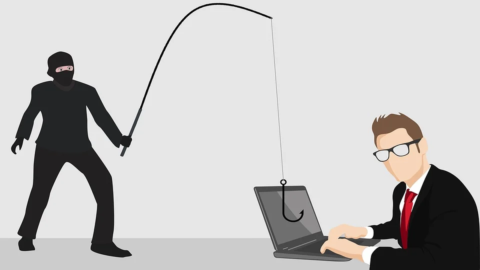
Even worse if you move on to the chapter on online scams. Only 38% declare that they know how to recognize the most widespread frauds and 54% that they are only partially aware of them. In addition, about 6 out of 10 do not know that the "Phishing” is accomplished through e-mail messages, and even less that “vishing” uses a call to hit or, again, that “smishing” exploits SMS.
Worrying data that, however, reveal some information. The first is that young Italians, growing up, are unable to make up for the enormous deficit of financial knowledge certified by the OECD Pisa Report, which photographs the situation of 15-year-old boys: Italy achieves an average score of 476 points, significantly lower to the average of the OECD area (505), with approx 1 in 5 students lack the minimum skills necessary to make financial decisions aware and responsible. The second, however, is that their familiarity with the internet induces young people to have excessive trust in the medium. As long as it's about using the web for fun, it doesn't create problems, but scams are always lurking.
What is lacking above all is economic independence or in choices. Thesis supported not only by the results obtained, but also by the need to have a more structured point of reference in case of problems. This often results in opening the traditional or mixed double for over 6 out of 10 people.
All of this translates into an attachment to cash that still persists in a generation that should be more launched in this direction. Thus, although many have a current account, about 36% of university students use cash for daily expenses. Such lack of familiarity with virtual currency it doesn't make them think in perspective or in any case in the long run. In most cases, those who save do so for short-term goals (cars, holidays and technology) and not long-term goals (housing, education, etc.). Supplementary pensions (34%) and personal insurance (38%) are almost ignored.
The approach of young people to the banking world and more generally to savings is a topic of great interest for UniCredit as he underlined Remo Taricani, Co-CEO Commercial Banking Italy of the Banking Group.
“The results of the Survey that we are presenting today show us that 1 “digital native” out of 2 still has shortcomings in terms of “financial literacy” and is too exposed to online scams – added Taricani -. With this in mind, our Save4Young program was born, in collaboration with a prestigious partner in the sector such as Skuola.net. The initiative is part of our Banking Academy which has been involved in banking and financial education for more than 10 years and works and will work precisely on financial education dedicated to young people, because our idea of a sustainable future must primarily look at them".