The pandemic has not only passed like a steamroller on the Italian catering scene, causing the economic but also social disasters that we have experienced in this year of hardship, but it has also had another effect, that of affecting the food culture of Italians. Certainly and it is difficult to say for how long, the principles of our diet will no longer be the same as before.
Many starred restaurants in reopening have modified their menus by lightening the more complex aspect of their cuisine to convert to a territoriality from which to bring out authentic tastes and products of the earth, possibly from the zero kilometer supply chain. The sales statistics of large-scale retailers show us a country that is more attentive to healthy eating and to safeguarding the environment, less dedicated to meat and more to vegetables, extra virgin olive oil and the principles of the Mediterranean diet. In this new situation, vegetarian restaurants are experiencing considerable success, even vegan restaurants that are viewed today with less distrust.
It is above all the time for restaurants inspired by ethnic cuisines such as Poké, very fashionable among young people, as healthy food with its bowls of raw fish and vegetables that have conquered all of Europe and which seem destined to overthrow sushi in the scale of cuisines based on raw fish.
If Chinese restaurants have been affected - unduly accused of their origins - by representing the cuisine of the country that exported Covid to the whole world, vice versa there is a great flourishing of Japanese restaurants these days. Japanese is a simple cuisine, which manipulates its ingredients to a minimum to religiously enhance their taste while trying to preserve their purity.
Even a trendy chef like Alessandro Borghese has reserved the sixth edition of Alessandro Borghese Kitchen Sound on Sky Uno and NOW TV with a new series of episodes dedicated to the world of the Rising Sun, hosting Enrico Schettino, the Neapolitan entrepreneur who invented the format Giappo in Naples and which today has become a group of twenty premises between direct and franchised ones.
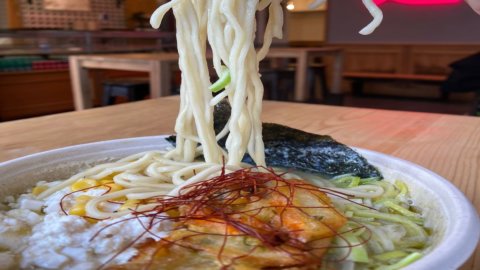
You say Japan and you immediately think of Sushi, then sashimi, then rice, then tempura, but there is also pasta, which is different from ours but lends itself to infinite tasty and healthy variations, which go under the name of Ramen , a typical Japanese dish based on wheat noodles served in meat and/or fish broth, often flavored with soy sauce or miso and with garnishes such as sliced pork, dried seaweed, kamaboko, negi and sometimes corn.
Of very ancient origins, imported from China, until 1900 ramen noodles (cut, rather than hand-pulled), with a few garnishes, and a broth flavored with salt and pork bones were served from mobile food kiosks from street managed by the Chinese. A curiosity: their presence was announced by a musical horn called charumera from the Portuguese charamela).
After the Second World War, however, cheap flour imported from the United States of America spread to the Japanese market. During the same period, millions of Japanese soldiers had returned from China and the mainland Far East. Many of these returnees had become familiar with Chinese cuisine and consequently opened Chinese restaurants all over Japan. Eating ramen, while popular, was still a special occasion that required dining out.
From there, it was all one thing to export ramen all over the world. As always in these cases, the kitchens often lose their original flavor tamed to the needs of globalisation. Not so in Rome, where, a stone's throw from the Trevi Fountain, which served as a theatrical backdrop to the most famous sequence of Federico Fellini's Dolce vita with Anita Ekberg and Marcello Mastroianni, there is what can be considered a truly authentic corner of culinary Japan.
All thanks to Akira Yoshida, an enterprising former soccer player who moved to Italy at the age of 17 to play in a professional soccer team in Abruzzo. The boy had the numbers and was soon called up to the Japanese national futsal team, continuing to play in Serie A up to the age of 5. However, he was soon attracted to the world of business, first with fashion together with Bobo Vieri and Maldini, advertising a new clothing brand in Japan which today has 26 stores.
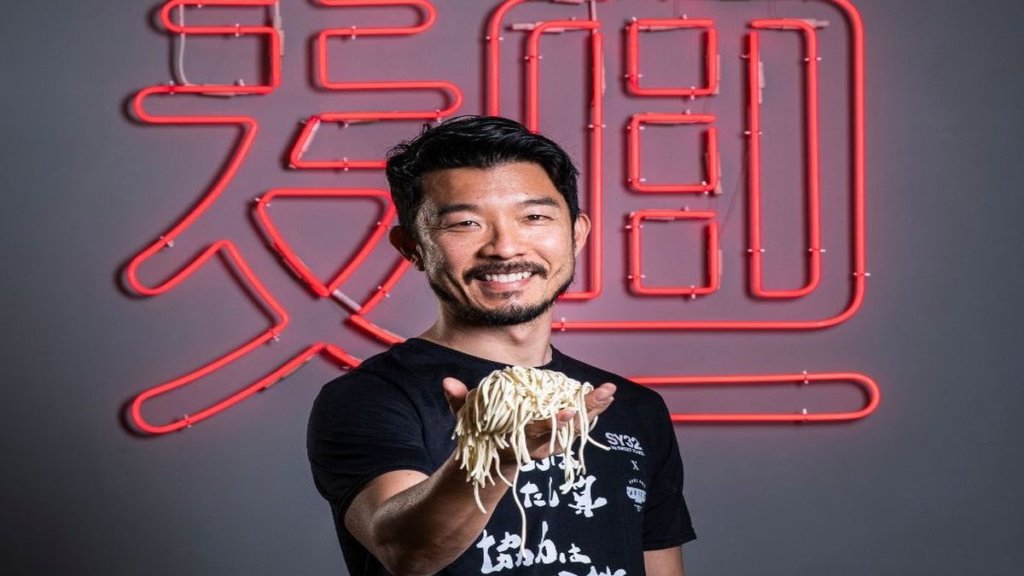
Then at 29, the gastronomic turning point. Yoshida sniffs the air and opens a Ramen bar in Ostiense, which they follow in Rome. You throw yourself with the commitment of the footballer who has joined the national team and the businessman who produces successful brands. He studies the format with the collaboration of an established Ramen bar in Japan and also makes agreements with NISSHIN, an international group of processed food active all over the world. for the production of fresh pasta in Italy.
Its mission: to spread the authentic culinary tradition of the Rising Sun starting from Rome, the city that adopted it. Here in 2016 in the Ostiense district he had founded "Ramen Bar Akira", which was followed by several openings such as the street food-style shop inside the Central Market at Termini Station and then also opened in Turin. It currently already has 5 active premises and is about to open one in Fiumicino. Always pursuing the authentic meaning of the cultural and gastronomic tradition of his country, he decided to raise the level of the offer by opening the Ramen Lab, the first artisanal noodles workshop of the Akira group, at the Trevi Fountain.
The protagonist is Ramen. The basic rule is quality and originality. That's why he brought in a kneading machine from Japan that costs tens of thousands of euros, he sent his cooks to learn the art of Ramen from the masters, he adopted cooking techniques that strictly last 12 hours. And he never declares himself satisfied: ”We care about quality, in these 6 years we have never stopped improving quality and always inventing new products.
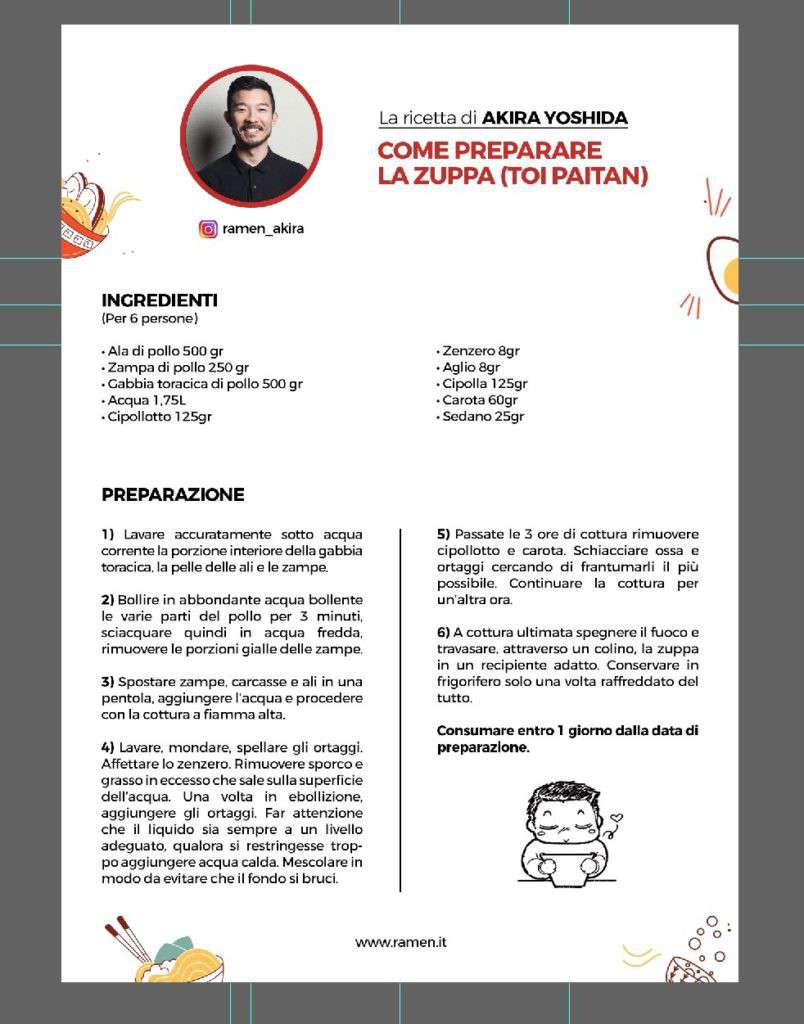
The new menu extends the already existing ramen menu to include 12 types with broth based on pork, chicken or vegetables cooked rigorously for 12 hours. Here it is possible to customize the typical Japanese dish based on wheat noodles served in broth by choosing the thickness of the pasta, fine or thick, the cooking time, normal or al dente, as well as the different toppings such as pork slices, egg boiled marinated in soy, nori seaweed, leek and spicy sauce.
Each bowl of ramen has a different weight and corresponds to a different geographical area: Tonkotsu Shoyu, for example, is a Fukuoka specialty with pork broth, a slice of pork, savory Shoyu sauce, spinach and seaweed, again the Tonkotsu Shio, an older and more savory recipe or Tonkotsu Miso Spicy for those who love spicy. There are two vegetarian versions, the Veggy Ramen based on vegetable broth, spicy miso, mixed vegetables, seaweed, olive oil and sesame, and the Veg Deluxe, less spicy but always with vegetable broth, soy milk, vegetable tempura, tofu, corn, leek, shio sauce, seaweed and olive oil. Pleasant even in the hottest periods, there is Hiyashi Cold Ramen served cold with pork strips, tomatoes, cucumbers, omelette, soy sauce with ginger, sesame and seaweed, a fresh, always colorful and nutritious dish.
Ramen can also be accompanied by some Japanese delicacies such as Edamame (soy beans), Onigiri (rice balls filled with fish or vegetables), Gyoza (fried dumplings filled with chicken or vegetables), Takoyaki (fried octopus balls), Karaage (fried chicken nuggets), Curry Don (white rice, curry sauce, potato, carrot and onion), Chashu Don (pork marinated in soy sauce, seasoned with leek, hot sauce, nori seaweed and white rice) . Two types of sweets complete the menu: Dorayaki, a pancake filled with Azuki red bean jam, and Taiyaki, the same typical dessert but in the shape of a fish.
In short, a truly authentic corner of Japan where you sit down and enter the heart of the most authentic culinary history of the rising sun.