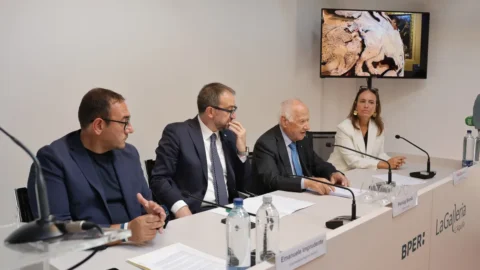
"Gladiators in the Arena. Between Colosseum and Ludus Magnus” project conceived and implemented by the Colosseum Archaeological Park with the curatorship of Alfonsina Russo, Federica Rinaldi, Barbara Nazzaro and Silvano Mattesini.
Everything starts from the recovery and enhancement of the eastern cryptoporticus of Colosseum which in Roman times connected the Arena with the district of the gymnasiums built by iEmperor Domitian, of which the most famous is il Ludus Magnus where gladiators trained and prepared for performances.
This ancient connection was interrupted due to the construction of a sewage collector in the XNUMXth century to serve the populous Esquiline district. There reopening of the Cryptoporticus of the Gladiators will be told together with a temporary exhibition that will illustrate a selection of the main types of pairs of gladiators who performed in combat on the Arena floor.
Il Cryptoporticus it connected the Colosseum with the training school district, including in addition to the Ludus Magnus also the Ludus gallicus, Matutinus and Dacicus, the headquarters for the sailors of the Miseno fleet involved in maneuvering the velum, Castra Misenatium, the depots for the Arms, the Paraphernalia, the hospital or Saniarium, the Spoliarium, where the bodies of dead fighters were undressed and finally the Summum Choragium, factory and warehouse of the scenography. The Cryptoporticus develops up to the modern interruption and still retains the original brick flooring arranged in a herringbone pattern (opus spicatum).
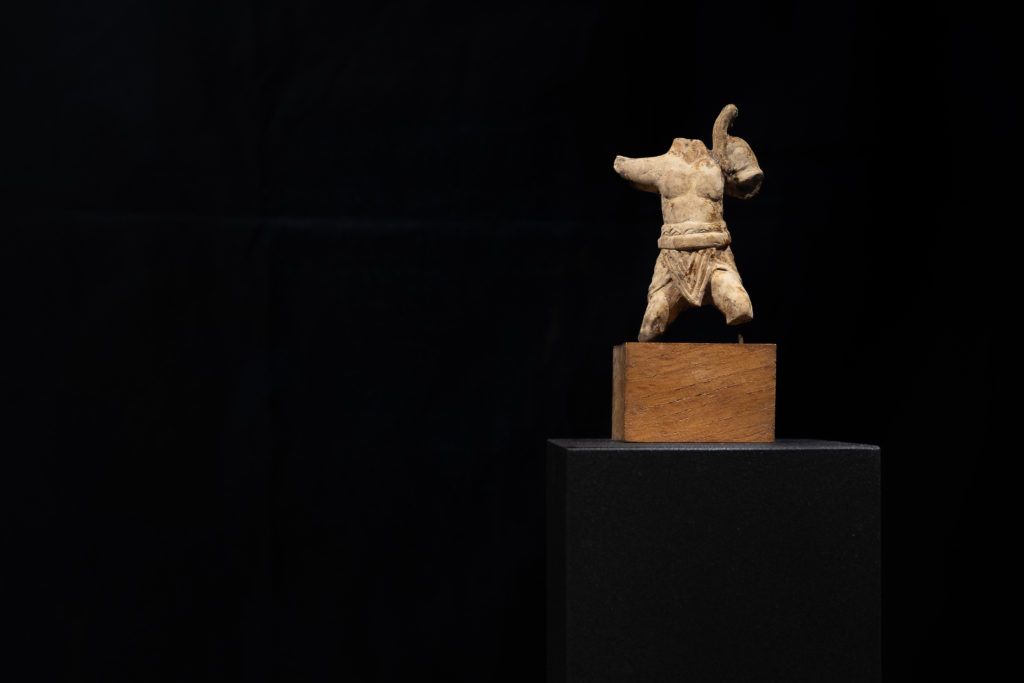
The multimedia display combines original finds from the Roman age
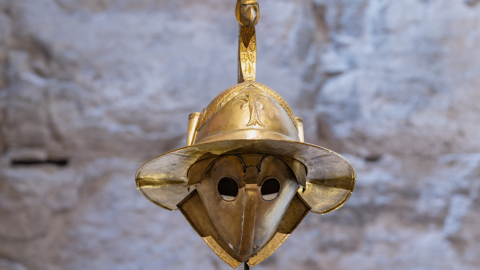
There are images of gladiators caught in typical combat positions, with true-to-life reconstructions of their armor, made according to the ancient technique of embossing and casting by Maestro Silvano Mattesini.
You will be able to admire the full armor of the Murmillo and Thraex, next to the original helmets of Pompeii from the National Archaeological Museum of Naples, the precious miniature helmets in amber from the National Archaeological Museum of Aquileia and the funerary stele of the Murmillo Quintus Sossius Albus, also from Aquileia. It will also be possible to admire the graffiti on the steps of the Colosseum cavea where the public of the time had represented their heroes in combat, next to the complete armor of a Retiarius and Sector. that ofHoplomachus with his typical round shield, opponent of the Murmillo, is exhibited next to two statuettes from Aquileia.
The enhancement of the Cryptoporticus and the undergrounds, with the story of what actually happened in these places, restores its original function to the context and is fully part of the cultural strategy that distinguishes the actions of the Colosseum Archaeological Park - declares Alfonsina Russo, Director of the Colosseum Archaeological Park. Expanding the cultural offer with innovative technologies, which make it possible to make the function and historical events of the monuments immediately perceptible, is one of the primary objectives that the PArCo has always pursued, also with the public-private partnership which over the years has contributed to carry out important projects aimed above all at improving fruition and both physical and cultural accessibility.
Within this programmatic framework, PArCo accepted the proposal for a partnership with the Hornblower Group, a leading US company active in transport and tourism founded in Boston in 1926, directing its mission towards a policy of public-private participation. The Cryptoporticus will remain open to visitors even after the end of the exhibition, enriching the tour of the hypogea in a suggestive way.
The exhibition brings together 12 works of Roman age from the National Archaeological Museum of Naples, the National Archaeological Museum of Aquileia and the collections of the Colosseum Archaeological Park, to which are added the armor belonging to the private collection of Silvano Mattesini.
The exhibition can be visited every day, both during the day with the Full Experience Arena and Underground ticket, and during the night as part of the The Moon over the Colosseum (Tuesday to Saturday).