Telecom Italia collapses, rises and then falls again. The former monopolist of Italian telecommunications remains under special surveillance in Piazza Affari and the roller coaster trend of the last few days - since the story of the clash at the top between the shareholder Vivendi and the CEO Flavio Cattaneo exploded on the way forward for ultra-broadband – is destined to last at least until the board of directors' meeting on the half-yearly accounts set for Thursday 27 July. On the eve, investors are racking their brains trying to figure out if a turnaround is about to take place at the top of the company, after the news that gave the exit of the current CEO as imminent, the change with manager Amos Genish (former CEO of Gvt, the company sold by Vivendi to Telefonica) in a role of general manager and the possible strengthening of the current vice president Giuseppe Recchi who would be assigned certain powers. Even Tuesday, the day started with a succession of rumors and with the share going from +1,4% in the early hours of the morning to a reduced +0,61% to then close at +1,7% at a level of 0,82 euros on the end of the session.
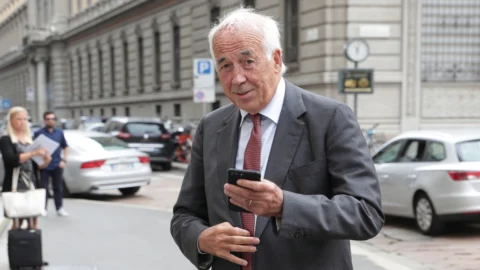
He, Flavio Cattaneo, at the informal request of Consob, underlined that he will honor his commitment to stay until next 2020. However, no one seems to believe it completely and there is speculation about frictions with the French shareholder Vivendi, born above all after the attack launched in Parliament by the manager on the government plan for ultra-broadband in areas with market failure. And so it seems that the negotiation for the manager's exit is going ahead and an attempt is being made to find a balance, sooner or later, between the hypothesis of a total allowance close to 50 million euros between bonuses, salaries and severance pay, made possible by the terms of his contract of engagement, and the much less generous intentions of the French shareholder Vivendi.
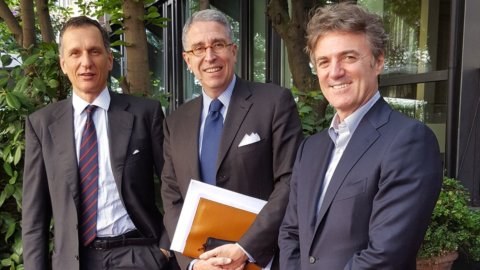
According to some observers it would not even be excluded that finally, a name of absolute prestige emerges from Vivendi's top hat, such as that of Franco Bernabè, former CEO of Telecom Italia (for two different mandates) and today independent director on the board. His name made us think of a possible network company project, a project that has been talked about for years and which would make sense especially now that the government has focused on the creation of a new national fiber optic network at the hands of Open Fiber (50 % Enel and 50% CDP). Assuming that there may be room for the overlapping of two parallel networks in the first 12-13 Italian cities, creating duplicates elsewhere would risk compromising the business plans of both protagonists, in a sort of fratricidal war with an outcome full of unknowns.
Some have seen Minister Carlo Calenda's recent conciliatory statements (“Cattaneo is a good manager”) as an invitation to negotiate. And Il Sole 24 Ore maintains that with the half-year numbers in hand, Cattaneo will end up staying in his place, on the strength of his employment contract, the difficulties of defusing it and the good results. That Telecom has made progress, in terms of customers and clean accounts, under the leadership of Cattaneo is recognized by investors and analysts. The same stock has gone from 0,69 cents in July 2016 to the current 0,81 and that's no small amount. But Vivendi could choose other ways to remind Cattaneo that to lead Telecom, relaxed relations with the government are needed, especially if the shareholder is not Italian. And the arrival of Genish either as a consultant to President Arnaud de Puyfontaine, or as a non-appointed adviser in place of a member appointed by Vivendi (for example Fredric Crepin), cannot be entirely ruled out.
In the meantime, Open Fiber continues on its way: it would be imminent by now, as it has hinted Franco Bassanini in his FIRST online interview, the conclusion of the bridge loan of 500 million as part of the 3,5 billion project financing that the company expects to close between the end of 2017 and the first months of 2018. Spaces could immediately open for the entry of a new shareholder , and infrastructure funds have already expressed their interest. All this suggests that the public group wants to move with prudence and negotiate with Telecom when its network will be more advanced (today OF is present in Milan, Turin, Bologna above all thanks to the acquisition of Metroweb, Perugia is the first cable city while the rest is to be built). Times? Mid or end of 2018, to see the first concrete results. So negotiating with Telecom Italia will take place on the basis of greater strength because the more OF's fiber network advances, the more the value of Telecom's copper network is reduced, which is not by chance accelerating its investments in the network. And for the State, these are not trivial differences: estimates on the ex-monopolist's network vary from 20 billion to 12-13 billion registered as assets in the Telecom balance sheet. A value that could go down in the future; for this reason also times, in the risk of telecommunications, are a strategic factor.