Matteo Salvini is the new Drought Commissioner appointed by Giorgia Meloni. The Minister of Infrastructure and Transport has been delegated to preside over the control room decided by the government a few days ago. The situation, especially in Northern Italy, remains very critical and the Minister-Commissioner will have to coordinate and monitor the interventions on the territory. Spring and summer - according to meteorologists - do not bode well with forecasts quite low rainfall. In recent days, the alarms of farmers and the most representative organizations have asked for interventions at various levels. The calls to hurry came when the government and the majority parties were busy discussing whether the Commissioner should be a technician or a politician. In the end, the political criterion prevailed, which, moreover, is characterizing all the appointments and positions of this period.
Drought divides North from South
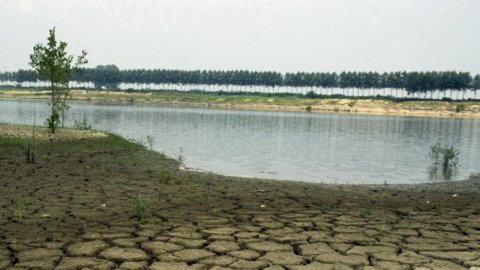
The economy of the territories of Piedmont, Lombardy, Emilia Romagna is very compromised. "What is happening in the North affects the economy of territories, strongly linked to the activities of the primary sector," he says Francesco Vincenzo, President of the National Association of Consortia for the Management and Protection of the Territory and Irrigated Waters (ANBI). The quantity of water in the Po is increasingly reduced. Despite some timid rain in recent days, the flow rate of the great river barely touches 400 cubic meters per second, according to the technicians. A really difficult condition that Salvini will have to manage in the broader scenario of the climate impacts. Coldiretti's proposal to plan small lakes using the additions always remains under the government's attention 3 billion euros available. But they also need it projects long-term as the climatologist told us Luca Mercalli. At the time of writing, the name of who will assist Salvini on a technical level is not known. In recent days, the name of Fabrizio Curcio, head of civil defence. In the central-southern regions things are a little better. Last week Abruzzo Molise, Basilicata and Puglia were hit by a wave of bad weather that filled the regional reservoirs. In Basilicata, 10 million cubic meters of rainwater were recorded in the reservoirs.
What will Salvini do?
Behind all this are the data of the European platform Copernicus : 2022 is the driest year in all of Europe with the highest temperatures of the century. The sign that drought has distant origins, without preventive measures being taken in our country. The effects are being felt on the agri-food sector. After all, the prices of agricultural products have been rising for months. A recent study by the Polytechnic of Milan published in Nature Water established that the idrought-induced food securityà is the link that connects the availability of water to the emergence of social conflicts. Italy is not at this stage, but there are now millions of people complaining about water shortages. Water is a primary commodity in the chain of survival, and we carry it with us years of lost investmentand remediation of transport systems and networks. Dozens of extraordinary plans have been announced, often squandering money. Will Salvini remedy everything? Unlikely. In the South we continue with water works built in the 60s and 70s by the Cassa per il Mezzogiorno. For once, the Minister-Commissioner can look at the South in a different way than usual. Indeed he can get some ideas.