It's not just Fiat, with its one billion investment in the Zastava plants in Kragujevac (now managed by a company controlled 70% by Turin and 30% by the Serbian government), where it will go from 30 cars produced in 2012 to 200 this year, when the total exports that Fiat Automobili Serbia could achieve is estimated at between 1,1 and 1,3 billion euros, or about 15% of the total current exports of the Balkan country.
Serbia, which would like to focus more and more on leisure tourism and not just on business, and which for this very reason has entrusted Lonely Planet with the edition of the first Italian-language tourist guide on Belgrade and its surroundings, is a eldorado for many companies in the boot. Not only assembly of Fiat Punto and, since last year, production of 500L, but also a lot of banking presence.
According to official Ice data, with the investments of Intesa-San Paolo (both present before the merger, today with Banca Intesa Serbia first bank in the country) and Unicredit (third bank), Italian banks now have a market share of around 25% of the entire Serbian banking sector. As for the insurance sector, in 2006 the Generali Group acquired 50% of Delta Osiguranjie – the leading private insurance group and third market operator – and in 2007 Fondiaria-Sai acquired the second largest insurance company in Serbia. The overall share controlled by Italian companies is around 44%.
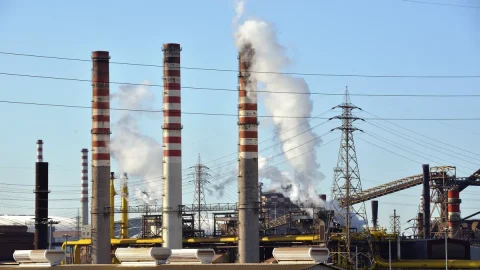
Not to mention the industrial sector: Fiat aside, the one most present in Serbia is that of knitwear and underwear. Among the most important names present with their own production plants are Pompea, Golden Lady, Calzedonia and Fulgar. In February 2011, Benetton registered the Serbian company Benetton Serbia, which has made an investment of approximately 40 million euros which involves hiring 2.700 people over the next few years. There is even room for agri-food with Amadori and for infrastructure, col new "Zezelj" railway bridge in Novi Sad, built for 45 million by Italferr together with Spanish partners.
The result gives that the colony of Italian tourists is now among the most numerous: 51 arrivals in 2011 (+34% on 2010) with almost 3 average nights spent (those who spend the most time, together with the Russians). Except for the neighboring countries, among the western ones we are the most present, like the Germans. But does the former Yugoslav country, reborn for the umpteenth time after being destroyed (and rebuilt) about forty times by the armies that crossed the Balkans over the centuries, does it want to be just a land of business?
No, as the suggests Director of the National Tourist Board, Gordana Plamenac, and as confirmed by some data. Although linked to the economic universe, there is above all a flourishing and growing congress tourism. “The number of international congresses has increased to 53 and the ranking of Serbia as a congress destination, based on the ICCA (International Congress and Convention Association) list has risen in the past six years from 72nd to 42nd place globally, while Belgrade is one of the top 50 prime conference destinations in the world".
Then, unlike nearby Croatia and Montenegro which point to the sea, there is the mountain. According to the data from the World Travel & Tourism Council, in fact, of the more than 2 million arrivals (of which 800 thousand from abroad) and 6 and a half million overnight stays in 2012, 1,5 million were registered in Belgrade, but also a good 400 thousand in mountain resorts, with almost a average week passed. The most visited places, still unknown to most, are Kopaonik and Zlatibor.
“We are betting a lot on Kopaonik – confirms Plamenac -, with new hotels and ski infrastructures”. Ski resorts that are currently missing: the Serbian mountains are more popular in summer, but they also want to become a ski holiday destination. For this, and in general for the challenge of leisure tourism, investments are needed, which at the moment, to tell the truth, are still proceeding slowly. Some comparative data with other countries of the former Yugoslavia give an idea of how long there is still a long way to go. Of the total public expenditure, to begin with, only 0,5% is destined for tourism: 182nd country in the world, where the average is 3,9%, in Italy by 3,6% and in neighboring Montenegro by 2,6%.
But above all it is private investments that launch Montenegro: almost a quarter of the capital invested in the country goes into tourism, while in the world the average percentage is 4,7% and in Belgrade and its surroundings it is 3,8%. The incidence of leisure tourism on the GDP is therefore still low: 132nd place in the world with 1,4%, where Montenegro and Croatia travel around and more than 10% (Italy 3,3%). Considering indirect and induced activities, the figure rises to 5,4%, equal to almost 1,7 billion euros. In 2023 it is estimated to touch 4 billion euros, or 6,8%, thus growing more than the world average, but at the moment it is the 147th on the planet (Italy 79th with 10,5%, Croatia 20th with 26,3% ).
There is also a gap in jobs: 3% of the population is currently employed in tourism, and even considering indirect and induced activities, there are 80 jobs, 6%, much less than in neighboring Croatia, where more than one worker out of four (almost 29%) works in the tourism sector.
Despite these data, the intentions and the first results are there. “Serbia continues to grow in tourist arrivals – explains Gordana Plamenac – and this coincides with new investments in the hotel sector: the Crown Plaza Hotel in Belgrade is expected to open in a few days, as well as that of the Radisson Blue in mid-2014”. There are currently over 109 beds, with prices decreasing especially in Belgrade: in 2011 a room cost 93 euros, this year on average 71 euros, while with 50 euros you can stay in Novi Sad.
Then there are air transport: 45 flights over Serbia in 2012, up from 40 in 2009. Passengers were 3 again last year, against 400 million in 2,6. “This is also thanks to the new national carrier, Air Serbia, just launched in October this year and owned 49% by Etihad-Abu Dhabi Airlines and 51% by the Serbian government. Not only that: Turkish Airlines has increased the number of flights from Istanbul to Belgrade, Vueling from Barcelona to Belgrade, while low-cost carriers are increasing their offer”. As Easy Jet, which flies to Italy from Rome Fiumicino and Milan Linate, and this year has also added Malpensa.
But why should you visit Serbia? Gordana Plamenac summarizes it once again: “Apart from the sea, we have everything: a city like Belgrade and its troubled history, welcoming and perfect for young people. And then the mountains, and then the Romanesque monasteries protected as EU heritage. Food, art, culture. Even design, with the Mikser Festival held between May and June and which is climbing the international rankings of participation and approval”. In short, a bit like the Fuorisalone in Milan. But above all, as the new Lonely Planet guide says, “a little Istanbul and a little Berlin”.