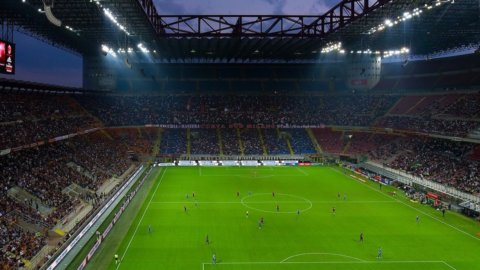
Milan says goodbye to the old Meazza and opens the way to the new San SiroAfter a political marathon of almost twelve hours, at 3.45 in the morning the City Council approved the resolution authorizing the sale of the San Siro stadium to Inter and MilanA historic vote for the city and for the future of Milanese football, which came with 24 votes in favor and 20 against, at the end of a heated session at Palazzo Marino with amendments, protests and dramatic changes.
For the mayor Giuseppe Sala, which has been working on the dossier for the new plant since 2019, this is a political victory that has been sought for years. The decisive move was Forza Italy: instead of voting against, the blue councilors have abandoned the classroom At the crucial moment, lowering the quorum and allowing the majority to overcome the obstacle. A strategy described by Forza Italia members themselves as a "responsible" choice, but one that split the center-right and sparked protests from the League and Brothers of Italy.
“We welcome with great satisfaction the decision of the City Council to authorize the sale of the San Siro stadium to Inter and Milan – declared Alvise Biffi, president of Assolombarda This is a strategic step that paves the way for the construction of a cutting-edge infrastructure, in line with international standards, destined to become a driving force for Milan's attractiveness and innovation. With this in mind, Assolombarda is pleased to announce that it will soon host a presentation of the project with the leaders of the two clubs: an event that marks a further step forward towards the completion of a project that is crucial to the region's competitiveness.
San Siro, green light for sale to AC Milan and Inter: the vote
Il “no” front it was confirmed to be transversal: those who voted against the resolution were the Verdi, three councilors of the Democratic Party, a civic councilor of the majority, the groups of Alloy e Brothers of Italy, in addition to the "rebel" of Forza Italia, Alessandro DeChirico. But the most important news concerns the split within the majority: well seven councilors against – Carlo Monguzzi, Enrico Fedrighini, Francesca Cucchiara, Tommaso Gorini, Alessandro Giungi, Angelo Turco and Rosario Pantaleo – and the heavy absence of Marco Fumagalli, leader of the Sala List, who will soon announce his resignation. Sala, present in the chamber for the entire session, accepted the result without making any official statement, while Deputy Mayor Anna Scavuzzo expressed "satisfaction" with a move that "transforms the uncertainties surrounding the San Siro area into a vision for the future."
The long night of the City Council was marked by 239 amendments, Of which only 25 They were discussed before, at 3 a.m., a sub-amendment nullified almost all the changes through the so-called "gut trap." Outside Palazzo Marino, protests arose, fueled by recent judicial investigations into Milan's urban planning.
New San Siro: the approved conditions
The approved resolution contains some substantial changes compared to the original text, introduced during the debate. Among the key points are the requirement for anti-mafia guarantees for the companies carrying out the work, increased funding for public green spaces in the neighborhood, resources dedicated to the redevelopment of Milan's public housing from the sale of the stadium—which will bring in €197 million—and a commitment to ensure that the new facility is accessible to all, barrier-free, and affordable.
The future of San Siro and the neighborhood
The new stadium, designed by architects Norman Foster and David Manica, will have 71.500 spots on two rings and will be surrounded by 140 square meters of urban park. Construction is expected to be completed in 2031, with almost total demolition of the current Meazza: only a part of the Curva Sud will remain, repurposed as a historical memorial.
A true citadel of sport and entertainment will be built around the new stadium: offices, hotels, parking lots, restaurants, shops, and a shared museum of Inter and Milan.overall investment, estimated at about 1,2 billion, of which 700 million will be allocated for the construction of the stadium, is part of an urban regeneration plan involving over 280 square meters of the city. The new arena should be ready in 2031, while the complete transformation of the neighborhood will take place. will be completed by 2035.