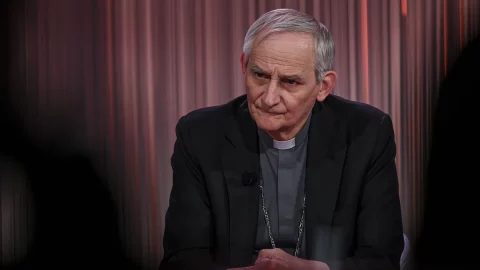
La peace mission of Cardinal Matteo Soups a Moscow takes on even more value after Yevgeny Prigozhin's revolt against Russian President Vladimir Putin. A turbulent context which, however, can open a glimmer of "humanitarian" negotiations, as happened for the continuous exchange of prisoners. The Holy See confirmed this with a statement: "We inform you that on 28 and 29 June 2023, Cardinal Matteo Maria Zuppi, Archbishop of Bologna and President of the Italian Episcopal Conference, accompanied by an Official of the Secretariat of State, will make a in Moscow, as Envoy of Pope Francis. The main purpose of the initiative is to encourage gestures of humanity, which can help favor a solution to the current tragic situation and find ways to reach a just peace”.
This is not a mediation, the Vatican are aware that they do not have all this power. It is rather an attempt to build a network of relationships that allows, as Zuppi himself said, "to transform the enemy into an adversary", to pass "from the military mentality to the political mentality".
Zuppi's mission in Moscow
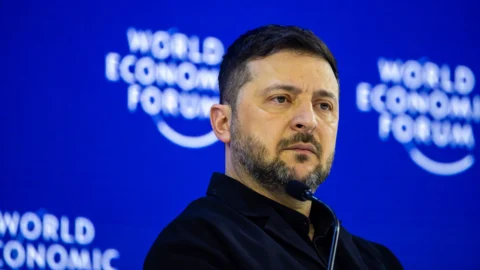
Cardinal Zuppi began his mission in early June from Kiev, where he met the Ukrainian president Volodomyr Zeleneksy. An initiative, stated the communiqué of the Holy See, aimed at "listening in depth to the Ukrainian authorities on the possible ways to achieve a just peace and support gestures of humanity that help to ease tensions".
Even in Moscow, the objective of Zuppi's mission in this phase is above all that oflistening and the encouragement of "gestures of humanity“, in particular for the question – strongly urged by Ukraine – of the possible return to their homeland of Ukrainian children deported to Russia: accusation that cost the Russian president the indictment for "war crimes" by the International Court in The Hague.
At the moment we do not know which political personalities Zuppi might meet. It is plausible that the Archbishop meets the Orthodox Patriarch Kirill who has always supported the Kremlin's actions against Ukraine. Bergoglio has repeatedly "called" him to commit himself to peace, even going as far as to define him as "Putin's altar boy". He words that were not well received by Moscow. The Pope's envoy will now try to rekindle the broken relationships, looking for a crucial figure in Kirill for an ecumenical initiative in favor of peace.
What is happening in Russia?
Still many shadows on the story of Wagner's coup-non-coup. Three different versions tell a somewhat discordant story. After almost two days of silence, the first to speak was the head of Wagner (who is currently in Belarus) with an 11-minute audio message in which he declares "it was not a coup but a protest". In the evening it was Putin's turn, in a pre-recorded speech lasting about 5 minutes in which he admits the mutiny but that "an armed insurrection would have been crushed in any case". Instead, speaking on Cathedral Square in the Kremlin to units of the army and security forces, Putin admitted: "The Russian army and security forces have effectively prevented the outbreak of a civil war." And if Wagner's march over the weekend hadn't been stopped, everyone "we don't know what would have become of the country - he underlined - but all the results obtained in the fighting will have been lost". Then the ultimatum: “I thank the soldiers and commanders of the Wagner Group who made the only right decision: they did not go to fratricidal bloodshed, they stopped in extremis. Today you have the opportunity to continue serving Russia by signing a contract with the Ministry of Defence or with other security agencies, or to return to your loved ones. Anyone who wants can also go to Belarus. My promise will be kept."
Finally, the President of Belarus also intervened on the matter, Alexander Lukashenka, during a meeting with the heads of its armed forces. “We have all lost sight of the situation.” For the Belarusian president it was "painful to witness the events taking place in southern Russia, because the homeland is one". Lukashenka therefore warns that "if Russia collapses, we will all remain under the rubble". And again: “The threat of a new global conflict has never been as close as today”.