La new railway line ad high speed Naples-Bari will have a significant impact on Southern Italy: 4,4 billion euros of added value and 62 thousand jobs. The study, the result of collaboration between SVIMEZ (Association for the Development of Industry in Southern Italy) and Italian Railway Network (Fs Group), highlights the economic and employment benefits of the new infrastructure being built in the South, presented in the Svimez 2024 Report.
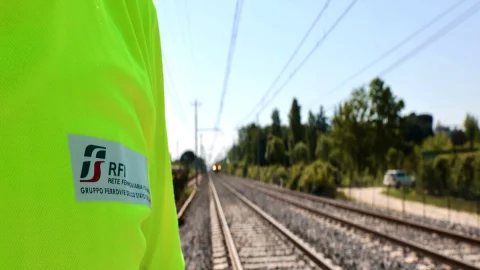
This strategic infrastructure will connect Southern Italy with the main regions of Central-Northern Italy and Europe, bringing high speed to the South and stimulating the competitive relaunch of the country. The project, in detail, includes the construction of a new double-track line between Naples and Foggia, which, with speeds between 200 and 250 km/h, will allow reduce notably i travel times: only two hours between Naples and Bari, three hours between Rome and Bari and four hours between Rome and Lecce/Taranto.
The Naples-Bari line: the project
The new AV/AC Naples-Bari line, with a investment of over 6 billion euros, will have a direct and indirect impact on the added value of 3,9 billion euros, generating approximately 53 thousand full-time jobs. Taking into account the induced effects, the value added overall comes to 4,4 billiona employment impact of 62 thousand workersThe sectors most affected are civil engineering, design, construction, metal fabrication and wholesale services.
The project is not just about the economy: it is estimated that the new line will reduce the annual approximately 141 thousand tons of CO2, equal to the emissions of 638 thousand trucks on the Naples-Bari route.
Comments
“With the construction of the new Naples – Bari line – commented the CEO and general manager of Rfi, Gianpiero Strisciuglio – we are charting a course to support the relaunch of Southern Italy. Rfi's commitment is aimed at changing mobility habits and giving a decisive boost to local economies. A value that is realized not only in the creation of new jobs, but also in the push for a modal shift in line with European climate objectives”.
For Luca Bianchi, general manager of Svimez, “the analysis carried out in collaboration with Rfi highlights the transformative potential of an intervention that connects two of the most dynamic regions in the South. These projects contribute to a new development model, capable of combining territorial growth, enhancement of skills and sustainability”.