La mobility sectors of Italian is transforming, with a growing propensity towards more means be sustainable and green, a constant growth trend over the last five years, destined to further strengthen in the future. Although the private car remains the most used means of transport (94%) in Italy, over 40% (considerably above the European average) are open to giving it up in the future, with the 18-34 age group at the forefront.
This is what emerges from the second edition ofAuto & Mobility Barometer by Ipsos-Europ Assistance.
New mobility habits
Habits are changing: 43% prefer walking more than five years ago (+30%), while 48% use the muscular bicycle and 25% the electric one. Car sharing is also gaining ground, with 26% of Italian respondents using it (+9% from 2022).
Driving the evolution of Italians' mobility habits are above all concerns related to cost of transport (33%), followed by change in the family situation (27%). In third place, ecological motivations (25%): 77% of the sample declares that they pay attention to the impact of their mobility habits on the environment and 64% (73% in the 18-34 age group) that they already have them modified to make them greener. Many (79%) are convinced that the environmental issues must be a priority for the institutions and consider the measures adopted to make cars less polluting to be correct (73%).
The potential of electric cars is growing, albeit slowly
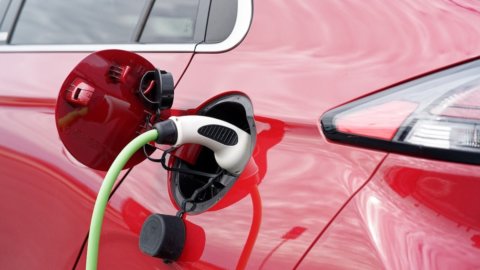
Furthermore, there is a growing interest in electric cars: 44% of Italians would consider purchasing an electric car (+15% compared to the European average). Among the main reasons, the possibility of saving on fuel costs, environmental reasons (both at 40%) and the fact that internal combustion cars will be less and less widespread in the future (34%). However, some persist concerns, mainly related to Costs (purchase, 51% or maintenance, 21%), tobattery life during long journeys (29%) and the difficulty of installing charging columns at home (22%) or the lack of charging points at work (13%).
Interest in person-based policies is increasing
A third of Italians already have insurance coverage for bicycles and scooters (+7% from 2022), a percentage that rises to 39% in the 18-34 age group, while 58% are interested in person-based policies, which cover travel regardless of the means of transport (with the highest figure Europe and growing by 5% in 2022).
Roadside services and assistance: what matters most?
Finally, in terms of Insurance services, roadside assistance (87%), vehicle tracking (86%) and replacement car (85%) are considered the most important. In particular, there is a strong interest (54%) in a mobility budget that allows you to move in other ways if your vehicle stops, a sort of digital wallet to take advantage of alternative means to the replacement car.
The ability to carry out a roadside assistance specific for electric vehicles (63%), a mapping of charging points (59%) and certified maintenance workshops (53%) are the services considered most useful in supporting the spread of electric cars.
Compared to the rest of Europeans, Italians make less use of roadside assistance (only 40% compared to 50% of the European average, although growing by 9% compared to 2022), but 93% of them would be willing to pay a price additional to receive this service, if it was offered as an option in addition to standard coverage.