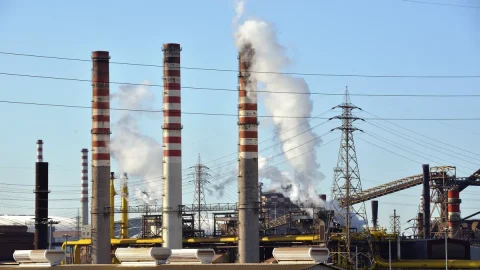
Of the infractions inflicted on Italy for environmental and mobility issues, count has been lost. The increase in smog in the city and outside has been a constant, until we became aware that PM10 levels are really bad. With the publication in the Official Gazette of decree so-called «save infringements» cars will be able slow down on highways and main extra-urban roads in order not to pollute. The European Union had warned us, without an ad hoc provision that reduces the harmful substances emitted by car exhausts, the infringement is transmitted to the European Court of Justice. What, as we have known for years now, that involves paying for a few million euros. What is written in the decree? That "in cases where it is necessary to limit the emissions deriving from vehicular traffic in relation to the levels of polluting substances in the air, the regions...may order reductions in the speed of circulation of vehicles, even of a permanent nature". In the case of motorways, the decision on mobility must be taken together with the companies that manage them. Even more interesting in the provision is the reference to the Highway Code, which transfers to the local authorities the power to limit speed on those roads pass through population centers "or that are located in the vicinity of them". Basically, in addition to the safety limits, the governors and mayors, on the basis of atmospheric data, can decide not to let certain speeds be exceeded. In addition, municipalities and regions will also be able to limit the permanence of cars within limited traffic zones or establish new ones for environmental reasons.
Mobility: limits with environmental value
Motorists must be informed about entry and exit times from the Ztl. The new provisions will be applied by means of "traffic control devices or technical means" such as speed cameras or other. A step forward, in short, not only to avoid reprimands from the EU but to protect people's health, it was done. Speed limits are already in force in many cities, especially in those city more exposed to the permanence of fine dust in the air. all the Po Valley è threatened by climate-altering factors due to intense traffic inside and outside the urban perimeters. Each municipality has the option of varying the application of the limitations, both in terms of speed and duration times. In this sense the prevails principle of public health controlled with field measurements. Mayors (why not?) may be urged to take restrictive measures also on the basis of reports from citizens. Motorists therefore have no choice but to pay attention to signs or electronic signals to avoid fines and tow trucks. A way to share green mobility.