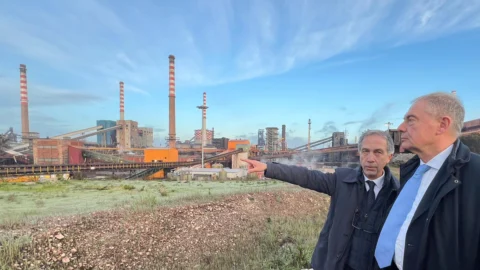
Were it not for the risk of the government's referral to Parliament, a change at the Ministry of Business and Made in Italy would not only be useful but certainly necessary. The many dossiers (many of them dusty and unfinished for years) accumulating in the rooms of Piacenza's grand building on Via Veneto follow one another, like a rosary, from postponement to postponement, from table to table, often with the same liturgy: few demonstrations, a few flags in the streets, many people present at the table with the obvious conclusion of the renewal of ten-year layoffs, early retirements, vertical and horizontal mobility, and various shortcuts along the now stale lines of union liturgy. Almost always with the presence (and silence) of the employers' representatives of Confindustria and Confapi, both vertical and horizontal. Sometimes a person "interested in investing in the sector" joins the company...
Unfortunately, in this context the recent situation of the Electrolux Group and the now very long agony of ILVA-branded steel They're the masters. But there's no longer any time for delays or unjustified investigations, at least when it comes to the second one. Why?
The Odyssey of Taranto's Ilva Steelworks, from privatization under the Rivas to Monti's administration.
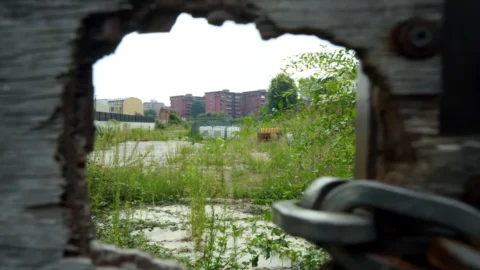
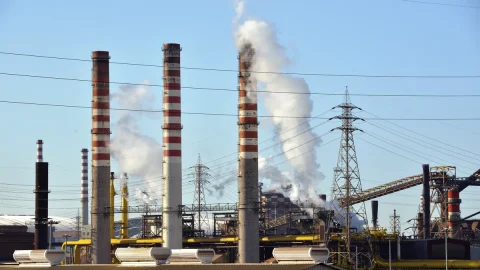
Since the late 90s with the privatization of the Ilva group by the Riva family Until October 2012, when the Monti government ordered its forced administration due to the plant's "environmental dangers and risks to public health," with the related seizure of the entire hot-rolling area, Taranto churned out millions of tons of steel, consolidating and contributing to Italy's manufacturing leadership.
Today, after the forced expulsion from Taranto (with the insult of prison for Emilio Riva's sons), the Lecco Group still leads Europe among the top producers with 5 factories in Italy, 2 in France, 4 in Germany, 1 in Spain, 1 in Canada. And yet The Rivas' watchword is clear and definitive: total deafness. to ministerial appeals and no interest in Taranto.
Like the Rivas, the so-called "Bresciani" (Brescia residents) are aligned in their refusal, having grown, strengthened, and still alive and well on European and international markets. Among them is Antonio Gozzi's Duferco Group. As President of the Italian steel industry, he must necessarily tread the Ministry's carpet and attend the few top-level meetings dedicated to the fate of Taranto. And yet Duferco owns 8 plants in Italy and over 6 in Europe.
The the world's seamless pipe giants, the "Bergamo-based" Roccas, with their 5 factories in Italy and 60 thousand employees spread across the world, from Argentina to the USA, after having acquired Dalmine over 30 years ago, today, constantly keep away from the Taranto question.
The example of the Marcegaglias, the only ones willing to take on the commitment
From Bergamo to Mantua in less than an hour. In Gazoldo degli Ippoliti The Marcegaglia family has been reigning supreme as the largest steel processors in Europe for at least 50 years.They process over 7 million tons of coils per year and operate 36 plants on four continents. From transformers, they have converted to steel producers, first in England and now in France, in Fos-sur-Mer. In just under a year, they will inaugurate the new DRI/HBI steelworks, whose melting furnaces employ the most modern and innovative production and environmental technologies.
Technologies that, as far as Taranto is concerned, are the subject of dreams, chatter, projects, hopes, and predictions; things that appear but simultaneously disappear at the discussions convened by Via Veneto. The Marcegaglias are the only ones who have given an answer to the Minister For the Apulian plant: "If production restarts and they're able to consistently deliver semi-finished steel products, we could commit to purchasing a portion." Thank you and goodbye.
Last but not least, Giovanni Arvedi from Cremona, Cavaliere del Lavoro, remains. From his sixteenth-century palace, he has led the Italian stainless steel industry for years, revitalizing and strengthening the once-public Terni steel hub, investing in ultramodern smelting technologies: the kind dreamed of for Taranto. This is the national picture. Outside the borders, both the French Arcelor and the Indian Mittal have taken on other commitments and other paths.. Likewise, the Bain Capital funds joined forces with another Delhi giant, Jindal. Let's not talk about Vulcan Green, which appeared, disappeared, reappeared, and then...
Haven't the various ministers (red, yellow, green, or technical—these are the expressions of civil society) ever asked themselves what's keeping these entrepreneurs away from the Taranto plants? Have they considered the reasons for their doubts and fears? The various ministers of recent years must remember the action of Carlo Donat Cattin when he sat in their same chair. He knew neither coal nor iron, but he had political acumen and a foresight into the facts. For this reason, he successfully led the emergence of the new private Italian steelworkers, in opposition to the great European and Italian dynasties. He convinced a Viscount like Etienne Davignon. He made "les Bresciani" victorious, and with them the modern private Italian steel industry.
So what are the fears of Italian entrepreneurs? Here are six certainties.
First certainty. All hot-water operations at the Taranto power plant must be suspended by August 24th. This is according to the ruling of the Milan Court, which "deems the decision made for Taranto in 2025 to be insufficient in terms of environmental and public health concerns."
Second certaintyThe Municipality of Taranto has never revoked the resolution for the "progressive closure of the hot area."
Third certainty. The Puglia Region "stops the hot zone".
Fourth certaintyTaranto Parents' Committee, Pace Link, Lega Ambiente, WWF Taranto, and the NGO Unione Diritti Umani, a total of 300 signatures: "Taranto must be closed." I forgot about the protest in the Tamburi neighborhood.
Fifth certainty. The European Court of Justice, with its categorical statement "Taranto should be closed if it causes harm," also seems to put an end to the matter. Today in the Brescia court, Luigi Lucchini's heirs are being called to account for alleged environmental damage caused by a company once owned by him and managed for over a decade by other entrepreneurs.
Sixth certainty. Perhaps the most fundamental. Trade unions of "all levels" have long been torn between fighting smoke and noise and saying, "Let's try and do something." Their commitment is also sporadic, depending on the deadlines for redundancy payments, mobility, early retirement, and all the other issues that are more a matter for the welfare system than for the union. After all, it's no secret that the local economy also relies on informal activities related to agriculture, the service sector, and tourism. Trulli and orecchiette, plus redundancy payments, are better than standing in front of a blast furnace. It may sound demagogic, but it's true.
Minister Urso can no longer wait: he must clarify matters now.
Today the Minister finds himself faced with these obstacles with only one de facto interlocutor: the Flachs Fund which continues to roam the corridors of the Ministry with a retinue of industrial and environmental experts but without ever bringing with them the financial guarantees capable of sustaining investments and the relaunch of production, albeit supported by substantial public money, that is, ours.
What to do? Pierpaolo Bombardieri of the UIL (Italian Industrial Union) made no self-criticism in yesterday's newspapers. Not even about the Taranto issue of Palombella's Uilm. However, he recalled the damage President Emiliano had done to the ILVA cause, adding to that related to his decade-long opposition to the TAP project. But at the end of the interview, he concluded, "...but ILVA is closed." Minister Alfredo Urso cannot wait any longerIf you think you can wait until the election eve to avoid making a decision, you're wrong. Do it now, with clarity of facts and accountability. We'll all be grateful.