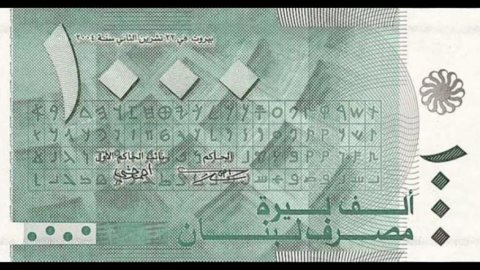
The economy of Lebanon is based on the tertiary sector: the highest growth rates are recorded in tourism and the banking sector. On the one hand it is a necessity, due to the scarcity of natural resources, on the other a consequence deriving from the advantage of facing the Mediterranean. However, the tertiary sector is also the sector which, in the event of a conflict, would be most affected. And the period of instability that the country is experiencing now is an example of this.
The great growth has occurred hand in hand with the political stability following the Doha agreement in May 2008. The tourism and banking sectors have strengthened and have favored a 7% increase in GDP in 2010, (while the region Mena – Middle East and North Africa – slowed down). This year, however, tourism is in sharp decline and public debt has reached 46 billion dollars in May 2011. According to the rating agency Fitch, sovereign debt should stabilize at 135% of GDP by the end of the year but that Lebanese remains the third highest value after Japan and Greece. Sustainability is guaranteed by the strength and importance of the local banking sector in debt, which limits speculation.
The country experienced a civil war between 1975 and 1990 which seriously damaged the economic infrastructure and halved exports. During the government of Rafiq Hariri, in 1992, an austerity program was implemented which included tax increases and privatizations of state-owned enterprises. Since then, economic and financial reforms have stalled and public debt has started to grow, exceeding 100% of GDP in just 5 years. In January 2007, more than 40 countries in the Middle East, Europe and America, in the Paris III assembly, offered 7,5 billion dollars for the recovery and restructuring of Lebanon. The pact provides funding for development projects and for the consolidation of the public budget, on the condition of an implementation of tax reforms and a privatization programme. The first results have been seen in the last two years, with high GDP growth, but the country is starting to slow down.
Tourism is in decline. The number of passengers at Lebanese airports slightly exceeded one million in the first quarter of 2011, a decrease of 4,5% compared to the same period last year. According to data from the Monetary Fund, the number of flights also recorded a decline of 1,3% in 2011. But above all, in terms of employment, the hotel sector, which offered 73% of work in 2010, now has a share that nearly 43%. The Minister of Tourism, Fadi Abboud, announced on Sunday that "the inhabitants of the Gulf countries can enter Lebanon without the need for a visa", a first measure to attract new tourists. The entire tertiary sector has undergone a strong downsizing due to the insecurity and instability widespread in the population. The political situation is deadlocked but “it can change at any moment and war can break out at any moment.” said Richard Azzam, group manager of Isco (Integrated Services Company), a multi-service provider, catering to diverse industries, from commercial exchange to the jewelry industry.
But the instability of the entire Mena area, especially after the revolts in North Africa, also has effects on the Lebanese economy. Growth is slowed down by high inflation, around 6,5%, which threatens the operations of small and medium-sized enterprises. The picture is summarized in the latest projections of the Monetary Fund which estimates a growth of 2,5% in 2011, compared to 7.5% in 2010. Lebanon would thus become the fourth slowest country in the Middle East at the moment and would be affected most of all small and medium enterprises.
But optimism is a natural instinct for many people and the Lebanese have it. The country boasts great economic freedom: the index of economic freedom published by the Wall Street Journal ranks it in the world average with a score of 60.1. This is an important factor that greatly encourages foreign companies to invest in the country. Freedom and opportunities are there, we must not be discouraged by the uncertainty of the political situation. To put it in the words of Richard Azzam: "I am sure that when stability returns, the economy will have another boom".
(translation by Camilla Carabini)
Sources: Inhad, indexmundi, dailystar.com.lb