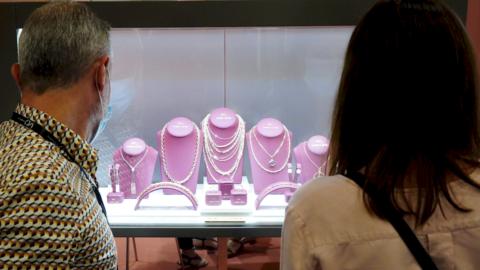
In the 2021 Spanish jewelry market and watchmaking recorded a turnover growth of 28,8% to 1,5 billion euros, further consolidated in 2022, when over 1,6 billion and a growth of 7% were achieved.
By product type, the costume jewelery and jewelery items represent 56% of total sales, while the Watches they represent 39%. The remaining 5% comes from sales of silverware and accessories. However, as regards the sales channels, the one that has grown the most in recent years is thee-commerce, which represents 9% of the total turnover in 2021, with a turnover of 130 million euros.
La internal production covers a large portion of the market, with over 8.900 companies active in the sector located mainly in the area of Cordova as regards goldsmithing, and of Madrid, Barcelona and Galicia regarding high-end jewelery with precious stones.
Italy exported jewels worth 243 million to Spain
However, iThe country is also an important importer, and although the general trade balance with the world is traditionally positive for Spain, the bilateral one with the Belpaese is positive for Italy with a surplus of around 170 million of Euro. In 2023, Made in Italy exported jewellery, silverware and watches to Spain for a value of 243,4 million, reaching a share of 14,2% of the total imported, which places it in second place among suppliers, after the Switzerland.
The most marketed products are the type ones medium and large consumption (87% of the total). By type of product, we find in first place the gold jewelry without stones, with a share of 21% of the total, followed by gold/silver chains and jewelery with precious stones. Among silver objects, frames are the most requested products on the market.
Exporting companies must pay attention to Precious Metals Act n. 17/1985, according to which Spain belongs to the small group of EU punching states together with Portugal and France. This means that articles manufactured with precious metals, before being marketed, will have to have two hallmarks:
- guarantee or official hallmark;
- identification of origin, manufacturer or importer.
I guarantee hallmarks are for the exclusive use of laboratories authorized by the competent authorities for the analysis of precious metals. In all of Spain there are only 17 laboratories to which companies and importers can entrust the guarantee marking of products. Guarantee stamps are geometric figures, of different shapes for platinum (rhombus), gold (ellipse) and silver (horizontal rectangle).
I identification stamps of origin of the manufacturer or importer, however, they can be of free design but must comply with certain requirements:
- have larger dimensions than the guarantee hallmarks;
- have a shape that allows them to be easily distinguishable from the guarantee ones;
- they must not be enclosed in a geometric figure.
The origin identification mark must be registered in the “Registro de la Propiedad Industrial”. Once granted, it is necessary to present a certificate of the validity and validity of the hallmark to the Official Laboratory which will hallmark the item.
Furthermore, objects made of precious metals may have other engravings or other trademarks provided that they have been duly registered at the “Oficina Española de Patentes y Marcas”.