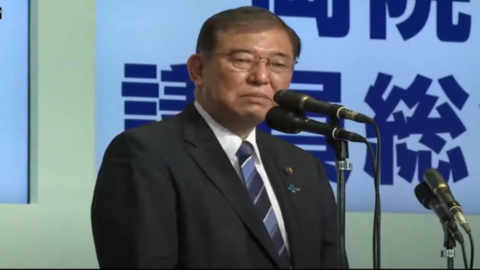
In the end, the Japanese Prime Minister Shigeru Ishiba he resigned. Not even time to celebrate a year as prime minister: appointed on October 1, 2024 to succeed Fumio Kishida, engulfed in a scandal over party financing, Ishiba promised to reform the mammoth organization that has ruled Japan almost continuously for over 70 years. He failed. heavy defeat in the elections for the Upper House last July deprived a government coalition led by the Liberal Democratic Party (PLD) of the majority in both houses of the Diet.
The causes of the defeat were multiple: thedissatisfaction with economic policies of the government – which had refused to reduce the consumption tax despite high inflation and low wages – and the impact of tariffs by US President Donald Trump, which have weakened Ishiba's image, despite the prime minister's attempts to balance national interests and relations with the White House.
Why did Japanese Prime Minister Ishiba resign?
The news was in the air: already at the end of July they had rumors of resignation spread imminent, then denied. Ishiba had tried to resist, but in the end the PLD has decided for himA significant part of the party considered its weakness the determining factor in the electoral defeat and called for responsibility: translated, resignation. The conservative wing, heir to the faction of Shinzo Abe, pushed for early primaries, while the moderates Yoshihide Suga e Kishida They attempted to curb the radical push. In the end, Ishiba gave in, summoned by the party's two most influential leaders: Suga and the Minister of Agriculture shinjiro Koizumi.
Last week it was discharged also the general secretary of the party Hiroshi Moriyama, a clear sign that the internal truce was running out. With Ishiba's decision, the LDP avoided an internal split and opened the race for a successor.
Who is Shigeru Ishiba
Ishiba, 68, a former banker, became Japan's 102nd prime minister thanks to the support of party moderates. During his career, he held the positions of Ministry of Defense and Agriculture He always presented himself as a domestic reformer. A Protestant Christian, he repeatedly spoke out against the use of nuclear power in the energy transition and had planned social reforms, such as abolishing the law requiring spouses to have the same last name.
Politically, Ishiba has always aimed at a pragmatic line in relations with the China, promoted the idea of an "Asian NATO" and intended to reshape the alliance with the United States, which he deemed unbalanced. His priorities included revising the post-war pacifist constitution, managing climate disasters, and addressing the demographic emergency. In the leadership contest of the LDP, Ishiba had prevailed over Takaichi, an ultra-conservative politician, and Junichiro Koizumi, a 43-year-old scion, thanks to the support of the party's moderate base.
Succession and future challenges
With Ishiba's resignation, the party will have to elect a new leaderAspiring candidates will need to secure the support of at least 20 parliamentarians; the final decision will be made through a vote involving MPs and party members. Historically, leading the PLD almost always means also becoming prime minister.
Among the possible successors, the ultra-conservative wing is banking on Sanae Takaichi, a former heavy metal drummer and Shinzo Abe loyalist, known for her hawkish positions on China and her demand for greater strategic autonomy in trade and defense. Among the moderates, however, the name of Koizumi and it is even hypothesized that Kishida's returnThe choice of the new leader will also determine if and when parliament will be dissolved and whether early elections will be necessary.