Hot emergency: the first agreement between the ministry, businesses and unions since Covid was signed, to protect workers during climate emergencies, which are increasingly frequent and dangerous in Italy. The “Workplace safety protocol 2025” will be incorporated into a ministerial decree and will then have to be implemented in territorial and sector agreements. Furthermore, an amendment to the Ilva decree is expected to refinance the layoffs with the reason "weather events", with a budget of at least 30 million euros, double that of last year. For the first time, the redundancy fund will also be extended to seasonal agricultural workers, even for half a day, and will be excluded from the maximum limit of weeks available for companies, as requested by the unions. Rider e self-employed are excluded, unless they are employees. The protocol applies to all workers to ensure health and safety, but the issue of poor protections for freelancers remains open. In the meantime, several Italian regions have already banned outdoor work during the hottest hours. Here are the details.
Heat and work emergency: what does the new 2025 safety protocol provide?
The protocol aims to strengthen safety in the workplace, especially for those who work outdoors and in environments exposed to high temperatures such as construction sites, quarries and mines. Here are the main measures provided.
Hot: Flexible Hours, Rescheduled Shifts and Safety Plans
Among the key points of the heat emergency protocol, the following stand out: flexibility of the timetables of work and the possibility of reschedule the shifts. The importance of planning changes to the timetables, with advances or postponements with respect to the hottest hours of the day, is recognized, as well as more frequent breaks o prolonged to enable workers to recover in safer conditions.
Employers will be required to prepare safety and coordination plans which include the availability of shaded or air-conditioned refreshment areas, easy access to drinks and, where necessary, the possibility of temporarily suspending work activity. These measures also apply to contracted companies, seasonal workers and student interns, to ensure uniform protection.
Redundancy Fund and Social Safety Nets: Green Light for Automatic Appeal
A central element of the protocol concerns the use of social safety nets in the event of adverse weather conditions. A Wide and automatic use of ordinary redundancy fund even in the event of partial suspensions or reductions in working hours due to high temperatures, without the periods of use being counted towards the maximum limit provided for unavoidable events. In other words, suspensions or reductions caused by the heat will not affect the overall number of hours available for other types of ordinary redundancy fund. This measure is also extended to workers seasonal. Furthermore, the protocol aims to protect companies from any liability related to delays in the delivery of works due to suspensions imposed by extreme weather events.
Appropriate clothing and protective devices for working safely
The new protocol also focuses on the importance ofclothing suitable and of the protection devices individual to reduce heat risks. Companies must ensure the supply of light and breathable clothing, sunscreen, headgear and any other useful device to prevent heat stroke and dehydration. The distribution of fresh water and the possibility of easy access to shaded areas are among the mandatory measures that companies must adopt.
Health surveillance, training and risk assessment
The document also assigns a key role to the health surveillance and the training of workers. Employers will have to constantly monitor local weather conditions, also using the forecasts available on the official website of the Ministry of Health, and promptly adopt preventive measures. Information and training are considered essential to prevent accidents and illnesses: for this reason, companies will be called upon to organize specific awareness-raising moments on the risks related to heat and on the best practices to adopt during climate emergencies. Great attention will be paid to risk assessment microclimatic within the Safety and Coordination Plans, with the introduction of measures aimed at reducing the risk of exposure.
Trade union demands: legal threshold and traceability of heat-related injuries
I sindacati they stressed that this protocol represents only a first step and have advanced requests for further stringent measures. CGIL proposes, for example, to set by law a temperature threshold beyond which the automatic stop or reduction of work activities would be triggered. Uil, instead, urges Inail to officially recognize and record heat-related injuries, in order to improve the monitoring and prevention of this emerging risk.
Heat ordinance: which regions prohibit working during the hottest hours
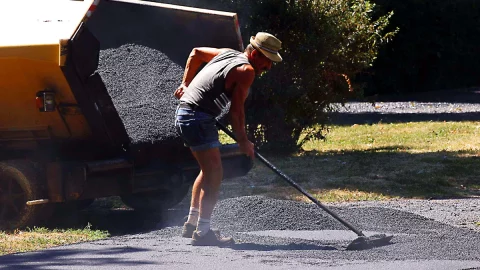
Alongside the “2025 Workplace Safety Protocol”, several regions Italians have adopted specific ordinances to prohibit outdoor work during the hottest hours of the day, generally between 12:30 and 16:00. These measures, binding at local level, respond to the urgent need to protect workers in areas particularly affected by exceptional heat waves.
For example, in Lombardia From today, July 2, until September 15, 2025, it is forbidden to work in construction sites, quarries, agricultural and horticultural companies during the hours of maximum risk, identified with a "High Risk" code reported daily by the official Worklimate website. Also Abruzzo introduced a similar ban until August 31, 2025, which concerns the agricultural, construction and floricultural sectors during the hottest hours. In Emilia Romagna and Lombardy e Veneto, measures include a ban on working during critical hours and requirements on staff rotation, hydration and the use of adequate protection for workers. Basilicata has introduced similar bans on days classified as high risk according to the Inail map.
Last updated: Thursday, July 3, 2025 at 7:47 am