The great unknowns cast on the last stage of the American presidential election by the coronavirus must not obscure various other aspects of this anomalous political dispute, which has become a referendum on Donald Trump. The virus has penetrated the White House in a big way and, with President Donald Trump and his wife hospitalized in the military hospital of Bethesda (Washington), lhe pandemic and how Trump has handled it inevitably leap to center stage. But there is not only this.
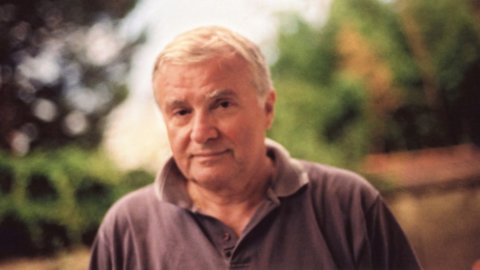
Americans are called to choose between a real estate developer and a showman (Trump won maximum visibility starting in 2004 as the patron of the TV series The Apprentice), and a longtime lawmaker and eventual vice president with Barack Obama who, 78 in November, would be the oldest president ever to take office if he wins. Joe Biden shows his age, while “big boar” Trump wears his already remarkable 74 years a little better. Trump is inevitably well known to us too, perhaps in an unwelcome and certainly superficial way, Biden much less so.
Biden was a senator from 1972, installed very young at the age of 30, to 2009; he chased his party's candidacy for a long time in the primaries, in 1988, in 2008 and had to accept Obama's choice in 2015 to pass the baton not to him but, in vain, to Hillary Clinton, a respect that after so many slights Obama did not could refuse the most powerful family, then, of the political universe of the democratic party. His name says little to many Europeans, who only remember him as Obama's deputy, ie shadow. But Biden unlike Obama and especially Trump is a good connoisseur of Europe, which he has always dealt with by sitting for a very long time and then chairing the Foreign Affairs Commission. In the mid-70s, he was the one who followed the Eurocommunist phenomenon from the Senate, a word whose contours few would now be able to define but which had a certain weight for a couple of years in transatlantic relations, directing debates in committee and depositions of experts. And even from the Judiciary Commission, inevitably almost entirely focused on internal issues, he never lost sight of the other side of the Atlantic, which he visited regularly.
At this point given the polls, all the polls and not just the big nationwide opinion polls, Joe Biden would be about to win. Even before the contagion hit Trump. Even more afterwards, because in addition to the various scenarios of uncertainty that the presidential contagion opens up, on Trump whether he is resigned early or not, whether or not he resumes the electoral campaign, whether or not he is still able to be the candidate, it is certain that the pandemic now dominates the last month of the race, exactly the opposite of what Trump who has always underestimated and snubbed her hoped would happen.
But, as Nate Silver of FiveThirtyEight, one of the leading opinion experts and who saved himself in part from the bad figure touched in 2016 to all pollsters by still attributing a 30% probability to Trump, three strong doubts remain widespread in the United States, particularly among progressives. That Trump, while losing and perhaps even by 4-5 million the popular vote, can win the decisive electoral vote; that the polls are blatantly wrong, as they did in 1948 (but then they were in their infancy) and in 1980, when they gave Ronald Reagan a slight advantage over Jimmy Carter while instead the difference was 489 to 49 in the electoral vote and almost 10 percentage points in the popular one, or as they did in 2016 unable to grasp the Trump phenomenon and the encounter between the "new man" and widespread discontent; and finally, the third doubt, there is the fear that in a ferocious head-to-head Trump, and for this reason he immediately wants the appointment of a conservative judge to the Supreme Court, could in the end "steal" the vote with various expedients. Having more popular votes than your opponent is not enough in the US presidential system to win because the geographical distribution of the vote is also important, to avoid that a few very populous states monopolize the choice of president; the so-called electoral vote o electoral vote assigns to each state as many "electors" as there are deputies in the House of Washington in Washington plus two senators, and these electoral votes go en bloc, with two small exceptions, to whoever has the majority of popular votes in the state . In reality, therefore, the president is not chosen by a single national vote, but by the sum of 50 state-by-state consultations.
Well, local polls, state by state, confirm overall the clear advantage – we are 8% ahead of Trump – that Biden has in large national polls, where voters from all corners of the country are interviewed randomly. If in the next few hours, also evaluating the consequences of the September 29 TV debate, this advantage which has been constant for Biden since June, dropping to a minimum of 6,6 points, should rise to around 10% both globally and as an average in the 50 states, the business for Trump would become difficult, says Silver.
But can we really trust surveys and pollsters? Do all voters tell the pollster the truth? A little reflection on how Trump won in 2016, when incredibly few were to seriously evaluate his chances, already evident in January-February of that year, and on how he could win in less than a month, covid permitting, may help. . Nothing better explains Trump's victory four years ago than the 206 counties, totaling 7,5 million votes, that voted for Obama in 2008 and 2012 and where a majority voted for Trump in 2016. Notable parts are found in the three States, Wisconsin, Michigan and Pennsylvania, of which Trump secured the electoral vote thanks to a tiny difference in his favor of 77.744 popular votes, about 44 in Pennsylvania, 23 in Wisconsin and 11 in Michigan. Why from Obama to Trump? Because Obama's promise to change Washington, to side with the little people especially after the shock of the great financial crisis of 2008 was considered failed, Obama's priority had been to save Wall Street, and in part the rest had been left to itself. Trump presented himself as the champion of anti-Washington. But already at the midterms of 2018 in the three states mentioned, the Democrats filled up, taking all three governors and three senators, one for each state, who were under consideration for the vote.
Trump has an economy on his side, especially employment but also GDP, which is making up for the collapse of the pandemic well. Employment is half of the 16% that the CBO, Congressional Budget Office, projected in April for September. For the rest, Trump has made himself known and it may not always be liked. He could perhaps win, but for an even narrower difference than four years ago, and this time Silver awards him about half of the 30% chances attributed in 2016. This month will be an interesting one.