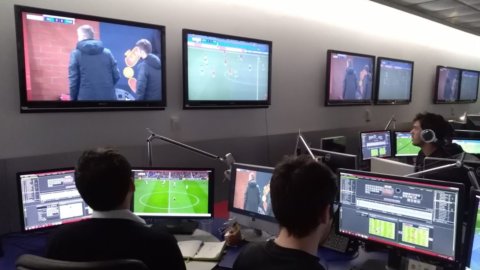
Missed passes, successful passes, ball possession, actual playing time and even kilometers traveled by every single player on the pitch. Behind those statistics that we all read at half-time or at the end of a football match, sometimes inattentively sometimes basting an interpretation that justifies the merits or demerits of a team, there are not only computers. There is a team of people who count and verify everything that we then see enclosed in a number and that we scroll through in a few seconds: it is the team of Deltatre, an Italian company founded in Turin 33 years ago but now with operational bases all over the world, from where it offers sports leagues and federations and Italian and international broadcasters a universe – often submerged – of services related to live coverage of major sporting events such as the Olympics, football, but also tennis, American football, golf, swimming and rugby.
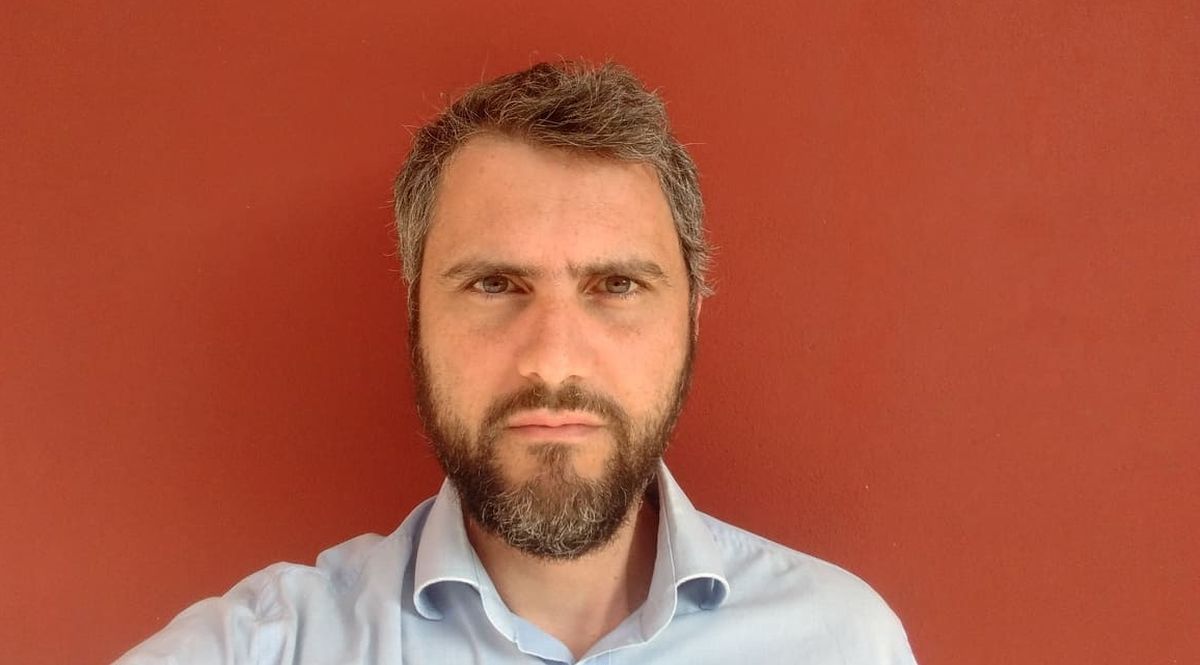
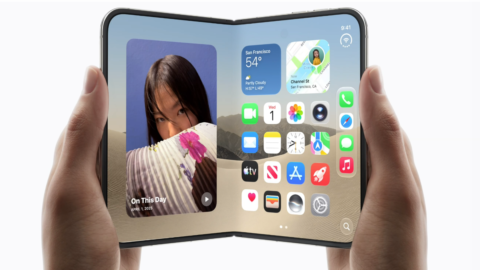
"Every year what we do is seen by 3-4 billion people", says the founder and managing director Giampiero Rinaudo, who still remembers the beginnings, when technology still did not help a job that has remained partly manual but which at the at the beginning it was in all respects: "We began by practically timing the alpine skiing, athletics and Formula 1 races with paper and pen, through a collaboration with Olivetti which at the time had a technical sponsorship contract with those competitions". A reality, that of Deltatre, born with statistics but which now does much more, thanks to a technology that, above all in recent years, has revolutionized the way we watch sport: not only on TV but also in streaming and on any device, anywhere and anytime. “It has almost become an offer like Netflix's for movies and TV series”. In Italy, the Netflix of football has recently arrived with Dazn, of which Deltatre takes care of the interface. "After all, sport has always been linked to technology: color TV was born with the World Cup".
Define the outreach of today Delta three, which recently acquired Australia's Massive Interactive forming a group with a turnover of 130 million and a thousand employees distributed mainly in Turin and London but also in more remote places such as Belarus and Utah, it is even complicated. You could try an acronym, OTT, which stands for over-the-top platform and includes all services related to the Internet and intended for television content, in this case sports: statistics but also 360-degree end-to-end solutions with highly profiled user experience and therefore interfaces, graphics, sites, applications, video clips or even support systems for commentators and referees, as happens in the case of football with the Var. "We don't do the Var, but we take care of the Var Communication System and that is the transmission of the Var operations on TV and on the monitors of the stadium and the press gallery, to show live to the public and insiders, as well as viewers, what is happening. We started last summer in Russia and now this novelty has also arrived in the top European club competition."
Events in fact by billions of spectators, who all look at the same graphics, one of the products packaged by Deltatre: in the case of football directly from the Turin base, in the case of other sports according to the most favorable time zones. A practically 24/XNUMX content production, thanks to a patrol of young computer enthusiasts of sports and capable of interacting with the most advanced technologies: Football statistics are captured through special cameras, placed in the stadium, often from the grandstand or from a high point to get a wider view, so that the software reveals the positions of the players, their movements and those of the ball. “We send four guys to the venue, who already on the eve of preparing the equipment: two of them follow the match from the grandstand, the other two from a van, just like a television crew”. However, an "invisible" television crew, which no one notices because the contents go directly to the sites and apps of the federations and sports organizations, or on TV on the main Italian and international broadcasts.
However, there is not only technology: as mentioned, the work of the correspondents and of the machines is meticulously controlled in real time by other young people in the flesh who, armed with Playstation-type joysticks, scan the matches by reviewing everything that is there on the replay it is to be reviewed and the definitive data packaged in almost real time, in order to pass them on to TV and Internet sites. Three other people work at the desk for each game, each with a different role: one of them, for example, with the help of tracking cameras from the stadium, counts every single touch of the ball by every single player on the pitch, clicking on the joystick as if the game was playing. Then, there is another team that processes cooked and eaten content to send to the media: it is a set of individual clips, which are then chosen and edited by the various TVs and become the famous highlights that we can enjoy in practically real time, in the intervals or a few minutes after the end of the meetings. “At our base in Turin, the average age is 36, but also considering the bosses. There are 83 workstations and we are able to manage many events at the same time. The best is when there are groups of European club competitions, with up to 24 matches within the same evening”.
At Deltatre you work almost playing and your work is seen by billions of people, but surprisingly this is not enough to convince young Italians; not even those many, many digital natives and football or other sports enthusiasts. And precisely in the Italy of youth unemployment, the company confirms what appears to be a paradox: “It will be because we are not well known enough, but we cannot find enough talent to hire in Italy. The fact of opening so many offices abroad was sometimes a forced choice: it wasn't because of the costs, we would have preferred to grow here but it wasn't possible, also because we are looking for rather high levels of technical specialization, and this can represent a deterrent. I'm just saying that here in Turin we have 65 open positions, we are looking for IT skills but not only”. Yet a cooler environment, in Italy, is hard to find: you participate in the production of the biggest sporting events within a small Silicon Valley. "We have even high-level technological collaborations, on artificial intelligence for example, with Google and Microsoft”. Step forward.