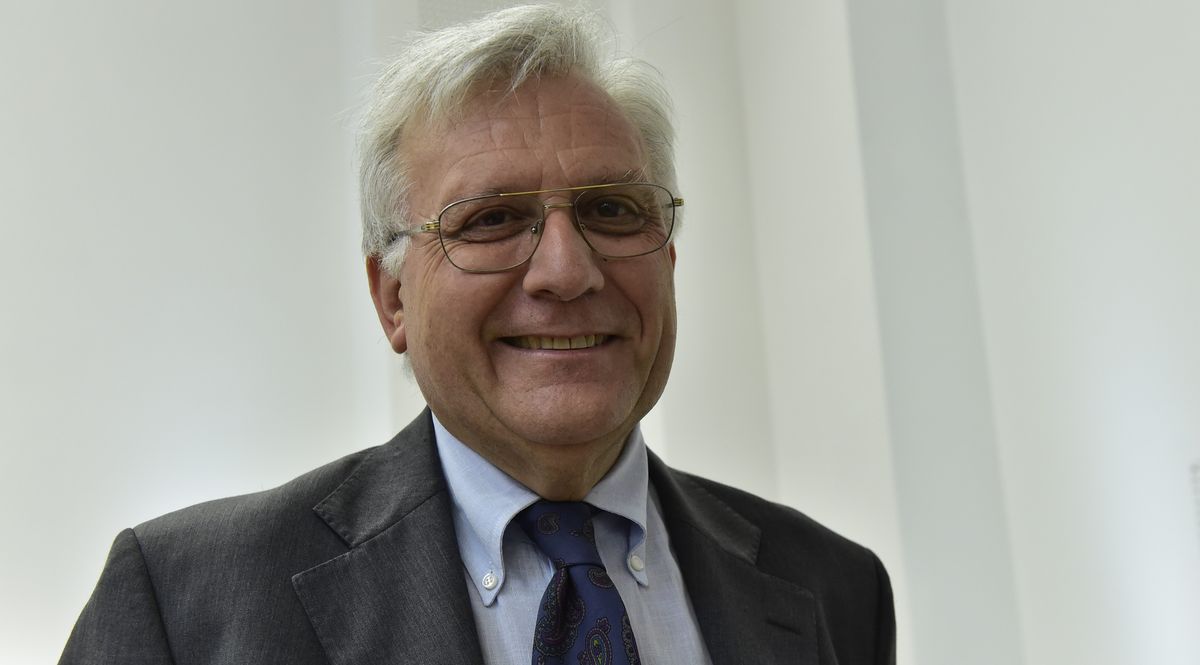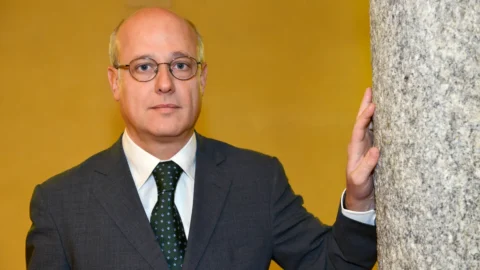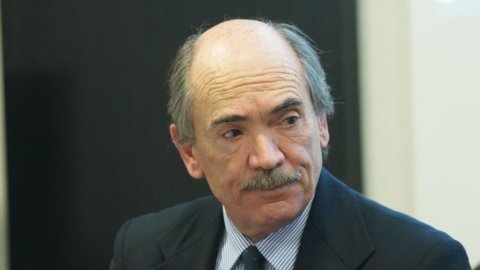
“The risk of mafia pollution in our economy is very high in this moment of widespread social and economic suffering; looking at the events of the past, I would consider the fear of repetitions of the evolution and infiltration of the mafias to be well founded". This is how it begins, after the announcements of the Italian Government on the details of the so-called Phase 2 of pandemic management of coronaviruses and on the eve of their effective introduction in May, the telephone conversation with Federico Cafiero de Raho. A long-time magistrate (in service since 1978), a life spent fighting organized crime in notoriously "hot" prosecutors, Naples and Reggio Calabria, Federico Cafiero de Raho has been at the head of the National Anti-Mafia and Anti-terrorism Prosecutor for almost two and a half years .
When asked whether, after the risk of contagion caused by Covid '19, the risk of the economy due to the infiltration of organized crime could also follow, the Prosecutor does not show the slightest doubt and adds: “My conviction is based on historical facts. Just name three, which are linked to as many dramatic episodes that have marred our country and whose memory is certainly still very much alive in Italians. The first, a story that I personally followed, in the 80s following the disastrous earthquake in Irpinia, which had protagonists in the reconstruction. Companies and entrepreneurs linked to the Camorra clans of Cutolo how Nuvoletta infiltrated the reconstruction; others, linked to the Casalesi, acquired control of the "major works", which they carried out with their own entrepreneurial entities, ready to intervene where needed, even in the form of the consortium, which constituted the mechanism for aggregating producers of concrete and aggregates and quarries owners.
“Another event – adds Cafiero de Raho – concerned the great building that characterized some areas of Sicily, at the end of the 70s and then in the following decade and which saw the most powerful mafia companies on the island engaged in the forefront. A story that led Giovanni Falcone to identify the entrepreneurs of What our. And, then, to conclude this quick roundup of memories from the past, how can we fail to mention the paradigmatic example of the waste emergency, which affected many Italian regions in the 90s and which recorded the massive presence of companies linked to organized crime, ready to provide its services for the identification of waste collection sites, for their storage and for their treatment?”.
Ultimately, therefore, is there a problem that exclusively concerns our territory and that has its roots in these and other clamorous events of the past?
“In reality, it seems to me highly restrictive to limit the activity of these criminal organizations to our borders. I'll give just one example. In a very significant telephone interception between two people, evidently belonging to criminal organizations, when asked by one of them what one should buy in Germany after the fall of the Berlin Wall in 1989, the other gave a chilling answer in its simplicity: 'you have to buy everything'; demonstrating the pervasiveness and economic strength of these organizations. But the fact that the infiltration of Italian criminal organizations knows no boundaries and makes use of legislation that is, if not compliant, at least more permissive than ours is certainly nothing new; just think of what happened in Malta in recent decades, but also, in the not so distant past, in Austria itself with multiple corporate settlements attributable to Italian criminal clans”.
So let's go back to the present day. In what forms do you currently see the greatest danger of organized crime infiltrating the Italian economy?
“The risk of a massive infiltration of organized crime following the catastrophic effects on the economy of this pandemic can be envisaged on two levels. The first level is that of needy people, who for various reasons have lost their jobs, or have seen their economic condition worsen, having previously carried out precarious or 'undeclared' jobs, which are no longer possible in this period. These people make up the largest recruiting pool. They are people willing to carry out marginal tasks entrusted by the mafias in exchange for modest rewards. Delivering a package containing drugs, acting as a sentinel in territories where illegal trafficking normally takes place to be promptly alerted to the arrival of the police forces, are just two of the examples of the destination of the recruitment of what can be considered unskilled workers of low-level crime, but certainly valuable to ensure the continuity of illegal businesses. In this regard, I would add that this 'modus operandi', cloaked in a semblance of social solidarity, contributes to significantly increasing the consensus these organizations enjoy, unfortunately, above all in some areas of our country”.
As for the other level?
“Equally worrying, if not more so, is what criminal organizations can implement on the business front. Here the techniques do not necessarily provide for the takeover of the company in difficulty with the ouster of its owner. The infiltration, in fact, takes place in an even more subtle way, apparently leaving the governance and therefore satisfying the natural desire of the owner to continue to perform his duties; even if, in reality, he is and will be subjugated by the directives and objectives of the underworld clan that holds him in their grip, having initially provided him with the money necessary for the continuation of the economic activity, to be repaid at usurious rates. Another aspect that should not be underestimated is the presence of mafia companies that operate in the labor brokerage sector, supplying it at more convenient overall costs, because they are lower than the market average, as no social security contributions or taxes are paid. With what further result? These companies are brought into bankruptcy and disappear after a few years, leaving outstanding debts to the tax authorities and INPS with damage also to the community. But not only…".
Is there still more to this business side?
"Surely! From what I have said so far, it is clear that emergencies constitute particularly attractive opportunities for economic crime organizations to increase their business and also their money laundering activity, given the large amount of public money that is disbursed in these circumstances. Just think of the flows directed, first and foremost, to the public procurement and health sectors. And so, looking at the current moment, I see a cause for great concern in access to credit for businesses. In fact, the measures that have been adopted to revitalize the economic circuit and avoid an economic-social catastrophe capable of shaking the country's structure to its foundations, unfortunately, can lend a hand to those devastating infiltrations I mentioned earlier. Therefore, at this moment I can only firmly invite all the institutions and the banking system, in particular, to monitor this aspect of access to credit with the utmost attention, reporting any objective anomalies in a logic of preventive and concurrent controls and subjective. These are aimed at matching with the databases which the Ministry of the Interior and the investigating authorities are equipped with and therefore prove to be invaluable in avoiding and countering the irreversible pollution of the virtuous circuits of our economy”.
But in all honesty, isn't this way creating bureaucratic bottlenecks, dangerous for the effectiveness and timeliness of application of the economic support measures launched by the Government?
“On this aspect I want to be very clear. In Italy, as I have already stated several times, we have first-rate legislation which is also taken as an example in many other countries for the fight against organized crime and corruption. A legislation which has not only taken into account the evolution of criminal pathologies over time, but which is also the result of experience gradually gained in the field. I am therefore convinced, on the one hand, that there is no need for extraordinary measures or further implementation of this legislation; and that, on the other hand, it is necessary to constantly monitor everyone to prevent the formation of pathological phenomena. For example, I find the decision to lower the price of masks, ordered by the Commissioner for the emergency, Domenico Arcuri, all the more appropriate in the current context. Having said this, I reiterate that using IT tools, with which it is possible to query the databases I mentioned earlier quickly and effectively, must be seen, if carried out with the full collaboration of all the bodies concerned, as a mandatory step, but not necessarily an inhibitory economic flows. An unavoidable condition, because the new hoped-for Italian economic miracle, in which hopes for a better near future are placed, may prove to be a goal that is not only challenging, but realistically achievable, in a perspective of economic and social growth of the country that is healthy and , for this very reason, solid and lasting".