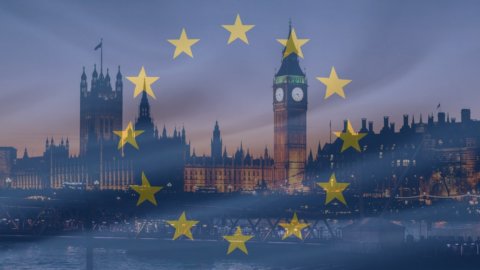
The Brexit referendum is approaching and the question hovering over the markets is only one: what will happen if British voters decide to leave the European Union on 23 June? There are too many variables to give an accurate picture of the long-term consequences, but the vast majority of analysts agree in painting a bleak picture regarding the immediate effects.
THE CONSEQUENCES ON INTERNATIONAL MARKETS
– EXCHANGE MARKET: PEAK pound
The rumors about the possible victory of Yes have already contributed to devaluing the pound by 12% in one year. According to Goldman Sachs, in the event of Brexit, the British currency risks losing another 15-20%.
– STOCK MARKETS: STORM COMING, BANKS IN THE TARGETS
Experts and various authorities predict that London's farewell to Brussels will open a phase of new turbulence on the stock markets. On Friday 10 June, the publication of some polls which gave the Yes lead by 10 points was enough to bring down the Eurofirst 300 index by 2,3%. If Great Britain were to leave the EU, the securities most at risk would undoubtedly be bank stocks, which have recorded heavy losses since the beginning of the year and could be subject to a new wave of sales.
– BOND MARKETS: SPREADS ON THE RISE, ECB IN THE FIELD
Investors will therefore move to safer stocks. In particular, a shower of purchases on German Bunds is foreseeable, which will widen the spread gap again. At that point the ECB should intervene by purchasing the government bonds of the countries under pressure, in order to stem speculation on sovereign debts.
– THE COUNTRIES MOST AT RISK IN EUROPE
An analysis by Standard & Poor's shows that Ireland, Luxembourg and Cyprus are the European countries most exposed to Brexit. Followed, in order, by Malta, Switzerland (which is not part of the EU), Belgium, Holland, Spain, Norway, Sweden, France, Germany, Denmark, Lithuania, Canada, Finland and Hungary. In line, surprisingly, Italy and Austria. The index calculated by the American rating agency takes into account exports to the United Kingdom, foreign direct investments, financial factors and migratory flows. However, the analysis does not reflect the potential consequences on the financial and foreign exchange markets, which, in reality, would make a difference.
THE CONSEQUENCES FOR GREAT BRITAIN
– GDP
With regard to Great Britain alone, the OECD estimates that – in the event of Brexit – the UK economy would experience “a negative shock” equal to half a point of GDP per year from 2016 to 2018. Moreover, the economy Britain could lose at least 3% by 2020, even if the weakening of the pound would limit the recessionary effects, strengthening exports.
- JOB MARKET
According to the English Confindustria, Brexit would cause a million job losses. George Osburne, Chancellor of the Exchequer, argues instead that the exit of Great Britain from the EU could cost 820 jobs over two years.
- REAL ESTATE MARKET
Again Osburne believes that with Brexit property prices could register a drop of between 10 and 18% in two years. The consultancy Capital Economics notes that the ratio of house prices to wages is already approaching pre-crisis levels.
– PENSIONS
As for the welfare state, British premier David Cameron did not mince words: “Brexit – he said – will open a black hole of between 20 and 40 billion pounds in our finances; the ministers will have to review the pension reform” and the doors will open wide to “a new austerity”.
- BALANCE OF PAYMENTS
On the balance of payments front, Brexit would trigger a flight of capital which would aggravate a not rosy situation. Last year, Britain's external deficit reached 5,2% of GDP, the highest level since 1948, the year the surveys began.
– COLOSSI ESCAPE FROM THE CITY
To save costs and build economies of scale, all the major international banks have established their European headquarters in the City of London, counting on the possibility of selling in 28 states without the obligation to obtain authorizations from the authorities of each individual country. With Brexit this organization risks imploding. According to the Financial Times, Deutsche Bank has created a working group to evaluate the possibility of moving out of the English capital. The American giants Citigroup and Morgan Stanley, on the other hand, have already indicated Dublin as the alternative to London.
– BANK OF ENGLAND AT A CROSSROADS
Meanwhile, the Bank of England risks finding itself at a dangerous crossroads: raise interest rates to curb inflation (which has an immediate cost for households and businesses) or keep them low to support GDP and the job market. In other words, there are no all-round positive monetary solutions to the problems that Brexit could create.
– CARNEY'S PHOTOGRAPH
The Canadian Mark Carney, governor of the Bank of England, gave in a few lines an effective picture of what Great Britain should expect at a macroeconomic level in the event of Brexit: "The pound would devalue further, even violently, pushing the inflation beyond target. Aggregate demand is projected to fall relative to our forecasts due to the financial crunch, depreciation of assets and uncertainty over UK trade relations. Households would curb consumption and businesses would curb investment. Global financial conditions could also change, with repercussions on exports”.