European banks are sinking, all in deep red in the last session of the week, while the sell-off triggered by Donald Trump's duties continues on global markets, with investors fearing the outbreak of a real global trade war with strong consequences on the growth of various countries.
At 11.20 it Stoxx 600 Banks marks a decline of 4,82%, with all the main big names in the sector marking strong declines. Among the most affected are Deutsche bank (-8,1%) in Frankfurt, SogGen (-8%) in Paris, Sabadell (-8,9%) And bbva (-7,4%) And Santander (-6,6%) in Madrid. Sales also on US giants, with Goldman Sachs, Morgan Stanley e JPMorgan Chase which on Thursday recorded losses of between 7,2% and 9,8%, the largest drops since 2020, and which today in the pre-market all left more than 2% on the ground.
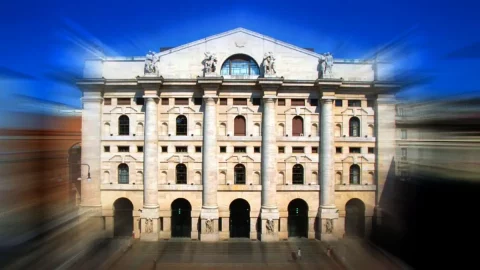
At Piazza Affari there is a sell-off on banks
It gets even worse business square, where the sector sub-index plunges by 6,94%. In the sector, no one is saved. The worst is Ps (-8,09%) despite the “promotion” by Morningstar Dbrs which brought the rating to the investing grade area, confirming the positive outlook. It is followed closely by Unicredit (-8,04%) awaiting the verdict, positive according to rumors, of the government on the Golden Power on the takeover bid for Banco Bpm. The banks of the galaxy are sinking Unipol (-6,54%): B for Bank e Pop Sondrio both mark a 7,7% drop. Deep red also for the other big ones with Bpm bank down 7,6% on the last day of the takeover bid on Anima and Intesa Sanpaolo down 6,7%. Also heavy Banca Mediolanum (-6,67%).
Banks worried about economy and rates
The possible consequences of the duties on the Italian and European banks are weighing downglobal economy monetary policy of central banks, while investors are taking advantage of this to lighten their positions on the sector, realising part of the gains made in the race of the last few months also in the wake of the bank risk. The market is particularly concerned that the trade war declared by the Trump administration could cause a recession in many countries, increasing the risks for the credit portfolio of the institutions and pushing the central banks to cut rates again despite upside risks to inflation.