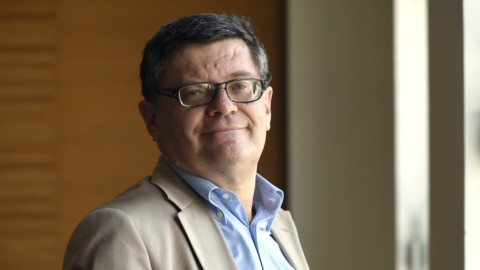
A few weeks ago, 2.000 Audi managers gathered at the group's headquarters in Ingolstadt to share the bitter pill of the new industrial plan which involves a cut of 9.500 jobs, only partially offset by 2 new hires in the electricity sector. ”For the duration of the convention – he says Joseph Bertha, interviewed by FIRSTonline – the House had made 2 electric cars available to the executives”.
Suddenly however, “because the Ingolstadt electricity grid could not withstand the impact of a use of that size. And the city remained in the dark”. An emblematic story, explains the professor, Professor of Economic History at Bocconi, of the state of the art of the European car on the eve of what risks being a dramatic year for the four wheels: in 2020, according to estimates by the Financial Times, four million fewer cars will be sold in the Old Continent, with dramatic ripple effects throughout the supply chain.
But will it be like this? And what will happen to Italian industry, both the one that focuses on French paper and on suppliers linked to Made in Germany?
“European industry is sailing in the dark. Traditionally, the industrial system has sinned with prudence, to the advantage of Americans and Asians who have filled the existing gap. Now, thanks to a system of very heavy rules, the opposite path has been chosen, bordering on rashness, underestimating the costs of the choice: cuts in Germany, starting with Mercedes, not to mention the enormous investments. I fear that the effort, in the face of facts, will prove to be unsustainable also because it will be acknowledged that the forecasts on electricity times, including infrastructures, will not be respected".
The result?
“I expect a very tough year for Germany and, consequently, for the countries that participate in the German production chain. Among other things, we were good enough to make customers flee diesel, a technology in which Europe was a leader. A madness that underlies most of today's problems”.
But there will certainly be some method behind these choices. Or not?
“Frankly, I don't see it, especially if I look at the times of the operation, really forced. The shock of the dieselgate certainly had a strong impact, as did the German fear of losing leadership in the sector. In the face of Trump's offensive, the desire to create a German-led avant-garde European system has grown. The risk, however, is that the bet, subjected to almost unbearable tensions for the social system, could cause a political short circuit. I don't rule out a second thought, even if the machine, once started, moves forward by inertia”.
It is not just a European phenomenon.
“What happens with us under the pressure of the regulators, elsewhere moves on the initiative of the producers. In America also against the indications of the White House. However, I am concerned about the approximation with which they are taken for good projections, all to be confirmed. In April 2018, I saw a fleet of self-driving cars in Detroit. At the time they assured me that the cars would go on the market by the autumn. But so far nothing has happened. There is an underlying insecurity that the automotive world is not used to. In the annual meeting with Fiat Chrysler executives there was an interesting speech on what is needed to start up an electrical infrastructure capable of supporting significant traffic flows. I am convinced that, for Italy, a long, indeed very long time is ahead before anyone dares to travel the Turin-Milan route on an electric car. But do you realize that today, in the absence of interventions on the grid, not even planned for now, it takes twelve hours to recharge a Tesla?”.
How does Fiat Chrysler fit into this picture on the eve of the merger with Peugeot?
“Fiat Chrysler has postponed the launch of the electric 500 to the second half of the year. Voices from inside tell me that it was decided to widen the rear of the car compared to the initial project in order to use the Punto line. Other signs bear witness to the difficulty of investing in a more decisive choice in the current situation. I would say that, for now, the electric turn makes some sense in the City Car sector”.
Let's go back to the meeting of Fiat executives, which has always been a compass for group managers. What impression did he have?
“The feeling of an aircraft carrier without a captain”.
Really.
”The arrival of Carlos Tavares is expected to delegate all the responsibilities to him. Meanwhile the engines are packed. Manley has disappeared. He's back in America doing what he knows how to do, which is managing North American brands well. Gorlier has never appeared, in recent months he has never made his voice heard and he too hopes to return to the USA. It really is a troubled situation, dominated by uncertainty”.
Not a pretty picture, is it?
“Let's look at Turin: the electric sector will have ridiculous numbers in the near future. Maserati depends on what the new top management decides. Will they decide to focus on the brand? And what fate awaits Alfa? The future, not only for Turin, is linked to the recovery of historical brands. In the meantime, the situation in the area, between sardines, initiatives blessed by the bishops and emerging social tensions, is less and less manageable. And yet, as Riccardo Gallo has pointed out, there are some strong points: Italian plants are among the most modern and efficient, both if you look at Europe and at the USA. I haven't seen anything like it in Detroit. But will this be enough to guide the choices or will more political evaluations prevail? We await, perhaps as early as next week, the PSA memorandum of understanding".
What role will John Elkann play?
“He escaped the Renault jumble in extremis. Now, thanks to Tavares, he can once again cherish the goal of managing a holding company thanks to Exor. But to obtain results he will have to commit resources, not only financial, superior to those of the past. Elkann will have to unpack CNH, sell Comau and find some strong support because today, apart from real estate, it doesn't even have the dimensions to perform the function it was originally supposed to perform. It's not a balanced portfolio."
Meanwhile, GM's torpedoes have arrived. What advantages can Mary Barra's complaint have?
“I don't think there will be a trial. The operation, in addition to confirming that the CEO hated Sergio Marchionne, represents a systemic move to reiterate that Jeep and Ram are US brands, don't think of coming to rule in our house, especially with companies that have Chinese shareholders, such as Psa. The first press release, the longer one announcing the appeal, pointed out that every dollar eventually recovered would go to strengthen production and investments in North America. An invitation to the White House to move against a group, PSA, which has significant Chinese shareholders. Tavares learned the lesson: Dongfeng's stake will fall below 5% in FCA/PSA, so he won't be entitled to a seat on the board. A compromise must be made with corporate America”.
And perhaps also with the balance of Italian finance. How should we read the entry of Exor in Gedi?
“Frankly, I'm puzzled. On the financial level, resources that would be needed elsewhere are lost. Even more demanding will be the commitment on the front of the image. Given the current weakness of the press, I don't think it's a bargain, even if there could perhaps be an immediate political payback. But it could turn out to be a boomerang”.
It is however a sign of attention towards the country. A sign of attention for what remains of Italian industry. He does not believe?
“Today, if we talk about industrial policy, Italy can only offer segments of the industrial cycle, in addition to the conditions established by the others because Italian industry is strong in intermediate processes, but others control the final phase of the cycle, as happens in fashion, or the initial one, which requires control of basic products. This must imply extreme flexibility and organizational ability to do everything better than others, but under conditions that others like. We cannot delude ourselves that Indians, Koreans or others will come and rehabilitate our steel plants. Such complex and expensive operations are carried out in one's own home, as the Germans teach”.
There would be the European Union, don't you think?
“And it will certainly play an important role. Let's think of the batteries, the soul of the electric car. We have launched studies, seminars, proposals. But there are no Italian capitals capable of developing projects worth at least one billion or more. The EU certainly helps. But let's not delude ourselves: without a strong public and private component, ideas are destined to remain so”.
The consequences?
“Let's be realistic; we have to dance to the music that others are playing. And we will be judged on what we can do in that context if we want to maintain a consistent industrial base. We'll make it? I do not know. Surely, if we want to maintain a prominent position we have to do the impossible. To be better than others while knowing that our country penalizes us. The task is that. It's a daunting task. Let's hope we succeed."
In short, it will be a difficult year. Indeed, the year of truth.