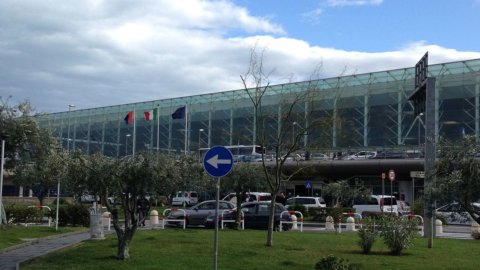
The aeroporto di Catania resterà chiuso fino alle 18 di giovedì 13 agosto. L’eruzione dell’Etna continua infatti a rendere difficili le operazioni di volo a causa della presenza di cenere vulcanica, costringendo lo scalo di Fontanarossa a prolungare lo stop agli arrivi e alle partenze. La decisione arriva dopo giorni di forti disagi per migliaia di passeggeri e centinaia di voli cancellati, ritardati o dirottati.
Aeroporto Catania chiuso, voli sospesi fino a giovedì. Riaperto Comiso
La situazione resta legata all’evoluzione della nube di cenere prodotta dall’Etna. La Bags, società che gestisce gli aeroporti di Catania e Comiso, continua a monitorare le condizioni dello spazio aereo e mantiene lo scalo pronto a riprendere progressivamente le attività non appena sarà possibile operare in sicurezza. La riapertura, quindi, non è automatica allo scadere delle 18: l’orario indicato rappresenta il termine attualmente previsto per la sospensione e potrà essere modificato in base all’evoluzione dell’attività vulcanica e alle indicazioni delle autorità competenti.
La novità riguarda invece l’airport Comiso, che è tornato operativo dopo essere stato temporaneamente interessato a sua volta dalla presenza di cenere vulcanica. Lo scalo, gestito dalla stessa Sac, rappresenta uno degli aeroporti alternativi utilizzati per ridistribuire parte del traffico di Catania. Comiso aveva dovuto sospendere le attività a causa della nube di cenere, ma è stato riaperto dopo il miglioramento delle condizioni. La sua riattivazione consente di recuperare una parte della capacità aeroportuale dell’isola proprio mentre Fontanarossa rimane fermo.
Il problema, tuttavia, resta la differenza di capacità tra i due scali: Comiso non può assorbire da solo il traffico normalmente gestito da Catania. Per questo, durante l’emergenza, sono stati utilizzati anche gli aeroporti di Palermo e Trapani per accogliere i voli dirottati.
Hundreds of flights cancelled and diverted
Between August 8th and 11th in Catania they would have been at least 388 departing flights cancelled, equal to 55% of those scheduled. Another 212 incoming flights, approximately 30% of the total scheduled, were unable to land at the Catania airport. Dozens of planes were therefore diverted to other Sicilian airports, particularly Palermo and Comiso. At Falcone-Borsellino Airport alone, approximately 190 flights have reportedly been diverted in the last four days, affecting more than 30 passengers. Among the companies most affected by the changes Ryanair, easyJet, Ita Airways and Wizz Air are among the airlines with the largest number of connections to Catania airport.
However, the situation remains linked to theevolution of the eruptionSAC, the company that manages the Catania and Comiso airports, explained that "operations continue to be severely impacted by the unpredictability of eruptive activity" and that "safety of operations remains the overriding criterion underlying every decision." The company also noted that management of individual flights remains in the hands of the airlines. "Individual airlines are solely responsible for managing their flights, including any cancellations, delays, diversions, or rescheduling, and for providing assistance and re-routing to their passengers," SAC stated.
Etna: Catania shuts down until 18 p.m. Comiso shuts down due to ash.
The new morning update of August 12th has further postponed the resumption of operations at Fontanarossa. Previously the stoppage was scheduled until 11 a.m., but the persistent emission of volcanic ash into the atmosphere led to the closure of sector B3 and the suspension of both arrivals and departures up to 18.
The airport too Pio La Torre of Comiso was affected by the emergency. SAC announced the suspension of operations until 10:00 a.m. on August 12th "due to volcanic ash contamination." The evolution therefore remains dependent on wind direction and the dispersion of the cloud produced by Etna.
The problems in the last few days have also reached Malta, where volcanic ash has caused cancellations and delays. A spokesperson for Malta International Airport said Times of Malta, 19 flights were cancelled, ten arriving and nine departing.
Meanwhile, the volcano's activity remains intense. The INGV's Etna Observatory has reported the opening of a new eruptive vent in the Valle del Bove, at approximately 1.900 meters above sea level near Monte Simone. Strong explosive activity continues in the Voragine crater, accompanied by ash emissions directed toward the south-southeast.
Canceled flights to Mount Etna: what passengers are entitled to
For those who find themselves with a cancelled, delayed or diverted flight, the main distinction concerns the reason for interruptionA volcanic eruption and the resulting closure of airspace fall within the exceptional circumstances envisaged by European regulations. This means that, generally speaking, no financial compensation is due A flat rate is applicable in other cases of cancellation or significant delay attributable to the airline. However, other passenger rights remain valid.
Il carrier must guarantee free assistance, which includes meals and drinks proportionate to the waiting time and, when necessary, hotel accommodations. Transfers between the airport and the hotel must also be guaranteed, as must the ability to communicate. If the airline is unable to provide these services directly and the traveler is forced to pay out of pocket, the necessary, reasonable, and documented expenses can be requested from the carrier. It is therefore essential to retain receipts, bills, and invoices. Even in the event of hijacking towards another airport The airline remains responsible for arranging the transfer to the originally scheduled stopover, or to a nearby destination agreed upon with the passenger. If this service is not provided and the traveler must arrange their own transportation by train, bus, or taxi, they may subsequently request reimbursement of the expenses incurred.
Unions call for more investment in Sicilian airports
The emergency has also rekindled the comparison of airport network capacity Sicilian airport to absorb situations of this kind. Filt-Cgil, Fit-Cisl, Uiltrasporti Sicilia, and Ugl TA have denounced the difficulties faced by both travelers and staff: "Flights canceled and diverted, passengers waiting, workers exhausted. What is happening right now at the Catania airport is not a fatality: it is the consequence of years of short-sighted decisions regarding investments and personnel," the unions stated. The organizations they ask for more resources, more staff and above all more efficient land connections between the island's airports, underlining how the transfer of dozens of flights to Palermo and other airports ends up rapidly increasing the workload.
The Etna emergency thus enters its fifth day with the situation still uncertain. The reopening of Catania and Comiso remains scheduled for 11:00 a.m. on August 12, but the actual resumption of operations will depend on the evolution of volcanic activity, ash dispersion, and wind conditions. Passengers are therefore advised to check the status of their flight with their airline before arriving at the airport.
Ultimo aggiornamento mercoledì 12 agosto alle ore 15:27