The Operational Research Plan (POR) onrenewable hydrogen extends to clean fuels for civil aviation. It is Enea that announces with the Polytechnic of Milan a research on e-fuels, which use renewable hydrogen and carbon dioxide. In the next few weeks the design of a pilot plant will begin using part of the 110 million euro of the POR. The success of the initiative would project Italy and its research body into a global context where the challenges regarding the use of hydrogen are greatly accelerated. The source, as we know, is privileged and is among those destined to occupy increasingly larger spaces in the new economy.
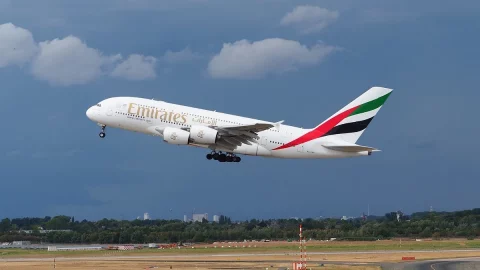
Planes consume kerosene and pollute. Costs are rising and the Meloni government has prohibited automatic tariff increase mechanisms by decree. Ryanair yesterday announced the cutting of many flights and it is true that the cost of fuel affects route management. However, “e-fuels are of particular interest for those sectors where direct electrification is difficult to implement, just like the aviation sector” he says Julia Monteleone, responsible for energy use in ENEA. Unfortunately, the technologies that must push the production of new fuels are still in their infancy. The extension of the POR is the context in which "an activity on e-fuels and in particular on e-kerosene was launched" he adds Monteleone. Among the projects of the Ministry of the Environment, this one on ecofuels has been going on for some time and is part of the European line on the environmental targets of Fit for 55 and REPowerEU.
Green fuel costs will fall
The experimental data will be used in a process simulator. The objectives in civil aviation include the use of at least 2% green fuels within the next two years, but in the bewitching 2050 of the green revolution, we should all travel on planes powered by 85% clean fuels. Along the way to 2050 in mix of solutions includes e-kerosene, which has advantages such as high energy density, as well as an already available market and infrastructure park. Enea and Politecnico di Milano will study the state of the art of production technologies for aeronautical applications and their implementation in the national context. Claudia Bassano, another Enea researcher, explains that the work will lead to "some plant configurations with economic analysis for estimating the specific production cost, calculated based on the cost of electricity and CO2 in the ETS emissions market". A medium-long term vision that should make airlines happy because e-fuels from a chemical-physical point of view are equivalent to fossil fuels but with the use of hydrogen the combustion changes and there is no more pollution. The cost of hydrogen fuels is currently high, but will have to come down. ETS emissions trading can be part of an economic process that brings good business to states that encourage green flights. One more reason to have confidence in Italian researchers.