On the night between April 25th and 26th 1986, at exactly 1:23 am, Reactor number 4 of the Chernobyl Nuclear Power Plant, in the then Ukrainian Soviet Socialist Republic, exploded during a safety test. It was supposed to be a controlled simulation: to test whether, in the event of a power outage, the still-spinning turbines could provide enough power to keep the cooling systems running. But a fatal combination of human error, design flaws, and protocol violations turned the experiment into a catastrophe.
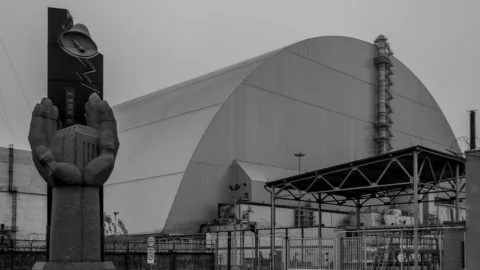
The explosion blew the lid off the reactor, releasing into the atmosphere a radioactive cloud that spread rapidly over much of EuropeIn the following days, while the Soviet authorities tried to contain the information, it was the Swedish monitoring stations that detected anomalous levels of radioactivity, forcing Moscow to admit what had happened. The consequences were immediate and dramatic, and still are today, given that the former nuclear site is still radioactive and it can indeed be visited, even through industrial archaeology tourism, but only for a few minutes and with the necessary protections, 40 years later and despite the "dome" that covers what remains of reactor 4.
The catastrophe's tragic toll, including deaths and displaced people
Two workers died in the explosion, while dozens of firefighters and technicians who intervened without adequate protection were exposed to lethal doses of radiation: Many of them died in the following weeks from acute radiation syndrome.Within a few days, over 100.000 people were evacuated from the surrounding area, including the nearby town of Pripyat, built specifically for the plant's workers. Over the years, the human and health toll of the disaster has been the subject of study and controversy: tumors, chronic diseases and environmental contamination have profoundly affected the affected populations.
The area around the power plant, the so-called "exclusion zone" remains largely uninhabitable todayTo contain the radioactivity, a first concrete and steel "sarcophagus" was built around the destroyed reactor in 1986. This structure was conceived as a temporary solution, but it remained in operation for decades. Only in 2016 was a new, gigantic enclosure completed, a more secure enclosure designed to last at least a century and allow for the gradual dismantling of the reactor.
Russia's invasion of Ukraine is putting the "sarcophagus" at risk
But even this facility is now at risk: due to the Russian invasion of Ukraine in 2022, the plant area was temporarily occupied in the early stages of the conflict, raising international concerns for the site's safety. But it is above all what happened in 2025 that has brought global attention to the plant's fragility: A drone hit the large steel cover built in 2016 over reactor 4, causing structural damage and a fire.
While radiation levels outside remained under control, the impact partially compromised the integrity of the so-called "new sarcophagus", designed to contain radioactive materials for decades. Experts have warned that the facility has lost some of its safety features and that complex interventions will be required to fully restore it. In a war context, even routine maintenance becomes more difficult, increasing long-term risks.
What does Chernobyl represent today, 40 years later?
Forty years later, Chernobyl remains a powerful symbol: of the fragility of technology when managed without transparency and rigor, but also of the long-term consequences of human error. And yet, the debate on nuclear energy is far from overFaced with the climate crisis and the need to reduce greenhouse gas emissions, many countries have reevaluated nuclear power as a low-carbon energy source. New technologies promise higher safety standards than the Soviet reactors of the 80s, and there is talk of small modular reactors and fourth-generation systems.
However, accidents like the one at Fukushima in 2011 have reminded us that zero risk does not exist. And the dangers that still exist even at a "closed" site like the Ukrainian one can pose an even greater threat if placed in an unstable geopolitical scenario like the current one. The danger is not immediate, but concerns above all the possible future release of radioactive dust in the event of further degradation or new attacks.
Chernobyl, therefore, is not just a memory, but a responsibility that is still open. Forty years later, the disaster of April 26, 1986 remains a global lesson: it reminds us that energy, whatever form it takes, is never neutral and entails choices, risks, and consequences that span generations. And it invites us to question, now as then, what balance is possible between technological progress, safety, and environmental protection.