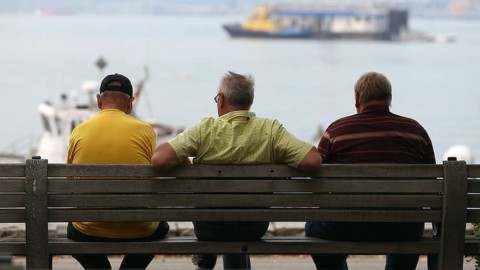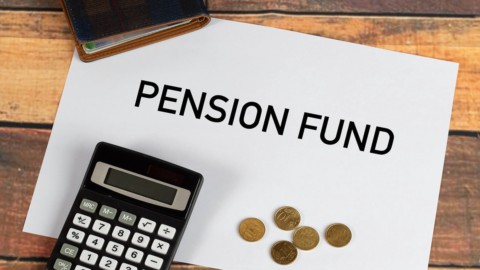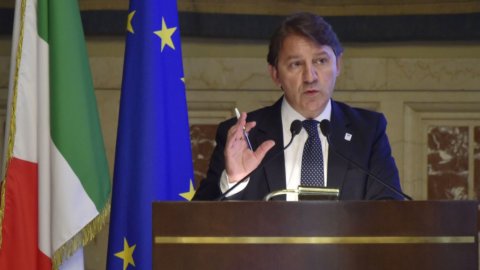
There are 16 million pensioners in Italy: 8,3 million are women, 7,7 million men. They receive 312 billion euros of treatments, 40% of which, however, is less than 1.000 euros per month. These are some of the numbers contained in the XXI Annual Report published today by INPS and presented to the Chamber by the president, Pasquale Tridico. A study which shows an ever wider pension and salary gender gap, quantified at 6 euros in the first case and 4 in the second.
How much do pensions cost?
The photograph taken by INPS shows that in 2021 the institute provided 20,8 million social security treatments. Out of a total of 16 million pensioners, as at 31 December 2021 INPS paid one pension to 15,5 million retirees, of which 7,4 men and 8,1 women (equal to 52%) for a cost equal to 305 billion euro of pensions paid, of which only 44% paid to women. Since the total benefits amounted to 20,8 million, there is a share of pensioners who receive more than one benefit (20% of men and 33% of women).
Out of the total number of exits, they weigh the most retirement/early pensions (56%), followed by old-age pensions (18%) and survivors' pensions (14%). Benefits for disabled civilians represent 7% of the total cost, while disability pensions and pensions and social allowances reach 4% and 2%, respectively.
Retired people: almost 40% have an income below 12 thousand euros, women are penalised
In the chapter dedicated to “poor pensions” it reads that last have 40% of retirees received a allowance of less than one thousand euros per month, equal to a gross pension income of less than 12 euros a year. However, if we consider the minimum supplements, such as the fourteenth month and social security increases, the percentage drops to 32%.
The report then goes on to analyze the pension gender gap. As mentioned, out of 15,5 million pensioners, 8,2 million are women (52% of the total). Of the 304 billion intended for the payment of pensions, however, only 44% went to female pensioners. It should also be considered that in 2021 the difference between men and women in retirement income was over 6 thousand euros. The report underlines how the gap derives from the clear prevalence of men in early pensions, i.e. those with a higher amount, while women prevail in survivors' and old-age pensions. Furthermore, according to INPS, the pension gap is attributable to hourly wages (difference of 17% in the private sector), working hours (part-time) and contributions seniority (difference of 40% in 2001 down to 25% in 2021). Overall, men's pension benefits are 37% higher than women's.
During the presentation of the report to the Chamber, Tridico did the point also on the citizen's income: in three years (April 2019-April 2022), 2,2 million households - equal to 4,8 million people - received the subsidy, for a total expenditure equal to 23 billion of Euro. The average monthly amount for the month of March 2022 is equal to 548 euros per household.
The poor job
The INPS annual report also talks about work. Well, the report shows that almost 4 million workers earn figures below the Citizenship Income threshold, i.e. less than 6 euros a year. In 2005 there were 2,5 million, with a growth of 10% from 2005 to 2021. To date, moreover, there are 257 national employment contracts under 1.500 euros gross per month, of which 11 in sectors that have over 100 employees. This means 4,5 million workers they earn less than 9 euros gross per hour.
“The Report – he explained Pasquale Tridico in the Chamber – proposes a simulation exercise in which the contributions accumulated in the first 15 years of their working career by the generations born between 1965 and 1980, to which the contribution system applies exclusively, have been reconstructed. Some of them have failed to earn wages higher than what would be equivalent today to a minimum wage of 9 euros per hour. If such a minimum wage were introduced, their contribution profiles would rise significantly, by an average of 10 percent. This exercise also shows that women and young people are more affected by low wages. In summary, we need more work and better paid work if we want to ensure the country's sustainability of its welfare system”.
Making a general analysis of the Italian labor market, INPS informs that in 2021 i public and private employees were 19,3 million (+1% compared to 2019), but almost half - 9,5 million - worked only part of the year, with 3 million people (-50% compared to 2020) on layoffs. Of these 9,5 million, 46% (4,4 million, +18% on 2019) were women.
As with retirement income, there is also a strong gender gap for employment income. Last year, women earned on average 4 thousand euros a year less than men (-25%, 20 thousand euros against 24 thousand, but -8% if we compare stable and continuous jobs).
Inflation could weigh on pension spending
The rising inflation in 2022, with price growth that could settle at 8% at the end of the year, could weigh on the expenditure for INPS pensions in 2023 for 24 billion. INPS also added that on the basis of data as at 2020 January XNUMX (therefore without calculating the shock of the pandemic and the war) the Institute's capital deficit could reach 92 billion in 2029.
“There is no sustainability problem – they explained – but there is a warning. We need economic growth and productivity for a balanced system.
The measures undertaken by the Government to support incomes in the face of rising inflation "seem to go in the right direction of not triggering an inflationary spiral, by intervening to support incomes, especially medium-low ones", said the president of the Inps, Pasquale Tridico. “In this context, he says, the Institute's commitment is once again expressed, in relation to social bonuses and theindemnity of 200 euros paid with the Aid Decree, making itself the go-between for as many as 31 million users including workers, pensioners and the unemployed. The majority of the indemnities are paid out by the Institute". The figure also takes into account those advanced by companies and compensated with INPS.
The cost and options of outbound flexibility
The report recalls that the "experiment" will also end at the end of 2022 Odds 102, which has taken the place of Quota 100 since the beginning of the year. If politics fails to find a new solution, from 1 January 2023 we will therefore return to the Fornero law. INPS experts have estimated the impact on the public accounts of three hypotheses on the table to make the pension system more flexible:
- option one: the recalculation of the check contribution which would allow the exit of workers still partly "wage" with 64 years of age and at least 35 of contributions on condition that they have accrued an amount of treatment equal to at least 2,2 times the social allowance. Cost: 900 million in the first year and would absorb almost 3,8 billion in 2029.
- option two: early exit with penalty. 64 years of age and 35 of contributions, but a penalty of 3% of the salary pension for each year in advance. Cost: just under a billion in the first year and up to 5 billion in 2029.
- option three: advance of only the contribution contribution of the check (“Tridico proposal"). Advance of only the contributory portion of the pension at 63 years of age and with 20 years of contributions to then recover the salary portion once the old age requirements are met. Cost: 500 million in the first year and 2,5 billion in 2029.