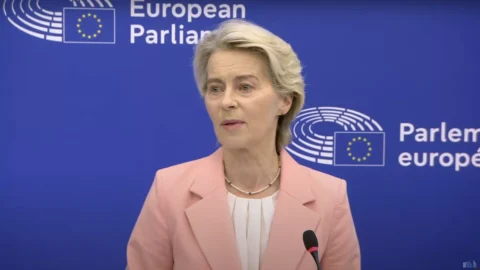
It is dotted with often invisible pitfalls the long journey from here to next two years will have to lead to the approval of the new Multiannual Financial Framework (MFF), practically the balance long-term plan of the Union from 2028 to 2034, for more 1800 billion euros.
It's one of more difficult challenges which the President of the Commission will have to face Ursula von der Leyen emerged unscathed (although a little battered) from the recent vote of no confidence and the Pfizer affair. A challenge that is intertwined with the negotiations on duties with the United States and with the Ukraine crisis which imposed on the Union a significant financial commitment to satisfy the demand for security and defense at the expense of funds allocated to farmers.
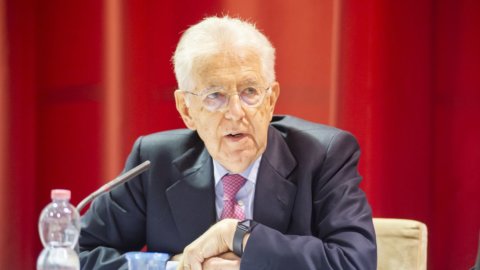
“At the autumn restart – he explains Enzo Moavero, former Foreign Minister and professor of European policies at Luiss University – the technical groups will meet to analyze in detail the more than 200 pages of the multiannual budget draft to be submitted to the General Affairs Council at the end of the year. In the event of a failure to reach an agreement, the decision will be passed directly to the Heads of State and Government of the European Council, as has already happened in the last two rounds.” According to Moavero, the creation of a mega budget chapter that includes both CAP and cohesion funds risks penalizing agricultural subsidies though national plans will decide how to modulate the interventions.
But right from the start, according to Moavero, it became clear how little influence European farmers' lobbies (especially Italian ones) had compared to the past. Italy and France They could therefore see their allocated contributions reduced. But these are also the two countries that previously blocked the EU-Mercosur agreement, which, in this phase of shrinking American markets due to tariffs, could have represented a valid alternative. The Commission President could therefore use the argument of a lack of solidarity towards Northern European farmers against Italy and France. It is also possible, Moavero explains, that Commission officials have already worked closely with representatives of the larger countries, at least, but not with Italy.
The negotiation could also lead (always away from the spotlight) to forms of compensation between agriculture and defense industry. But this will depend greatly on how the geopolitical framework evolves and Europe's future defense needs.
It must be said that the document presented on July 16 by von der Leyen after hours of negotiations among the commissioners appears to be the result of long-term planning. Anticipating difficult negotiations, von der Leyen and her chief of staff, Bjoern Seibert, began discussions with member states 18 months ago, that is, before even securing a second mandate. The idea was to gather input, avoid a complicated battle later, and be able to present a budget that would enjoy considerable consensus. There was no shortage of criticism from parliamentarians, who were presented with a few slides, while the press conference was said to have been more carefully planned (although the API correspondents' association had its say).
The novelty of von der Leyen was that of merge different budget resources in plans for each country, which would produce results only when governments implemented certain reforms. In this way the system would encourage recalcitrant countries to intensify their efforts, While increasing Brussels' influence, however, as the weeks passed, an alliance of farmers, regions, and legislators coalesced to counter this vision. "They all managed to save face," a Commission official reportedly said. Faced with the threat of massive cuts to the EU's gigantic agricultural budget, Agriculture Commissioner Christophe Hansen managed to set aside €300 billion that would go directly to farmers. For the Common Agricultural Policy, "this is not a revolution but an evolution," Hansen told reporters, attempting to reassure farmers protesting in the streets of Brussels.
Also opposing von der Leyen was Commissioner for Social Rights Roxana Mînzatu, who fought a rearguard battle to preserve the European Social Fund (the fund supports training for the unemployed and other vulnerable groups). While she failed to secure a specific amount for the ESF, Mînzatu secured a commitment to allocate 14% of the overall budget to social spending.
As for theItaly Commissioner for Cohesion and Reforms Raffaele Fitto opposed a plan to expand the power of national governments at the expense of the regions. The plan risked eroding Fitto's power within the Commission and weakening EU regional policy. "This was precisely what we discussed," an official said, during meetings between Fitto's team and Seibert. Fitto ultimately secured a commitment to allocate €218 billion in direct funding to less developed regions.
The Socialists and Democrats Group in the European Parliament wanted to reiterate some of Parliament's legislative, budgetary, and discharge prerogatives, so that they are fully respected at every stage of the process. "The next MFF," the S&D argues, "should be subject to full parliamentary scrutiny and accountability and safeguard Parliament's role as co-legislator, budgetary, and discharge authority. Furthermore, lessons need to be learned from past experiences, and we are therefore critical of the creation of the so-called 'national and regional partnership plans' as they have been conceived and presented, which, as currently designed, could hinder the European dimension."
Virgilio Dastoli, president of the European Movement, notes that "it is not easy to navigate the more than two hundred pages of communications and draft decisions that the European Commission churned out on July 16, 2025, after lengthy negotiations involving directorates-general, commissioners' cabinets, and ultimately the commissioners themselves, against whom a vocal minority had declared themselves hostile for various reasons, primarily related to external pressure. In the end, the vision of President Ursula von der Leyen prevailed, and her authority has for months appeared to be the defining feature of her second term."
According to Dastoli “the three major budget lines of the new MFF, excluding administrative expenditure and the reserve for Ukraine, would amount to 1804,8 billion euros at constant prices, but could increase if the European Parliament's proposal to extend the Next Generation Agreement by at least 18 months were accepted." Furthermore, Dastoli adds, "the continuation of the seven-year MFF deadline until 2034 removes the European Parliament, which will be elected in June 2029, from the power to decide on the European Union's finances and creates an unacceptable situation of instability in view of the future accession of candidate countries. If the European Parliament wanted to act decisively to implement the declaration signed on 16 July 2025 by the four political groups of the pro-European majority, it should seek external alliances by promoting interparliamentary meetings, especially in the case of renationalization and the introduction of twenty-seven national plans, and by involving civil society, the world of labor, and production in a "participatory budget" process.
Meanwhile, the voices of the Italian farmers. Massimiliano Giansanti, president of Confagricoltura and COPA (the agricultural lobby group) in Brussels, argues that "the Commission is not paying attention to the world of agriculture; it must be remembered that failing to invest in agriculture means jeopardizing our production and our citizens, who will no longer be able to purchase safe, quality food products." We are facing, says Giansanti, "a veritable declaration of war, and we acknowledge it. Von der Leyen's words on the strategic role of the primary sector, spoken during the election campaign, clash with what she stated: the president claimed to be a point of reference for farmers, but that's not the case." Agriculture has been the foundation of Europe for over 60 years: we are risking saying enough is enough to a shared vision: this is the beginning of the process of dismantling the EU. The president is taking on an incredible responsibility.