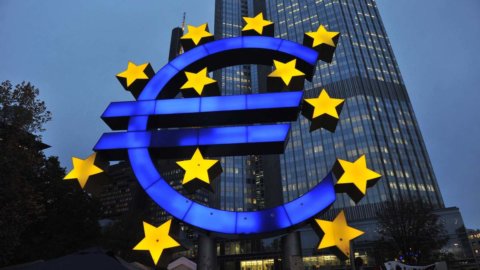
In the last meeting, the ECB decided to keep interest rates steady, but sent a clear signal: a crisis is looming cut in June. This move would anticipate the action of the Federal Reserve in the United States, where robust economic growth and persistent inflation (at 3,5% in March) postpone any cuts. In the Eurozone however, inflation continues to fall, driven by more stable prices for food and goods. Most measures of underlying inflation are falling, wage dynamics are gradually moderating and businesses are absorbing some of the increase in labor costs into their profits. Financing conditions remain restrictive and previously established interest rate increases continue to weigh on demand, helping to reduce inflation. However, domestic price pressures are strong and keep services inflation high.
This is what emerges in the last one economic bulletin of the ECB.
The euro area economy remains weak: services slowly recovering, uncertainties about wages
The first quarter of 2024 witnessed a weakness in the economy of the euro area, with limited production especially in energy-intensive sectors. However, one is looming recovery gradual over the year, driven mainly by services and supported by the increase in real incomes and export growth forecasts. Finally, monetary policy should have less of a dampening effect on demand over time. There unemployment reaches its lowest level since the introduction of the euro, while tensions in job market gradually diminish, accompanied by a decrease in vacancy offers. Governments need to withdraw energy-related support measures to ensure lasting disinflation.
The EU, writes the Bank, must quickly implement the new economic framework to reduce the budget deficit. At the national level, targeted policies can increase productivity, reducing inflationary pressures.
Furthermore, the Next Generation Eu and a stronger single market will promote innovation. Completing the Banking and Capital Markets Union is essential to attract the necessary investments.
Inflation declining but persistent
According to preliminary Eurostat estimates, annual inflation fell to 2,4% from February to 2,6%. This is mainly due to the reduction in food prices, which went from 3,9% to 2,7%. Energy inflation also decreased, from -3,7% to -1,8%.
Although inflation is in slight decline, it remains one priority. Domestic price pressure remains robust, especially in services.
Inflation is expected to remain around current levels in the coming months and to fall to 2% next year. This could happen because wages are growing less quickly, monetary policy is restrictive and the impacts of the energy crisis and the pandemic gradually fade.
Risks for growth on the downside, but risks on the upside for inflation
I risks for economic growth are mainly oriented towards fall. This could happen if monetary policy is more effective than expected in slowing the economy or if the world economy weakens further. Events such as the ongoing conflict in the Middle East and tensions between Russia and Ukraine could undermine confidence and disrupt international trade.
However, they are also there risks of higher inflation, especially if geopolitical tensions increase energy and transportation costs. Likewise, inflation could exceed expectations if wages or profits rise more than expected. Conversely, it could be lower if monetary policy curbs demand more than expected or if there are sudden deteriorations in the global economy.
Credit: demand still weak
Despite a slight reduction in interest rates on business loans and mortgages, the financing conditions remain restrictive and credit dynamics continue to show weakness. In February, average business loan rates fell slightly to 5,1% from 5,2% in January, while mortgage rates rose to 3,8% from 3,9%.
Despite this, the high level of indebtedness and the reduction of investments have caused a decrease in the demand for loans in the first quarter of 2024. Banks continue to be strict in their lending criteria, with a slight tightening for business financing and moderate easing for mortgage lending.
In general, the dynamics of credit remains weak. In February, bank loans to businesses increased 0,4% year-on-year compared to 0,2% in January.