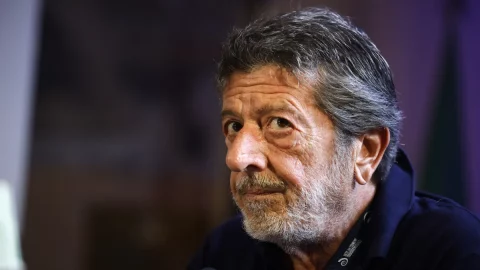
Andrew Purgatori died this morning in Rome after a short, fulminating illness. Journalist but also presenter, writer, screenwriter and actor, Purgatori found himself witnessing events that are a piece of contemporary history. For years at Corriere della Sera where he dealt with terrorism, intelligence, crime, and, in more remote times, sent to war zones (Lebanon, Iran and Iraq) and author of the most important Italian judicial investigations: note those on the case Moro and on the disappearance of Emmanuela Orlandi but above all he devoted himself with tenacity to Ustica massacre of 1980, which thanks to his commitment has remained open. To these themes, he also adds the violent crimes of the mafia, whose criminal actions he will deal with until the capture of the boss Totò Riina. Author of reports, he has successfully conducted on La7 Atlantis and has always expressed a strong interest in environmental protection, which led him to be president of the Italian section of Greenpeace until 2014.
Purgatori embodied the essence of good journalism: he was not afraid of the truth, of informing citizens, giving them news in the most complete and correct way possible through different linguistic registers but also of instilling trust or the healthy doubt that fuels research. The one who doesn't accept compromises, who doesn't bow to strong powers. In short, she knew how to "be the critical conscience of the institutions" with an incisive, refined stylistic signature free from useless banality.
Purgatori: "We know everything about Ustica, but the truth has been denied for 40 years""
On the evening of June 27, 1980, an hour after the DC-9 of Itavia Coming from Bologna and bound for Palermo had disappeared from the radar, Purgatori (he was 27 at the time) received a phone call from one of his sources, a flight controller at the Ciampino control center, convinced that the plane had been shot down. Several decades later, various aspects of the incident have not yet been fully clarified, but Andrea Purgatori has revealed the lies and omissions of those who wanted to hide the truth by setting up pure disinformation campaigns, not being intimidated by threats and silences. In the end, with the various judgments that next to theacquittal of four Air Force generals from the charge of misdirection, have established that theplane scheduled with 81 people on board was pulled down by a fighter of still unidentified nationality during a sort of aerial duel, near the island of Ustica. The remains of the aircraft were recovered only eight years later, bringing to light such evidence as to make the hypothesis of a bomb impossible. But also the former head of state, Francis Cossiga, Prime Minister at the material time, after years of talking about "structural failure" and "normal plane crash", then changed his version: "Giuliano Amato, then undersecretary, told me that in 2008 the French had shot down the plane from Ustica, by mistake, wanting to hit the Libyan plane that was carrying President Gaddafi”. The Ministries of Defense and Transport, found guilty of failing to protect safety in the skies, were sentenced to compensate the Itavia airline and the families of the victims, who have always been able to count on Purgatori.
Not just journalism: Purgatories between cinema and television
And the world of fashion also owes a lot to his work and his sharp gaze television and movies. Screenplay teacher, he has signed films such as "The rubber wall", inspired by the massacre of Ustica and for which he was awarded the Silver Ribbon, "The boy judge", "The industrialist". He signed, "Fortapàsc", inspired by the story of Giancarlo Siani and conceived together with Marco Risi.
But Purgatori has also participated in various comic and satirical operations, in the name of his close friendship with Conrad Guzzanti. Author and voiceover of the Rai3 program "The Scafroglia case", he participated in the film "Fascisti su Marte" and in the writing of the program "Aniene". He was co-author of Antonio Albanese's television program "Non c'è problema" and the presenter for the 2017-2018 edition of the cultural program "Atlantis".
Also author of television scripts, has signed fictions such as "Vite armored", "Fratelli" and miniseries such as "Suspects", "A case of conscience", "The scandal of the Banca Romana", "The forgetful of Collegno", "Where is my daughter?" and “The Company of the Swan”. In 2022, he is the one to narrate the Netflix docu-series “Vatican Girl” – The disappearance of Emanuela Orlandi.
Furthermore, Purgatori was actor. He has appeared in several episodes of the television series “Boris”, in Carlo Verdone's films “Posti in piedi in paradiso” and “L'chiamo grossa”, as well as in Alessandro Aronadio's films “Due vite per caso” and “Orecchie”. He also had a part in the television series “1993”.
As a writer, has published the essays "One step away from war" (1995), "The beauty of anger" (1997) and "The secrets of Abu Omar" (2008), while his first novel "Four small oysters" is released in 2019.