Cautious start to the financial week on the Asian markets. The political uncertainty in the USA weighs heavily, after the tough tug of war that led to the resignation of Stephen Bannon but also the joint US-South Korea military maneuvers which will start in a few hours. There is a strong fear of a reaction from a defiant gesture from Pyongyang.
The Tokyo Stock Exchange was weak -0,4% despite the data on business confidence recording the highest values for ten years. Seoul, Taiwan and the Australian Stock Exchange were also weak. On positive ground are Shanghai. In this context, the leap of Chinese telecommunications on the Hong Kong Stock Exchange +2,4% stands out. China Unicom, the state-owned wireless telecommunications giant, is suspended due to excessive increases after the announcement of the placement of securities for 11,7 billion underwritten by the three giants of the new economy: Baidu, Alibaba and Tencent. The dollar was also down, traded at 1,1715 against the euro. Yen at 109,22. Oil confirms the weekend's gains: Brent at 52,72 dollars a barrel, Wti at 48,53.
WALL STREET (AFTER THE ECLIPSE) WANTS TO MAKE PEACE WITH TRUMP
It will be a special week for US business. The eclipse that this morning will obscure the sun in North America for 2 minutes and 40 seconds (it hasn't happened since 1979) coincides with the great anger of Stephen Bannon, the leader of the US right-wing supremacist who on Friday resigned as head of strategies of the Trump administration. Bannon, defeated in the duel with Gary Cohn, leader of the doves, from today will target all the "doves" (real or presumed) of the president's staff. Cohn, Janet Yellen's favorite in the succession race in February, and the new chief of staff John Kelly have the arduous task of mending the rift between the big names in business and the White House by relaunching the tax reform, which has gone by the wayside. In the meantime, however, there has been a new defection: Carl Icahn, one of Wall Street's greats, has resigned as Trump's special adviser, but this time the protest against the president, tender with the Ku Klux Klan and friends of the far right, it has nothing to do with it. Icahn left in protest over suspicions of a "conflict of interest."
US RATES AND EUROPEAN QE AT JACKSON HOLE EXAMINATION
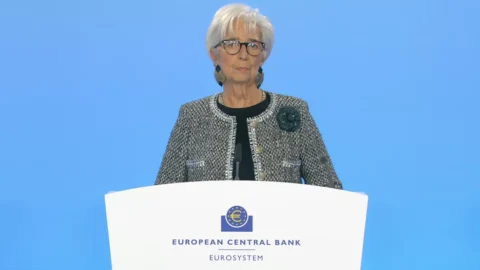
The highlight of the week will be the Jackson Hole, Wyoming meeting of the big central bankers. The intervention of Mario Draghi is expected, who has already made it known that he will not even touch the topic of tapering and/or the end of Qe, which will be followed by the intervention of Janet Yellen, probably the last to lead the Fed. Both bankers will speak on Friday: first Draghi then at 16 (Italian time) it will be the turn of the president of the Federal Reserve. The most eagerly awaited speech will be that of the Italian banker: three years ago in Jackson Hole Draghi sketched out the lines of European Qe now, albeit with great caution, he will have to address the issue of a return to normality.
Meanwhile, with inflation at a standstill, Yellen can afford to be patient on interest rates, but William Dudley of the New York Fed underlined the need for a new upward adjustment of rates: in the face of a strong labor market growth and equity prices near record highs, there is a risk that inflation will suddenly leap above the 2% annual growth target.
The Wyoming meeting will also offer the Fed's leaders the opportunity to challenge the choices of the US Treasury which has decided to ease the discipline on banks decided after the subprime crisis. Sranley Fischer, the number two of the central bank, called "amazing" the administration's orientation which plans to drop restrictions on trading, less stringent requirements for stress tests and fewer for the agency to protect consumer rights.
THE AGENDA: 100 DAYS OF MACRON, THE MEETING OF CL AND AIR BERLIN
Even in France, like Italy, the economy is sending comforting signals but this has not prevented the collapse of Emmanuel Macron's consensus: 100 days after his inauguration at the Elysée (the anniversary falls in the middle of the week) the popularity index of the president slipped to 36%. Ten points below the level of François Hollande.
In Italy the key appointment is represented by the Communion and Liberation meeting in Rimini. Minister Carlo Calenda (Tuesday) and the governor of Bank of Italy Ignazio Visco (Thursday) are expected this week. On the macro front, data from Zew, the German confidence index, will be released tomorrow. Eurozone PMI data will be announced the following day.
In terms of European companies, the most delicate case remains that of Air Berlin. According to what was reported by the CEO of the German low-cost airline, Thomas Winkelmann, at the Bild am Sonntag today there would be about 10 interested parties. Lufthansa, which had come forward in recent days, would instead eventually be oriented only to purchase 70 aircraft and to take over 2-300 employees of the total 8.600. To follow the balance sheet data of Wpp, the English advertising giant, a faithful thermometer of the moods of the big consumer players. After the summer break, the activity of Piazza Affari is starting to return to normal. This week's topics could include.
LUXURY: TOD'S IS IN THE SIGHT
Tod's has achieved a rise of 7,5% in the last four sessions, on the wave of the brilliant performance of luxury goods supported by the recovery in tourist flows. In fact, despite the terrorism scare, the week was positive for the Italian Moncler +5%, for Christian Dior +1,3%, for Kering +2,5% and for LVMH +1,3%. The speculative appeal for the Della Valle family company could also be fueled by expectations of a change of ownership, a topic that became hot in January, with the announcement of the entry into the capital of one of Andrea Bonomi's investment funds. Tod's could be one of the prey in a next round of mergers: Standard & Poor's estimates that the European luxury companies have a total of 24 billion euros of liquidity on hand, resources that could be channeled into external growth.
On the banking front, pay attention to Banco Bpm. There are at least five suitors for the role of bancassurance partner of the institute led by Giuseppe Castagna: Generali, Cattolica, Covèa, Zurich and Allianz. Barclays analysts raised the target price of the stock to 4,15 euro from the previous 3,3, confirming the Overweight opinion.
JONAS (MORGAN STANLEY): JEEP WORTH 120% OF FCA
Fiat Chrysler is always in the spotlight even if the speculative appeal ignited by rumors about an offer arriving from the Far East tends to fade, together with the denials arriving from China. "Forbes" dedicates a report to the possible split of the US brands held by FCA: Jeep, according to the estimates of Adam Jonas of Morgan Stanley, alone is worth 120% of the entire stable of the group. Ram is also attractive, while Chrylser minivans can be sold at Hiunday or Ford. The rest has a negative value. Barclays has raised the target price from 10,2 to 13 euro, equalweight opinion.
The effect of the fall on Walll Street of the competitor John Deere -5,4% after the accounts weighs on CNH Industrial. The manufacturer of tractors and agricultural vehicles has reported that in 2017 the reference market of North America will suffer a decline of 5%.