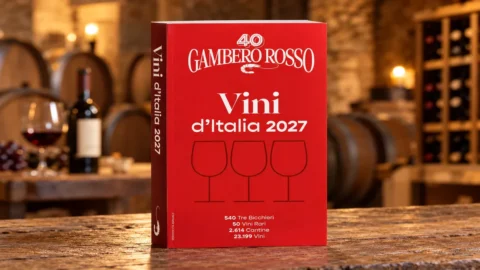
The fortieth edition of Gambero Rosso's Vini d'Italia guide boasts impressive numbers, with 2.614 wineries and over 23.000 wines analyzed. The Tre Bicchieri, which award top-quality wines, total 540, distributed across Tuscany (100), Piedmont (82), Veneto (49), Trentino-Alto Adige (40), Lombardy (37), Sicily (30), Friuli-Venezia Giulia (28), Puglia (26), Marche (24), Campania (21), Abruzzo (18), Sardinia (18), Umbria (18), Emilia-Romagna (15), Lazio (11), Liguria (7), Calabria (6), Valle d'Aosta (5), Basilicata (4), and Molise (1).
The 2027 edition of the Gambero Rosso Guide, edited by Giuseppe Carrus and Marco Sabellico, with William Pregentelli as deputy curator, retraces the path begun with the 1988 guide, which reviewed 500 producers and 1.500 wines. The 40th anniversary volume features the key figures who have contributed to changing Italian wine, the new generations, and artisan businesses, along with the themes of accessibility and sustainability. The selection is based on blind tastings and panel discussions, spanning multiple tasting phases.
In addition to the Tre Bicchieri-winning wines, thirteen Special Awards were also given. The Winery of the Year award went to Tommasi Family Estates, while Masciarelli's Montepulciano d'Abruzzo Marina Cvetic S. Martino Rosso Riserva 2022 was named Red Wine of the Year. Alta Mora's Etna Bianco Arrigo 2023 won the White Wine of the Year award; and Ferghettina's Franciacorta Non Dosato 33 Riserva 2018 won the Sparkling Wine of the Year award.
The Special Awards depict a geography of styles and projects. Paltrinieri's 2025 Lambrusco di Sorbara Leclisse is Rosé of the Year; Pighin's 2020 Collio Picolit receives the Meditation Wine of the Year award. The Best Purchase of the Year is Arillo's 2023 Chianti Classico Sacello in Terrabianca. Alongside Tommasi Family Estates, Cantina Kurtatsch is the Cooperative Winery of the Year, while the Emerging Winery award goes to Saraja, a project born in Gallura and expanding to other areas of Sardinia.
And more: Francesca and Davide Bonzano of Castello di Uviglie are Young Producers of the Year. Davide and Riccardo Sobrino of Cascina delle Rose, in Barbaresco (Cuneo), receive the Winemaker of the Year award. Benvenuto, in Francavilla Angitola (VV), receives the Sustainable Viticulture award; Cascina Clarabella, a social cooperative in Franciacorta dedicated to providing employment to people with psychiatric disorders, receives the Solidarity Project award.
Quality, the Guide highlights, is also a matter of affordability: 50 Tre Bicchieri wines can be purchased in wine shops for under €15, and five are under €10. There are 194 Tre Bicchieri Verdi, awarded to wines from wineries that adhere to the principles of certified organic or biodynamic viticulture. These two selections help readers navigate their choices based on their budget, without sacrificing the quality of the guide's highest recognition.
"Who we were and who we will be. We took this anniversary as an opportunity," says Lorenzo Ruggeri, editor-in-chief of Gambero Rosso, "to pay homage to the wineries that shaped the taste and identity of Italian wine, but above all to look forward with the optimism and joy that are inherent in this world. Wine is, first and foremost, trust, patience, and the expectation of a better harvest, beyond hailstorms and consumer crises. And it is also an invitation to travel, to discover."
A special section is dedicated to the Icons of Italian Wine: ten wineries and one winemaker who have shaped the guide's history and contributed to shaping contemporary taste. Antinori is the Winery of 40 Years, and Josko Gravner is the Winemaker of 40 Years. The volume also revisits the Tre Bicchieri awards from the first edition, connecting the memory of Italian wine with the challenges of the present.
The selection is rounded out by the 50 Rare Wines: labels worthy of the best Tre Bicchieri awards, chosen for their unique projects, the revival of grape varieties, historic vineyards, and limited production runs. Presented as a wine list spanning Italy, they showcase a biodiversity of territories, intuitions, and craftsmanship. The journey continues digitally, with a searchable and navigable format that showcases a historical heritage of over 1.5 million reviews.