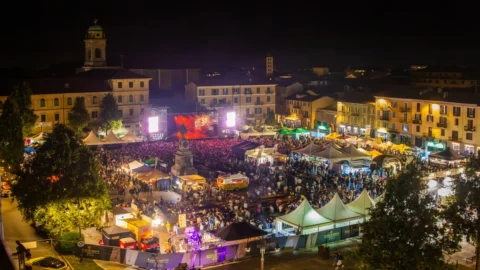
From 6 to 8 June 2025, Fossanova Abbey, in the heart of Lazio, will once again be the stage for one of the most fascinating events in the national food and wine panorama: the fourth edition of Abbey Wines, a one-of-a-kind event that intertwines spirituality, culture and winemaking tradition. The event, part of the regional project “Le Vie del Giubileo”, presents itself as an immersive journey through stories of monks, rare wines and territories to be rediscovered.
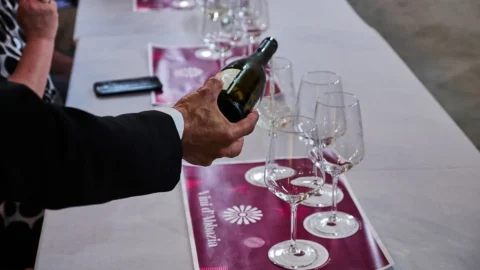
Over 30 wineries coming from Italian and international abbeys, lay producers linked to monastic places and local consortia will give life to a sensory journey in the suggestive Cistercian cloister of the Abbey, where every day, from 16pm to 30pm, the tasting tables will be flanked by the Food&Wine Village with the gastronomic excellence of the area.
Il program complete, already available for consultation online, offers six masterclasses led by authoritative names in wine journalism and criticism, along with a busy schedule of meetings, conferences and debates. The activities will be held in the Refectory, the Infirmary and the restored spaces of the village of Fossanova.
Fossanova, crossroads of faith and wine: the cradle of monastic viticulture
The choice of the Fossanova Abbey is not a random one, as it is one of the most significant examples of Gothic-Cistercian in Italy and a symbolic place for European spirituality and culture. Here he lived and died St. Thomas Aquinas, in 1274. Today, the complex hosts the event as a meeting place between memory and future, sacred and profane, spirituality and taste.
But Fossanova is also the symbol of a thousand-year-old tradition that links the silence of the cloisters to the work of the land. Since the Middle Ages, the monasteries They were much more than places of prayer: they were true laboratories of agricultural civilization, where the monks - following the Benedictine rule ora et labora - cultivated vineyards not only for the Eucharist, but also for the sustenance of the communities, the reception of pilgrims and the care of the sick.
Le cellars monastic, often dug into the stone and naturally isolated, became centers of advanced experimentation: natural cycles were observed, the best strains were selected, techniques that today we would call “sustainable viticulture” were refined. The religious transformed work in the rows into an exercise in active contemplation, where every agricultural gesture was also a spiritual act. Thus, from Fossanova to Cluny, from Monte Oliveto to Citeaux, an oenological knowledge was born that shaped the landscape, the culture and the taste of European wine.
Masterclasses and cultural meetings: the program of Vini d'Abbazia 2025
The path yes opens Friday 6th June at 17pm with “Guardians of the Vine: the monks and the culture of wine”, with testimonies from the main Italian abbeys and a video introduction by SER Monsignor Mariano Crociata. This will be followed on Saturday 7th by the workshop “Cooperation for Tourism and Sustainable Wine Tourism” (11:00 am), the official inauguration at 16:30 pm with the participation of the Flag-wavers of the Districts of Cori, and the meeting “Jubilee, Tourism and Business” at 17:30 pm. On Sunday 8th, the talk “Ancient Roots and Innovative Ideas: Wine According to Women” will give voice to the professionals who are innovating the world of wine.
From Cesanese, wine of the popes, to the Champagne e classic methodand at our wines of the ancient Romans to the rediscovery of winemaking in amphora, up to a journey through vineyard landscapes and a masterclass all-female: the six guided tastings (two for each day, at 18:00 pm and 20:00 pm) will offer cultural and technical insights of the highest level, curated by names such as Chiara Giovoni, Cristina Mercuri, Chiara Giorleo e Manuela Zennaro.
A mosaic of international presences
In addition to the Italian entities, the 2025 edition also welcomes the abbeys of the French network The Wines of Abbaye and the Georgian Alaverdi Monastery – Badagoni, guardian of one of the oldest winemaking traditions in the world. The consortia of the Cesanese del Piglio DOCG, from the Choirs DOC, from the Cabernet of Atina DOC, In addition to Wine Route of the province of Latina.