With two major interventions within 24 hours of each other, the ECB seems to want to start a moral suasion on Unicredit's takeover of Commerzbank and above all on the attitude of the German government, guilty of hindering the operation from its very beginning. The first to speak was the member of the executive committee. Piero Cipollonand who, in a measured but clear manner, stated that cross-border acquisitions “should be easier” because they make everyone stronger.
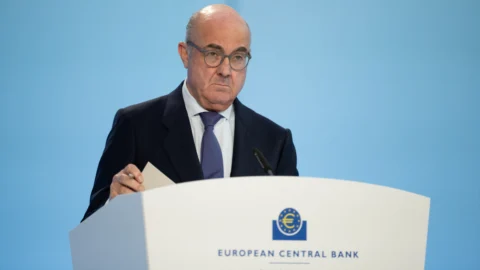
To openly scold Germany the vice-president of the ECB thought about it instead, Luis de Guindos“It is very difficult for governments to claim to be in favour of the Savings and Investment Union and then say: 'Well no, we are against this particular operation,'” the Spanish economist said in an interview with Financial Times.
Since the start of the takeover, i.e. in September 2024, the German government has always been strongly against possible marriage between the second-largest German bank and the institution led by Andrea Orcel. This opposition slowed, but did not stop Piazza Gae Aulenti, which, after having gathered, through direct participation and financial instruments, a share exceeding 35%, last May 4th launched an offer on Commerz which will conclude on June 16. It's difficult to imagine a takeover, considering that the takeover bid is at a discount at current prices, but especially considering the strong opposition the operation has encountered in Germany, both at the bank's top management and among politicians. "This is no way to treat institutions like a German bank," thundered Chancellor Friedrich Merz just a few days ago, speaking of an offer that “destroys trust” in the institution.
The ECB thinks diametrically opposite and for some time now, although it has not officially taken a position, has said it is in favour of any type of operation. cross-border consolidation This will lead to the creation of large European banks capable of competing with their US counterparts. This is a position Orcel knows very well, so much so that he is undeterred and is relaunching. Today, among other things, the UniCredit chief will meet with the EU's competition chief. Teresa Ribera and the Commissioner for Financial Services Maria Luis Albuquerque.
De Guindos on UniCredit Commerz: "Berlin's opposition goes against the spirit of the single market."
According to de Guindos, government opposition to consolidation operations "is not a problem unique to this specific example, it happens everywhere. Governments are very similar in their temptation to intervene in private agreements. But such moves go against the spirit of the single market".
The examples, in fact, are numerous and also concern possible domestic operations. Just think of the Spanish government's No to the marriage between BBVA and Sabadell or that of the Italian executive to that between Unicredit itself and Banco BPM. "The main problem with this type of national message is that undermine the credibility of the Savings and Investments Union” said de Guindos.
Regarding the UniCredit-Commerzbank deal in particular, the ECB Vice President explained that he believed he "was clear enough. I would apply the general regulatory framework to this case. Our recommendation is consider the euro area as a single jurisdiction with free movement of capital and equity and with a common deposit guarantee”.
De Guindos: "The German banking sector is highly fragmented."
Looking at Germany, de Guindos said the German government must undertake a series of reforms to revive its economy. "Even from the point of view of the banking industry, a certain process of modernization will be necessary, because Germany has a highly fragmented banking sector. I think some form of reform in this respect would be important.”
Asked whether he was in favour of a consolidation of the German banking sector, even looking beyond the borders, de Guindos replied that “we are in favor of cross-border consolidation. But sometimes you need domestic consolidation before you can get to cross-border consolidation. I think it will take some restructuring process".
Cipollone on Unicredit-Commerzbank: "An integrated market makes everyone stronger."
Piero Cipollone, member of the ECB's Executive Board, also commented on the UniCredit Commerzbank deal yesterday, speaking at the Ventotene Europa Festival. "Lately, we've seen controversy surrounding a major acquisition between Italy and Germany. These things should be simpler and have a more fluid, more natural dimension, because an integrated capital market allows everyone to be financially stronger," Cipollone said. He then added: "Europe exports about 2% of its GDP in capital every year," he added. "It's not that we lack money, it's that the markets are so fragmented that we end up investing in other countries, while our companies remain small and, when they need to grow, go public on the US markets. This is a huge impediment to Europe's growth and development," he concluded.