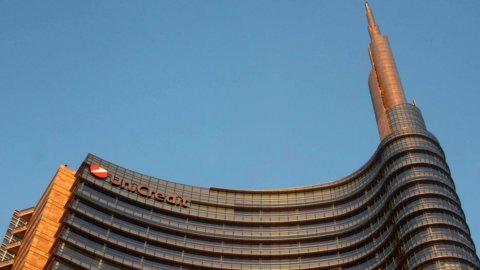
After partial rejection of the golden power by the TAR applied by the government to the takeover bid by Unicredit on Banco Bpm, also arrives the preliminary verdict from BrusselsThe European Commission has sent a letter to Italy in which it expresses its preliminary opinion that the decree issued by the Presidency of the Council of Ministers on 18 April 2025, which imposes certain obligations on the entity resulting from the merger arising from the acquisition of Banco Bpm “could constitute a violation of Article 21 of the EU Regulation on mergers and other provisions of EU law”. The news was given by European Commission spokesperson Thomas Regnier during the usual daily briefing.
Golden Power: The Opinion of the EU Commission
Specifically, "from a competition perspective, the EU Commission approved the transaction under the EURE, subject to certain conditions, on June 19, 2025. Separately, Italy issued a decree imposing obligations on UniCredit upon completion of the acquisition of BPM, based on national legislation that authorizes Italian authorities to review investments in companies active in certain sectors of strategic importance, including banking (the so-called 'Golden Power')," the Commission explains.
“Pursuant to Article 21, paragraph 4, of the EU Internal Market Regulation (EMR), Member States may take appropriate measures to protect legitimate interests, provided that they are compatible with the general principles and other provisions "EU law and that they are appropriate, proportionate, and non-discriminatory. This obligation is subject to scrutiny by the Commission, particularly to safeguard its competence under the EU Internal Market Regulation and avoid fragmentation of the Single Market," Brussels continues.
"On May 26, 2025, the Commission sent a request for information to Italy to better understand the decree. Italy responded on June 11, 2025," the EU executive recalls, before moving on to its preliminary conclusions.
“After carefully assessing Italy's response, the Commission preliminarily concludes that the decree could violate Article 21 of the EU Regulation on the Internal Market. The public security constitutes, among others, a legitimate interest and is explicitly mentioned in Article 21, paragraph 4, of the EU Internal Market Regulation, but the Commission preliminarily considers that the justification for the conditions is currently lacking motivation and that the Commission probably should have review the decree before implementation".
Brussels "also notes that the decree could be incompatible with other provisions of EU law, including those on the free movement of capital and prudential supervision by the European Central Bank.
In light of these considerations, the Commission invites Italy "to submit its observations" and "based on Italy's response to the preliminary assessment and the TAR ruling, the Commission will evaluate the next steps."
Reactions to the TAR ruling
Saturday The Lazio Regional Administrative Court (TAR) has partially accepted the appeal presented by Unicredit against the golden power, considering the bank's criticisms to be well-founded two of the four requirements imposed by the government. In particular, the administrative judges have dismantled the obligations relating to the five-year maintenance of the loan-to-deposit ratio and to maintain, without an expiry date, the level of project financing. The TAR considered the other two conditions imposed by the government legitimate, but the obligation to maintain the current level of Italian investments managed through Anima Holding has been transformed into a programmatic indication to keep the Italian securities in Anima, while on the cessation of all UniCredit's activities in Russia no inaccuracies were detected by January 18, 2026.
For its part, Unicredit underlined that the sentence recognised the validity of the institute's appeal against the golden power and also recalled that the same TAR does not have full jurisdiction Regarding the golden power statute of limitations requiring UniCredit to cease operations, or sell its assets, in Russia. As indicated by the Lazio court ruling, the ECB has jurisdiction to assess the matter.
On Sunday, the day after the publication of the device, Unicredit spoke of a turning point, claiming that "the ruling of the Lazio TAR is unequivocal proof that the golden power is illegitimate"The government decree is a single act," Piazza Gae Aulenti continued in a statement. "If even a single part of it is modified, it is nullified. For this reason, a new Prime Ministerial Decree is now needed to authorize the offering on the Banco, an operation that otherwise cannot be concluded."
Diverse Banco Bpm's position, which "acknowledges the ruling of the Lazio Regional Administrative Court (TAR) recognizing the proper conduct of the Government and, in particular, confirming the substantial legitimacy of the provisions contained" in the Prime Ministerial Decree on golden power. "In light of the aforementioned ruling, Banco BPM hopes that UniCredit will clarify its intentions regarding a public takeover bid—which will close on July 23, more than eight months after its announcement—which, due to the passivity rule, has severely limited the Bank's strategic flexibility at a key time for the national credit sector, generating serious uncertainty for shareholders, customers, and employees."
Palazzo Chigi: "We will respond with a collaborative and constructive spirit."
“Regarding the letter from the EU Commission on the application of special powers to Unicredit's offer for Banco Bpm, the Italian government will respond in a collaborative and constructive spirit to the clarifications requested as already done in the jurisdictional proceedings before the TAR within the terms and with reasons already considered legitimate by the administrative judges". This is what is stated in a note released by Palazzo Chigi which tones down the very harsh tones used a few minutes earlier by the Deputy Prime Minister and leader of the League, Matteo Salvini. "I think the EU has more important things to deal with, for example dealing with the US. So instead of to annoy the Italian government "On seaside resorts, beaches, scooters, electric cars and banks, it should deal with a few serious matters and do it well," Salvini said, adding that "the dossier is on Minister Giorgetti's desk, who has worked perfectly up to now, and the banking and credit system is a strategic asset for the country. Therefore, Italy can and must regulate as it sees fit without no one from Brussels should dare to intervene".
Within the government, moreover, it is precisely the League that, from the very beginning, has most vehemently opposed Unicredit's operation on Banco BPM, given the strong political ties between the party and the region (Lombardy, ed.) where Piazza Meda is most deeply rooted. Forza Italia, for its part, has repeatedly expressed its opposition to the use of the golden power to the other deputy prime minister, Antonio Tajani, who, responding to a question on the application of the golden power on the sidelines of the conference organized by Enel, stated: “The European Union deals with what it has to deal with and this is a matter that also falls within the competence of the European Union.”
What happens now?
The letter sent by Brussels represents only a "preliminary assessment". Now the Italian government will have two months to respond and only at a later stage will there be a possible decision by the EU Commission which will become immediately enforceable and which could also result in infringement proceedings against Italy.
In the meantime we await the possible moves by Unicredit in view of the closing of the takeover bid, scheduled for July 23. According to rumours, the bank led by Andrea Orcel could to convene the board of directors in the next few days In order to examine the situation and assess the consequences of the TAR ruling, the ECB letter, and the latest developments from France, Crédit Agricole has asked the ECB for authorization to exceed its 20% stake in Banco BPM, thus theoretically reaching just under 30%, the threshold beyond which a mandatory takeover bid is triggered. In light of what has happened, the following are now being discussed: two roads: waiver of the condition of the prospectus which provided for a golden power without prescriptions and subsequent raise the price. Or withdraw the offer, waiting – perhaps – to resubmit it at a later time when the conditions have become clearer.
The field could also be taken by ConsobAfter the initial 30-day suspension established in April, the Italian Market Supervisory Authority could intervene again, imposing a second suspension or an extension of the offer period. The game is still open.