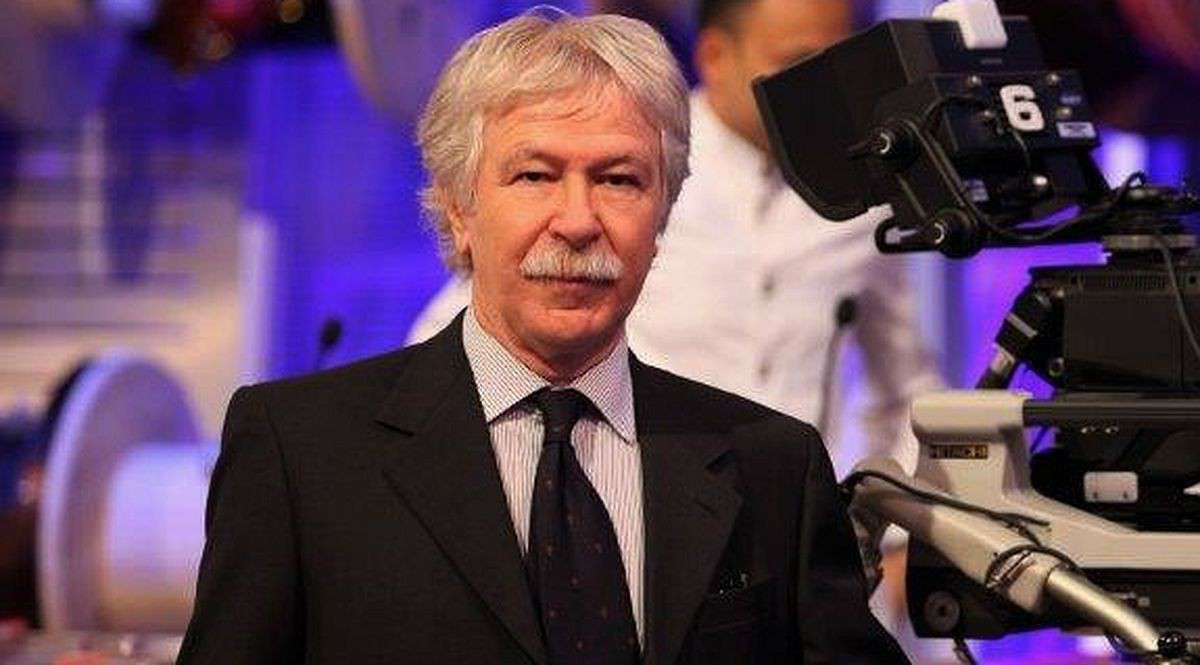
The revised and corrected version of RaiPlay, the streaming platform by Rai. The launch of the new Public Service bet foresees the return of Fiorello with a clip in prime time which will initially be visible after the 1 pm Tg20.30 from 4 to 8 November and subsequently from the 13th of the same month in streaming for six weeks every Wednesday, Thursday It's Friday.
RaiPlay, in the intentions of the CEO Fabrizio Salini, sets itself ambitious objectives: on the one hand, to be consistent with the choices of the Industrial Plan recently "branded" by the MISE where it aims to propose the Public Service as a "media company" capable of competing in the new size of the global audiovisual market.
On the other hand, it would like to represent a paradigm shift in the technological comparison on two fronts: that of the other operators and that of the public to whom the Rai proposal is intended. Compared to the "old" Rai Play, as the CTO Stefano Ciccotti, we start from scratch: "There is nothing of the previous platform in the new one and this was an advantage: we took the best of the previous experience without inheriting the problems". In fact, the innovations, beyond the success that Fiorello could have always been very appreciated by the general public, consist precisely in the different technological methods of evaluating this challenge.
As known, to access streaming services of big OTTs like Amazon, Netflix or AppleTv (as AgCom defines them: companies that supply content and services through the network) it is necessary to subscribe to a subscription and therefore the quantity of its "contacts" is equivalent to how many viewers intend to pay this kind of "fee".
instead for Rai the offer is free (by law) and therefore, for the first time, the network will be subjected to a sort of "bombardment" of contacts like never before. RaiPlay it already has a portfolio of over 12 million subscribers and no one is able to know how the ISP (Internet Service Provider) infrastructure will react, which could be a possible bottleneck capable of choking data traffic.
In fact, Rai could guarantee an emission standard sufficient for "pleasant" use but is unable to do the same for the subsequent path which is instead in the hands of the second segment of broadcasting on the Web. To get an idea of this problem, it is enough to know that Netflix requires a broadband emission standard from a minimum of 0,5 mgb/s up to 25 mgb/s for Ultra HD. Also, for RaiPlay However, this is a significant test also because the connections will not be geolocatable as, for example, Fiorello could be seen throughout the national territory. The challenge is launched, we'll see who wins.
So far, so good: that the Public Service poses the problem of competing on a rapidly growing market such as that of OTT where, at the end of 2018, according to what reported by Idate Digiworld "OTT video services will represent 14,5% of the total of the audiovisual market in 2018. This market it will be worth a total of 115,7 billion euros in 2022 and the OTTs will control increasingly large slices of it, given that, over the next four years, global linear TV will grow by an average of 0,8% against 14,2% for Ott services” is good news.
See also today's interview, appeared on Repubblica A&F, by Elisabetta Ripa, CEO of Open Fiber: “The agreement with Rai is to study and develop new services linked to the expansion of the fiber network” where the global market says that the direction is to switch from the airwaves to the cable. After all, the BBC too, as the latest report wrote in recent days OfCom, said it was "vulnerable to a rapidly changing media landscape and is struggling to engage and retain younger audiences ... for example by launching BBC Sounds and making programs available longer on iPlayer."
What is not at all clear, on the other hand, is knowing what new content will be released on the Rai streaming platform, who it will be intended for and how many resources will be used. Salini was asked yesterday the cost of the Fiorello operation: the answer was vague but, according to our sources, we are talking about 10 million euro, "spreadable" over time and for different uses, where perhaps Sanremo could be included.
The theme of the type of public to which the editorial offer of the new platform is addressed appears particularly complex: in intention, we would like to address that technologically poorly literate “adult” audience and accustomed to tablets and smartphones without forgetting the younger age groups. It appears a kind of "mission impossible" especially in times of scarcity of economic resources and in an area where Rai suffers from a long delay.
We have written about it several times on Firstonline: a lot is asked of Rai in exchange for little and what little there is (the license fee) someone would even like to take it away.