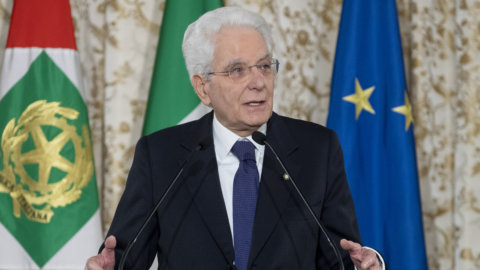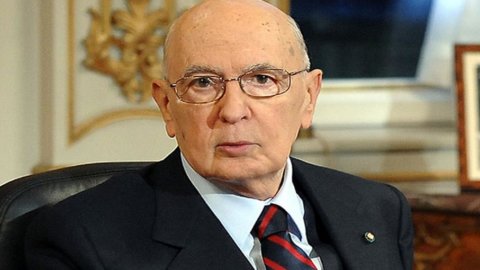
The first message of Giorgio Napolitano's second term hinged on three points: the ever more painful and more extensive social question with which the Italians are having to deal with; the need for reforms starting with the electoral one; meaning and duration of the second mandate accepted after the invitation of the most representative political forces. All this after having defined 2013 as "one of the heaviest and most restless years" in our political history.
Already in the last messages of the previous seven-year Napolitano had spoken of the drama of the social question as a consequence of a very difficult economic situation. This time he did it again starting from the reading of three e-mails from citizens who addressed the Quirinale directly. This too is a clear sign of the difficulties Italians encounter in making their voices heard. Behind the letters are three problems: that of an entrepreneur who wants to be able to continue playing his part, but who asks politics to do the same; that of those workers who, around the age of 45, have lost their jobs and are too young to retire and too old to find space in the job market: and finally the dramatic appeal of Veronica, a twenty-eight year old from Empoli who states: "I believe in Italy, but Italy still believes in me”? Tremendous question to which an answer can only be given by credible and strong politics. And certainly not that "all against all that tears the social fabric". Here the reference of the head of state is clear and also concerns "the insults, slanders and threats, by which he is very determined not to be" intimidated ".
And here comes the problem of reforms because, explains the President of the Republic, to overcome difficult and painful passages you need "foresight and continuity in government choices". And of course institutional reforms are needed, starting with the electoral one. To do this, even the oppositions will find the space to make their voices heard. As? Naturally operating in Parliament and putting aside the temptations of the logic of "all against all".
Finally, Napolitano also spoke of the meaning of his second mandate defined as a "short-term assignment". No explicit threat of resignation, but firm re-proposition of the concepts already expressed in Parliament after accepting re-election. Concepts for which the President of the Republic has once again placed himself at the disposal of the country to help overcome a very difficult political crisis for which, however, he needs that precisely those political forces that have invited him to accept must play their part to the end . Which has certainly not happened in these first months of the Legislature.
Significant, though predictable, is the fact that in his year-end speech, Napolitano dutifully avoided any reference to the forfeiture of Silvio Berlusconi as senator, which occurred as a result of a definitive sentence by the judiciary. Just as, with regard to justice reform, the head of state has once again asked for a solution to the dramatic condition of our prison system. Moreover, a question at the center of his formal message to the Chambers.
The first reactions of the political forces: Prime Minister Enrico Letta spoke of "total harmony" with the head of state. Forza Italia, on the other hand, saw only rhetoric in Napolitano's words and returned to ask to go to the vote immediately. Like the leader of the 5-star movement Beppe Grillo who returns, in a sort of counter-message from his blog, to re-propose threats of impeachment and wants to go to the vote with the Mattarellum, to postpone the definition of a new electoral law to the new Parliament.